The Blunted Edge: Analyzing Russia's Troubled Sarmat ICBM Program
A recent catastrophic test launch failure of a Russian intercontinental ballistic missile, widely believed to be the next-generation RS-28 Sarmat, has exposed significant vulnerabilities in Moscow's nuclear modernization efforts. This incident, occurring at the Dombarovsky air base, represents another setback for a weapon system President Vladimir Putin has touted as a 'truly unique' deterrent. The failure raises critical questions about the readiness of Russia's strategic arsenal, the viability of the Sarmat program, and how the demands of the war in Ukraine are straining military resources and technological development.
The reliability of a nation's strategic nuclear deterrent rests not on rhetoric, but on the proven technical capability of its delivery systems. A recent, very public failure of a Russian intercontinental ballistic missile (ICBM) test has starkly illustrated this principle, casting doubt on the operational readiness of a cornerstone of Moscow's nuclear modernization. The incident, involving a missile that crashed mere seconds after launch, suggests one of President Vladimir Putin's most frequently brandished strategic 'sabers' may have a significant flaw in its blade.
The Failed Test at Dombarovsky
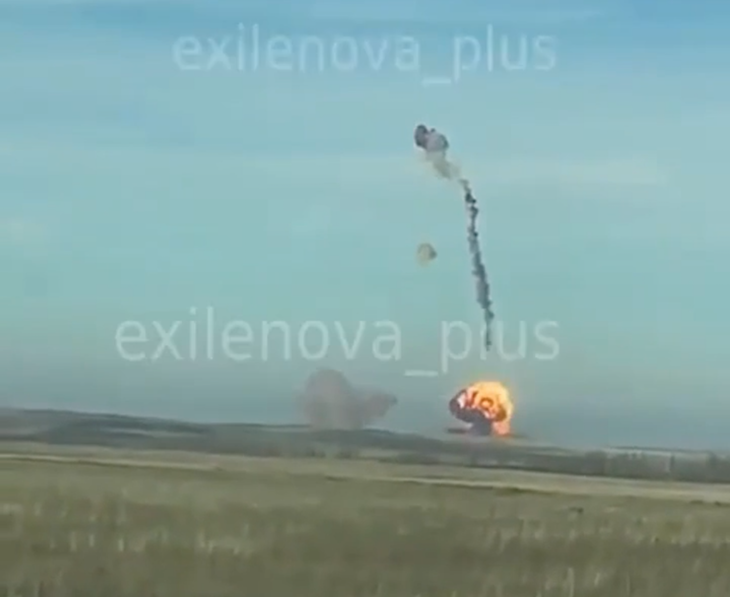
On a scheduled test from the Dombarovsky air base in Orenburg Oblast, a Russian ICBM fired from an underground silo failed catastrophically. According to analysis of video evidence and satellite imagery, the missile veered off course immediately after launch, cartwheeled, lost power, and crashed only a short distance from its silo—failing to travel even 4,000 feet of its intended 4,000-mile journey to a remote impact zone. The crash produced a significant fireball and a telltale reddish-brown cloud, indicative of the toxic hydrazine and nitrogen tetroxide propellant used in Russia's most powerful missiles. Satellite images confirmed a crater and burn scar near the launch site.
Identifying the Weapon: Likely the RS-28 Sarmat
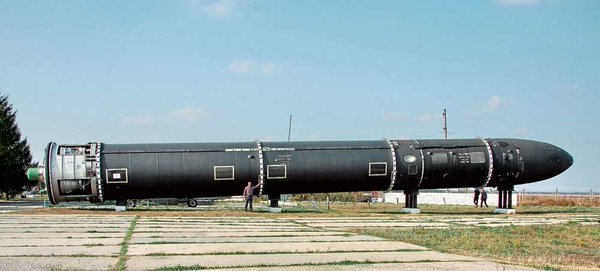
While Russia's military has remained silent on the specifics, analysts widely agree the failed missile was most likely the RS-28 Sarmat, Russia's next-generation heavy ICBM. Pavel Podvig, a senior researcher at the UN Institute for Disarmament Research, noted the missile ejected a component before impact, possibly a payload salvage attempt. The Sarmat, sometimes called 'Satan II,' is designed to be the world's longest-range missile, capable of carrying a payload of up to 10 large nuclear warheads or hypersonic glide vehicles over 11,000 miles. It is intended to replace the aging, Ukrainian-built R-36M2 missile fleet.
A Pattern of Failure and Strategic Implications
This incident is not an isolated one for the Sarmat program. While its first full-scale test in 2022 was reportedly successful, the program has since suffered a string of failures. Most notably, a catastrophic explosion last year destroyed a Sarmat missile silo in northern Russia. Analyst Etienne Marcuz of the Foundation for Strategic Research pointed out that the Dombarovsky silo used in this latest test had undergone 'urgent renovation' beginning in Spring 2025, likely to support Sarmat tests after the loss of the northern site. This repeated failure, as Marcuz stated on X, is 'highly detrimental to the medium-term future of Russian deterrence,' pushing the replacement of the aging R-36M2 fleet further into the future.
Broader Context: War in Ukraine and Nuclear Posturing
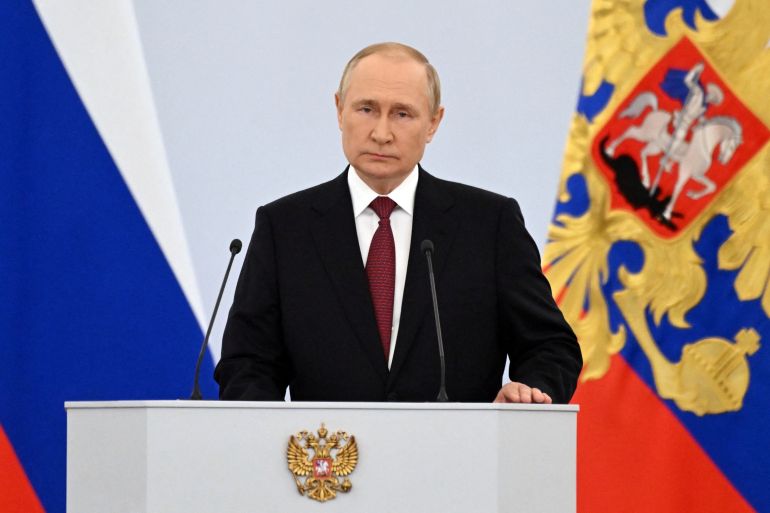
The Sarmat's troubles occur against the backdrop of the ongoing war in Ukraine, which is consuming vast Russian military resources—aircraft, artillery, drones, and personnel. In his public rhetoric, Putin has frequently invoked Russia's strategic nuclear arsenal to warn against increased Western involvement. He has called the Sarmat a 'truly unique weapon' that would 'provide food for thought' for those threatening Russia, and as recently as last month declared it would undergo 'combat trials' this year before deployment in 2026. However, the reality appears to be that modernization of Russia's nuclear forces has stalled as the Kremlin prioritizes replenishing conventional assets for the immediate conflict.
Alternative Pathways and Program Viability
The persistent failures have led some analysts to question the entire Sarmat program's future. Unlike the silo-based Sarmat, many of Russia's other land- and sea-based ballistic missiles, such as the Yars, use mobile launchers, offering greater survivability. Following this latest accident, Russian researcher Dmitry Stefanovich suggested on social media that 'Sarmat deserves to be canceled.' Relying on a larger fleet of these smaller, more reliable, and mobile ICBMs may present a more pragmatic path for Russian strategic forces, albeit one with different capabilities than the heavy payload and extreme range offered by the Sarmat.
Conclusion: Rhetoric vs. Readiness
The failed ICBM test is a potent symbol of the gap between Russia's assertive nuclear rhetoric and the practical challenges of maintaining a cutting-edge strategic arsenal. It highlights the immense technical difficulty of developing new weapon systems and the strain that conventional warfare places on a nation's broader military-industrial complex. For international observers and arms control analysts, the incident underscores the importance of looking beyond declaratory policy to assess actual capability. While Russia retains a formidable nuclear triad, the repeated stumbles of its flagship heavy ICBM program reveal vulnerabilities that complicate Putin's strategy of nuclear-backed coercion, proving that even the most fearsome saber is useless if its edge cannot be trusted.