Far-Right Activist Tommy Robinson Leads Major Demonstration in London
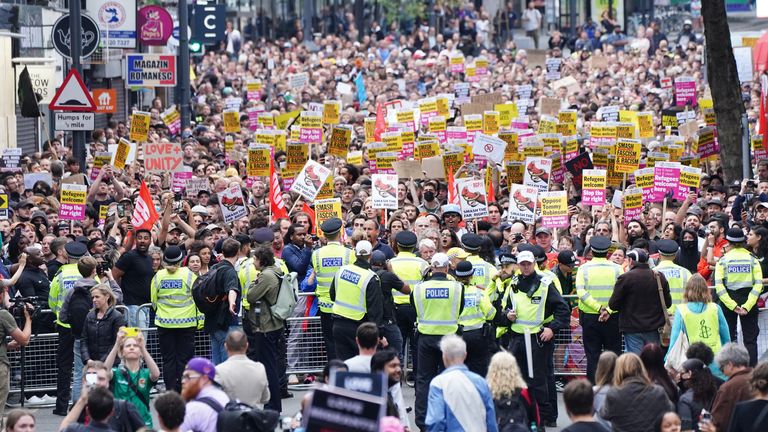
Thousands of demonstrators gathered in London streets on Saturday for a march organized by far-right activist Tommy Robinson. The event, which spanned several city blocks, represents one of the largest far-right mobilizations in recent UK history. This analysis examines the political context and significance of the demonstration within current British social and political dynamics.
Thousands of demonstrators packed London streets for several blocks Saturday in a significant mobilization organized by far-right activist Tommy Robinson. The event, which drew substantial crowds, represents a notable moment in contemporary British political activism and highlights ongoing social tensions within the United Kingdom.

Event Overview and Scale
The demonstration organized by Robinson, whose real name is Stephen Yaxley-Lennon, attracted participants from across the country. The march extended through multiple central London blocks, indicating substantial organizational capacity and supporter engagement. Such large-scale far-right gatherings remain relatively uncommon in the UK, making this event particularly noteworthy for political observers and analysts.
Political Context and Background
Tommy Robinson has been a controversial figure in British politics for over a decade, initially gaining prominence as the leader of the English Defence League. His activism typically focuses on anti-Islam and anti-immigration rhetoric, positioning himself as a voice against what he describes as "Islamic extremism" and mass migration. The London demonstration appears consistent with these longstanding political themes and objectives.
Social and Political Implications
The size and visibility of Saturday's demonstration suggest that far-right movements maintain significant capacity for mobilization in contemporary Britain. While such groups typically operate on the political fringe, their ability to organize large public events indicates persistent support bases and organizational networks. The event occurs against a backdrop of ongoing debates about national identity, immigration policy, and social cohesion in post-Brexit Britain.
Political analysts will be monitoring whether this demonstration represents a one-off event or signals broader momentum for far-right organizing in the UK. The response from mainstream political parties and civil society organizations will also be crucial in determining the longer-term impact of such mobilizations on British political discourse.
Security and Public Order Considerations
Large political demonstrations inevitably raise questions about public order and security arrangements. London's Metropolitan Police likely deployed significant resources to manage the event, balancing rights to peaceful protest with maintaining public safety. The handling of such events requires careful coordination between protest organizers, police authorities, and local government officials.
Conclusion
The substantial turnout for Tommy Robinson's London demonstration underscores the continued presence of far-right activism in British politics. While such movements typically operate outside mainstream political channels, their ability to mobilize thousands of supporters indicates persistent social and political currents that merit ongoing analysis. The event serves as a reminder of the complex challenges facing democratic societies in managing political extremism while protecting fundamental rights to assembly and expression.