Read on France 24
North Korea Commissions 5,000-Ton Destroyer, Signaling Naval Nuclear Ambitions
North Korea has officially commissioned a 5,000-ton destroyer, named the Choe Hyon, during a ceremony led by Kim Jong Un. State media reports tout the vessel as a key step in advancing the country's naval nuclear capabilities and extending its military reach at sea. The warship is equipped with nuclear-capable ballistic and cruise missiles, alongside anti-aircraft and anti-ship systems. While analysts debate its combat readiness, the move underscores Pyongyang's shift toward expanding its maritime power, including plans for a larger 10,000-ton destroyer and a nuclear-powered submarine.
North Korea has officially commissioned a 5,000-ton destroyer, named the Choe Hyon, in a move that underscores Pyongyang's growing focus on naval power and nuclear capabilities. State media reported on Wednesday, June 24, 2026, that leader Kim Jong Un presided over a ceremony at the western port of Nampo, where he hailed the warship as evidence of the country's advancing naval nuclear program and its expanding ability to project military force at sea. According to the Korean Central News Agency (KCNA), the vessel was formally placed into service with the North Korean navy, tasked with defending the country's western coast.

First unveiled in April 2025, the Choe Hyon represents a significant milestone in Kim Jong Un's strategic shift from a focus on ballistic missile development to enhancing maritime military capabilities. The destroyer is reportedly equipped with a range of systems, including anti-aircraft and anti-ship weapons, as well as nuclear-capable ballistic and cruise missiles. In his speech at the ceremony, Kim stated,
“It has clearly become a thing of the past when our navy existed as a force for defending the sea off our land. It is rising into a full-fledged service equipped with strategic means as the programme of equipping the navy with nuclear weapons is following its planned course unerringly.”
Strategic Implications and Technical Capabilities
The commissioning of the Choe Hyon comes amid rising tensions on the Korean Peninsula and deepening military cooperation between North Korea, Russia, and China. South Korean officials and experts believe the vessel was likely built with Russian assistance, given the close ties that have developed since Kim Jong Un's nuclear diplomacy with former US President Donald Trump collapsed in 2019. However, some analysts have questioned whether the destroyer is fully ready for active service, pointing to potential technical challenges.
KCNA reported that the Choe Hyon underwent a series of tests in recent months, including launches of what North Korea described as nuclear-capable cruise missiles. These tests are part of a broader effort to operationalize the vessel and demonstrate its capabilities. Kim has previously claimed that arming the navy with nuclear weapons would
“constitute a radical change in defending our maritime sovereignty, something that we have not achieved for half a century.”This rhetoric signals Pyongyang's intent to challenge the existing maritime order, particularly the Northern Limit Line (NLL) in the West Sea—a contentious boundary drawn by the UN Command after the 1950-53 Korean War that has been the site of several deadly skirmishes.

Naval Modernization and Future Plans
The Choe Hyon is not an isolated project. North Korea unveiled a second destroyer of the same class, the Kang Kon, in May 2025, though it was damaged during a botched launch at the northern port of Chongjin. After repairs, the ship was relaunched in June 2025, and Kim stated during Tuesday's ceremony that it would soon enter service. Additionally, Pyongyang has announced plans to build a larger, 10,000-ton destroyer and is actively constructing a nuclear-powered submarine, indicating a long-term strategy to build a blue-water navy capable of projecting power far beyond its shores.
Naval capabilities were a key focus of Kim's five-year military goals outlined at the Workers' Party congress in February 2026, which included calls for intercontinental ballistic missiles capable of underwater launches. This shift reflects a desire to overcome past limitations and create a more credible deterrent against potential adversaries, including South Korea and the United States.
International Reactions and Geopolitical Context
The international community has been closely monitoring North Korea's military advancements. The United States, South Korea, and Japan have condemned the development, viewing it as a violation of UN Security Council resolutions. In response, these nations have conducted joint naval exercises and reaffirmed their commitment to denuclearization. However, Pyongyang has maintained a hard-line stance, insisting that Washington drop denuclearization as a precondition for any renewed talks. Since 2019, Kim has accelerated weapons development and deepened ties with Moscow and Beijing, leveraging these relationships to bolster his military and economic position.
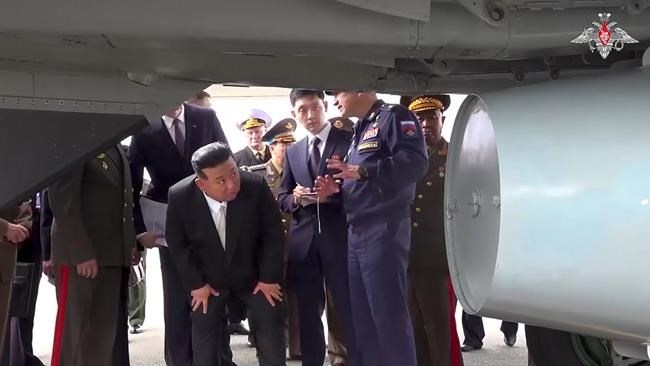
The commissioning of the Choe Hyon also comes as inter-Korean relations remain at a low point. Kim has repeatedly stated that he no longer recognizes the NLL, and analysts suggest North Korea may be preparing to formally declare a new maritime boundary that could encroach on waters controlled by South Korea. This move risks further escalation and potential military clashes in the disputed area.
Conclusion
North Korea's commissioning of the 5,000-ton destroyer Choe Hyon marks a significant step in its pursuit of a nuclear-armed navy and a more assertive maritime posture. While questions remain about the vessel's operational readiness, the move signals a clear strategic intent to expand military capabilities beyond land-based systems. As Pyongyang continues to develop larger ships and nuclear-powered submarines, the regional balance of power in Northeast Asia faces new challenges. The international community must remain vigilant and pursue diplomatic channels to manage this evolving threat while addressing the underlying security concerns that drive North Korea's military buildup.