US Lifts Iran Maritime Blockade; Tehran Pledges to Expedite Strait of Hormuz Transit Under New MoU
The United States has officially lifted its maritime blockade on Iran, and Tehran has announced measures to expedite transit through the Strait of Hormuz following the signing of a bilateral memorandum of understanding. This marks a significant step toward de-escalating regional tensions, though the agreement's implementation faces potential hurdles from ongoing Israeli military operations in southern Lebanon. The MoU establishes an immediate ceasefire and a 60-day negotiating timetable. However, Israel — not a party to the agreement — has rejected calls for withdrawal, introducing uncertainty into the broader peace process.
The United States has formally lifted its maritime blockade on Iranian ports, and Tehran has announced a significant acceleration of vessel transit through the Strait of Hormuz. This development follows the signing of a memorandum of understanding (MoU) between the two nations, marking a critical step in reducing long-standing geopolitical tensions in the Middle East. The agreement, which was electronically signed by US President Donald Trump and Iranian President Masoud Pezeshkian, establishes a broad framework for ceasefire and negotiation across multiple fronts.
Ending the Maritime Blockade
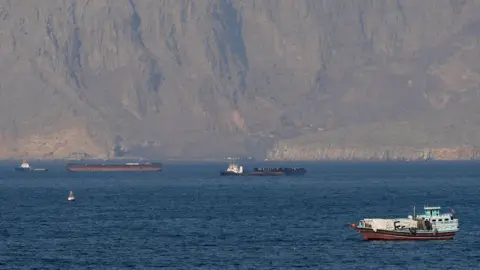
On Thursday, the US Central Command issued a statement confirming that all maritime interdiction operations targeting vessels entering or leaving Iranian ports and coastal waters had been terminated. The command posted on social media that "all US military blockade enforcement efforts have ceased," while noting that US naval forces would remain in the region to monitor compliance with the pact. This move effectively ends a period of heightened naval pressure that had raised risks of direct confrontation in the Persian Gulf.
Tehran Accelerates Hormuz Transit
On the same day, Iran's Supreme National Security Council (SNSC) ordered the expedited processing of passage requests through the Strait of Hormuz, as outlined in the MoU. Under the terms of the agreement, ships requesting passage will be exempt from transit fees for the initial 60-day period, with the Iranian government covering those costs. The SNSC confirmed that vessels must submit requests to the Persian Gulf Strait Authority (PGSA), which will enforce designated routes and schedules to ensure safety. Maritime traffic through the strait is expected to increase incrementally.
Broader Framework of the MoU
The MoU between Washington and Tehran is a 14-point document aimed at ending conflicts on multiple fronts, including the situation in Lebanon. It calls for an immediate ceasefire and establishes a 60-day negotiation timetable for a final settlement. President Trump, writing on his social platform, called for a "complete ceasefire on all fronts, including Lebanon, Hezbollah, and Israel," urging regional parties to honor their commitments.
Implementation Challenges
Despite the agreement, significant obstacles remain. Israeli Prime Minister Benjamin Netanyahu stated that Israeli forces would not withdraw from southern Lebanon, defying the MoU's call for the cessation of military operations. Israeli officials cited ongoing security needs, with troops deployed approximately 10 kilometers inside Lebanese territory. Lebanese President Joseph Aoun reported the conflict's heavy toll: more than 3,500 killed, over 11,000 injured, and around 68,000 homes destroyed.
The uncertainty in Lebanon has already impacted the MoU's implementation. A source familiar with the matter revealed that Iran's negotiating delegation postponed its planned trip to Switzerland because of continued Israeli military operations. Iran has communicated to the United States and mediators that developments in Lebanon are a core element of negotiations and will determine whether talks proceed. During a press briefing, US Vice President JD Vance criticized the Israeli government's reaction, calling it a "weird panic" and urging Israeli officials not to attack the administration of President Trump, who remains Israel's key international ally.

Conclusion
The lifting of the US maritime blockade and Iran's commitment to expedite Hormuz transit represent concrete steps toward de-escalation. While the MoU freezes active conflict rather than resolving underlying issues, the 60-day negotiating window offers a path forward. However, the refusal of Israel to withdraw from southern Lebanon and the postponement of negotiations highlight the inherent fragility of the agreement, making its successful implementation highly dependent on developments on the ground.