Read on bbc.com
Exhaustion and Despair in Tehran: Civilian Struggle Amidst Sustained Attacks
Residents of Tehran and Karaj report severe physical and psychological strain following over a week of Israeli and US military strikes. Interviews conducted by BBC Persian reveal widespread sleep deprivation, power outages, and property damage, compounding the trauma of recent anti-government protests. While some express defiance and hope for political change, others voice overwhelming fear and exhaustion as explosions draw closer to residential areas daily, highlighting the human cost of the ongoing conflict.
For over ten days, the nights in Tehran and the nearby city of Karaj have been shattered not by silence, but by the relentless percussion of airstrikes and missile impacts. According to firsthand accounts gathered by BBC Persian, the civilian population is reaching a breaking point, grappling with exhaustion, fear, and the fundamental disruption of daily life. The psychological toll of sustained military action, coupled with physical damage to infrastructure and homes, paints a grim picture of urban life under fire, where the simple act of sleeping has become a rare luxury.

The Unrelenting Assault on Daily Life
The Israeli military announced a "broad wave of strikes against terror targets in Tehran" beginning Monday evening, targeting facilities linked to Iran's Revolutionary Guards, including an underground weapons research complex and the Quds Force headquarters. These actions are part of a joint US-Israeli campaign initiated on February 28th, which has prompted retaliatory strikes from Iran. For residents, however, the geopolitical strategy translates into a terrifying and exhausting reality. One man in his 20s in Tehran told the BBC, "I'm feeling terrible. They hit a street near us today. I just want to be able to sleep tonight." This sentiment is echoed widely, with sleep deprivation emerging as a common and debilitating symptom of the sustained attacks.
Infrastructure Collapse and Sensory Overload
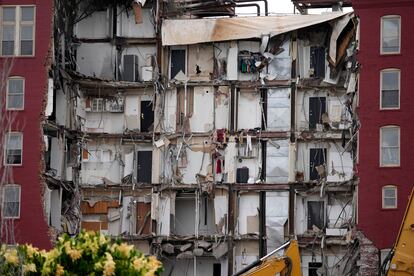
The strikes have severely damaged critical infrastructure, plunging parts of the cities into darkness and uncertainty. "I was in total darkness last night," reported a man in his 30s from Tehran. "The electricity went out and I had no idea what was happening." Others described temporary blackouts or dangerous power fluctuations. Beyond the loss of electricity, the sensory experience of the attacks is overwhelming. A woman in her 20s reported explosions "every few hours" and observed a strange white light in the sky, different from previous nights. In Karaj, videos show the night sky illuminated by blue and red glows following booms on the horizon, creating an apocalyptic atmosphere that erodes any sense of normalcy or safety.
A Spectrum of Civilian Responses: From Defiance to Despair
The civilian response to the crisis is not monolithic, reflecting deep pre-existing political fractures within Iranian society. For some, the violence is a painful but necessary price for potential political change. "Even if it takes a few weeks now, it's still better than spending a lifetime living with this system," said one young woman in Tehran, expressing a desire to see the end of the Islamic Republic. A restaurateur in her 50s in Karaj, who felt "the shadow of death" after a strike near her home, stated, "We are standing firm until the end to survive and to be free. Even if we are killed, it honestly does not matter compared to the lives that have already been lost."
Conversely, others are consumed by fear and fatigue, seeing themselves as perpetual victims of conflict. A man in his 20s from Karaj admitted, "I'm getting tired of this situation. The whole war is overwhelming." Another in Tehran, who was shot in the eye during the anti-government protests months earlier, poignantly summarized this feeling: "We are the victims. I have been harmed by the Islamic Republic, and because of it a war is now happening that is harming us again." His observation that "where missiles hit is getting closer and closer every day" underscores the escalating immediate physical threat to civilians.
The Compounding Trauma of Recent History
This current conflict layers fresh trauma upon recent wounds. The reference to the protest crackdown is critical context; the US-based group Human Rights Activists in Iran (HRANA) reported that at least 6,480 protesters were killed and 25,000 injured in the government's brutal response to demonstrations in December and January. For many, the current aerial attacks feel like a continuation of state-inflicted violence, albeit from external actors. The physical evidence of this dual trauma is literal, with residents reporting new cracks in their home's walls from nearby explosions, a stark metaphor for the fracturing of civilian life.

Conclusion: The Human Cost of Strategic Strikes
The accounts from Tehran and Karaj move the narrative beyond military briefings and geopolitical analysis to the human scale of conflict. The exhaustion is palpable—a profound fatigue born from sleepless nights, constant anxiety, and the destruction of routine. Whether residents respond with defiant hope for political change or with fearful exhaustion, they share the common experience of being caught in a devastating crossfire. As one man simply pleaded, "I just want this to end once and for all." His words stand as a powerful testament to the primary desire of civilians in any conflict zone: not victory for a particular side, but the return of peace and the basic ability to live, and sleep, without fear.