Read on PBS News
Supreme Court Justices Spar Over Emergency Orders: Jackson and Kavanaugh's Judicial Debate
Supreme Court Justices Ketanji Brown Jackson and Brett Kavanaugh engaged in a rare public debate over the court's use of emergency orders, particularly those favoring the Trump administration. The justices, who previously served together on the D.C. Circuit Court of Appeals, offered contrasting views on judicial intervention in ongoing cases during a memorial lecture. Jackson criticized the increasing frequency of emergency interventions as creating a 'warped' legal process, while Kavanaugh defended the court's actions as necessary responses to executive branch policy shifts. This exchange highlights fundamental tensions within the judiciary about the proper role of the Supreme Court in fast-moving political controversies.
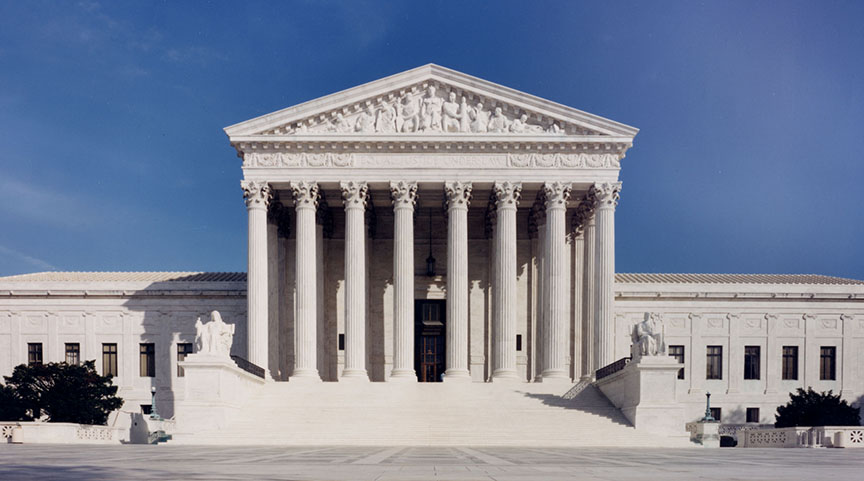
In a remarkable public exchange, Supreme Court Justices Ketanji Brown Jackson and Brett Kavanaugh recently debated one of the most contentious issues facing the modern judiciary: the Supreme Court's increasing use of emergency orders to allow presidential policies to take effect while legal challenges proceed. The setting was extraordinary—a federal courtroom filled with legal luminaries where the two justices, who once served together on the federal appeals court in Washington, offered fundamentally different perspectives on judicial restraint and intervention.
The Setting and Significance
The debate occurred during the annual Thomas A. Flannery Memorial Lecture, a gathering that brought together prominent members of the legal community. Justice Kavanaugh, appointed by President Donald Trump in 2018, and Justice Jackson, appointed by President Joe Biden in 2022, sat just a few feet apart in the same courtroom where they previously heard cases together on the D.C. Circuit Court of Appeals. Their physical proximity underscored their shared judicial background even as their perspectives diverged sharply on matters of judicial philosophy and practice.
Justice Jackson's Critique of Emergency Orders
Justice Jackson emerged as a forceful critic of what she described as an "unfortunate problem" in the court's recent jurisprudence. She argued that the increasing willingness to intervene in cases through emergency orders creates a "warped" legal process. "The administration is making new policy ... and then insisting the new policy take effect immediately, before the challenge is decided," Jackson stated, drawing applause from the audience. Her central concern revolves around the court essentially predicting case outcomes before arguments have been fully developed, potentially undermining the integrity of the judicial process.

Justice Kavanaugh's Defense
Justice Kavanaugh offered a more measured defense of the court's emergency order practices. He noted that the Justice Department's rush to the Supreme Court for emergency relief is not unique to any particular administration. Kavanaugh contextualized the issue within broader political realities, explaining that as enacting legislation through Congress becomes more difficult, administrations increasingly "push the envelope in regulations." He also pointed out that critics of recent orders had raised few objections when the court allowed challenged Biden administration policies to proceed during litigation.
Broader Judicial Context
The audience included federal judges who have been directly involved in high-profile challenges to administration policies, including U.S. District Judge James Boasberg, whose clash with the Trump administration over deportation flights prompted Trump to call for his impeachment. Also present was U.S. District Judge Royce Lamberth, who recently ruled against actions taken by Trump appointee Kari Lake at the U.S. Agency for Global Media. While neither justice mentioned specific judges by name, the presence of these jurists highlighted how lower court decisions frequently trigger the emergency appeals that reach the Supreme Court.

Fundamental Questions About Judicial Role
At the heart of the debate lies a fundamental question about the Supreme Court's proper role: "Should the Supreme Court be superintending the lower courts when they are hearing and deciding the issues?" Jackson asked. This question reflects ongoing tensions between judicial deference to lower court proceedings and the Supreme Court's responsibility to provide definitive guidance on important legal questions. Kavanaugh acknowledged the complexity of these issues, noting that cases are often close and difficult, and that "none of us enjoys this" aspect of the court's work.
Conclusion: A Window into Judicial Philosophy
The exchange between Justices Jackson and Kavanaugh provides valuable insight into how Supreme Court justices approach one of the most consequential aspects of their work. Their debate reflects broader divisions within the court about the appropriate balance between judicial restraint and intervention, particularly in politically charged cases. As administrations continue to test the boundaries of executive authority through regulatory action, the Supreme Court's approach to emergency orders will remain a critical area of judicial practice and public concern. The respectful but firm disagreement between these two justices demonstrates how shared professional backgrounds can coexist with fundamentally different approaches to the most challenging questions of constitutional law.