Read on bbc.com
Ancient Elephant Bone Discovery: First Hard Evidence of Hannibal's War Elephants
Archaeologists in southern Spain have unearthed an elephant foot bone that may provide the first concrete physical evidence supporting the legendary accounts of General Hannibal's use of war elephants. The discovery, detailed in the Journal of Archaeological Science: Reports, comes from an Iron Age site near Cordoba and has been carbon-dated to the period of the Second Punic War. This rare find challenges long-held assumptions about the scarcity of elephant remains in Europe and offers new insights into Carthaginian military logistics and the historical accuracy of ancient warfare narratives.
The legendary crossing of the Alps by Carthaginian General Hannibal and his army of war elephants has captivated historians and scholars for centuries, existing primarily in ancient texts and artistic depictions. Now, a remarkable archaeological discovery in southern Spain may finally provide the tangible proof that has eluded researchers for generations. An elephant foot bone, excavated from an Iron Age site, stands as a potential first piece of hard evidence that these colossal creatures were indeed part of Hannibal's military campaigns during the Punic Wars.
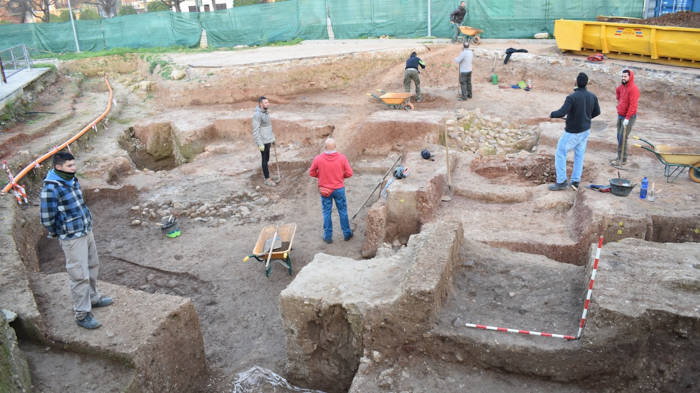
The Archaeological Discovery at Colina de los Quemados
Led by Professor Rafael M. Martínez Sánchez, a team of archaeologists made the significant find during excavations in 2020 at a location known as Colina de los Quemados near Cordoba, Spain. The discovery site yielded more than just the elephant bone—artillery, coins, and ceramics were also uncovered, collectively pointing to the area having been a battleground. The elephant bone itself, a 10cm cube-shaped specimen, was found beneath a collapsed wall, preserved through the centuries in a context that suggests it was not transported for decorative or craft purposes.
The rarity of such a discovery cannot be overstated. As noted in the research paper published in the Journal of Archaeological Science: Reports, "Beyond ivory, the discovery of elephant remains in European archaeological contexts is exceptionally rare." This scarcity has long fueled skepticism about the historical accounts of Hannibal's use of elephants, making this find particularly significant for classical studies and military history.

Scientific Analysis and Dating
To establish the bone's provenance and age, researchers employed rigorous scientific methods. Carbon dating techniques were applied to the specimen, yielding results that place it within the timeframe of the Second Punic War (218-201 BCE). This period aligns precisely with Hannibal's famous military campaign against Rome, during which he is said to have crossed the Alps with 37 elephants in 218 BCE.
Further comparative analysis was conducted to identify the animal species. The research team examined the bone against known samples from modern elephants and extinct steppe mammoths. While the exact species determination remains challenging, the evidence strongly suggests the bone belonged to an elephant rather than a mammoth, supporting the connection to Hannibal's African war elephants imported from Carthage (modern-day Tunisia).
Historical Context: Hannibal's Military Campaign
Hannibal Barca, often regarded as one of the most brilliant military commanders of classical antiquity, led the Carthaginian forces against the Roman Republic in a series of conflicts known as the Punic Wars. His most celebrated maneuver was the audacious crossing of the Alps from Gaul (modern France) into Italy, a feat that included transporting war elephants—animals native to Africa and Asia—through treacherous mountain terrain.
The strategic use of elephants in ancient warfare was primarily psychological and tactical. These massive creatures could break enemy formations, trample soldiers, and create chaos on the battlefield. However, their presence in European military campaigns has been documented primarily through secondary sources and artistic representations rather than physical evidence. As the research paper concludes, this bone "could potentially embody the first known relic − so sought after by European scholars of the Modern Age − of the animals used in the Punic Roman wars for the control of the Mediterranean."
Implications and Significance
The discovery carries multiple layers of significance for historical scholarship. First, it provides physical corroboration for ancient accounts that have been subject to historical debate. While the bone likely comes from an animal that died before reaching the Alps (as noted in the BBC report), it nevertheless establishes the presence of war elephants in Hannibal's European campaign.
Second, the find sheds light on Carthaginian military logistics. Transporting elephants from North Africa to Europe required sophisticated planning and resources. The researchers note that "as non-native species and the largest living terrestrial animals, these imported beasts would have required transportation by ship," highlighting the advanced logistical capabilities of the Carthaginian military.
Finally, this discovery opens new avenues for archaeological research in Mediterranean history. It demonstrates how even small, seemingly insignificant finds can reshape our understanding of major historical events and challenge assumptions about what evidence survives through time.
Conclusion
The elephant foot bone discovered in southern Spain represents more than just an archaeological curiosity—it serves as a tangible link to one of history's most legendary military campaigns. While questions remain about the specific elephant species and its exact role in Hannibal's army, the find provides the first concrete physical evidence supporting ancient accounts of war elephants in European battles. As research continues and more context is uncovered, this discovery may help bridge the gap between historical legend and archaeological reality, offering new insights into the complex military strategies of the ancient world and the remarkable capabilities of classical civilizations to project power across continents with both human and animal forces.