Read on nature.com
AI Unlocks the Secrets of an Ancient Roman Game Board
A mysterious stone object discovered in the Netherlands, long suspected to be a game board, has been conclusively identified through artificial intelligence. Researchers from Leiden University employed AI simulations to analyze the microscopic patterns on the artifact, revealing it was most likely a 'blocking game'—a type of board game previously unknown in Europe before the Middle Ages. This discovery, detailed in the journal Antiquity, reshapes our understanding of Roman leisure activities and the historical spread of gaming culture.
The intersection of cutting-edge technology and ancient history has yielded a fascinating discovery. A perplexing Roman-era object, unearthed in what is now the southern Netherlands, has finally been identified with the help of artificial intelligence. Long thought to be some form of board game, AI-powered analysis has now provided definitive evidence, classifying it as a specific type of game that challenges previous historical assumptions about leisure in Roman Europe.
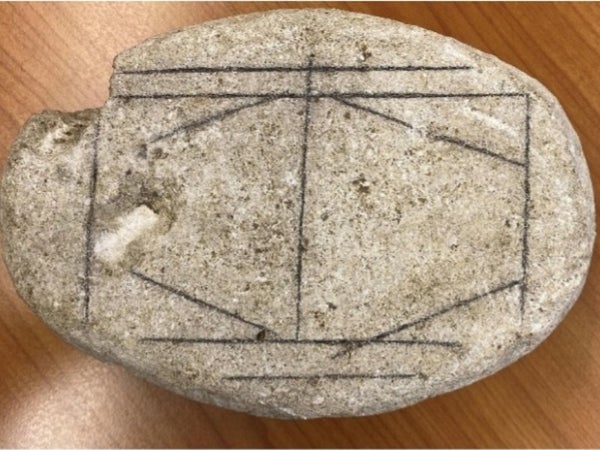
The Mysterious Artifact
The object in question is a stone slab featuring intricate, microscopic patterns. For years, archaeologists speculated it was used for gaming, but the exact rules and type of game remained elusive. Traditional archaeological methods could only take the analysis so far, leaving the artifact's true purpose shrouded in mystery. The physical characteristics suggested deliberate human design, but without a clear cultural reference or comparable find, its function was educated guesswork at best.
AI as an Archaeological Tool
The breakthrough came when researchers, led by Walter Crist at Leiden University in the Netherlands, turned to artificial intelligence. By creating detailed digital models of the stone's surface, they could feed the pattern data into AI simulation systems. These systems were tasked with testing various ancient gaming rules against the physical layout of the board. The AI essentially played countless simulated games to see which ruleset best fit the board's design and wear patterns, a task far too vast and complex for manual human analysis.

Revealing a 'Blocking Game'
The AI simulations produced a conclusive result. The patterns on the stone were most consistent with a 'blocking game.' In this genre of game, players typically move pieces around a board with the strategic goal of obstructing their opponent's movement, rather than capturing pieces. The significance of this identification is profound. According to the research published in Antiquity, blocking games were not previously known to have existed in Europe until the Middle Ages, centuries after the Roman period. This discovery therefore pushes back the timeline for this type of game in the region, suggesting a richer and more diverse gaming culture among the Romans than previously documented.
Implications for History and Archaeology
This finding does more than just label an old object; it opens a new window into daily Roman life. Games are a universal aspect of human culture, reflecting social interaction, strategic thinking, and leisure. Identifying a specific game type allows historians to better understand how people spent their free time, how games might have spread through trade or military movement, and the cognitive skills they valued. Furthermore, the successful application of AI in this context sets a powerful precedent. It demonstrates how machine learning can be used to test hypotheses against complex archaeological data, offering a new, rigorous tool for interpreting artifacts that defy conventional analysis.
/https://tf-cmsv2-smithsonianmag-media.s3.amazonaws.com/filer_public/3b/83/3b837e13-26b6-4628-9bf1-277e709498b0/rapphoto.jpeg)
Conclusion
The story of the Roman game board is a perfect example of how the past and future can collaborate to reveal hidden truths. A silent stone artifact, waiting for centuries, finally met its interpreter in the form of artificial intelligence. This synergy between archaeology and technology has not only solved a long-standing puzzle but has also expanded our knowledge of Roman social history. It proves that some of history's most intriguing answers are not buried deeper, but require us to look at old evidence in brilliantly new ways. As AI tools become more sophisticated, we can expect many more silent artifacts from across the globe to finally tell their stories.