Read on bbc.com
Fela Kuti Makes History as First African to Receive Grammy Lifetime Achievement Award
Nearly three decades after his death, Nigerian music legend Fela Kuti is set to posthumously receive the Grammy Lifetime Achievement Award, marking a historic first for an African artist. The recognition comes as global appreciation for African music reaches new heights, with Fela's pioneering Afrobeat sound having inspired the modern Afrobeats genre. This article explores Fela Kuti's enduring legacy, his revolutionary impact on music and politics, and what this long-overdue recognition means for African music on the world stage.
In a landmark moment for African music, the late Nigerian icon Fela Kuti will posthumously receive the Grammy Lifetime Achievement Award, becoming the first African artist to earn this prestigious honor. The announcement comes almost 30 years after his death in 1997 at age 58, representing what many see as long-overdue recognition for an artist whose influence has only grown in the decades since his passing.

The Significance of the Recognition
For Fela Kuti's family, friends, and global fanbase, this Grammy recognition represents more than just another award. As his son Seun Kuti told the BBC, "Fela has been in the hearts of the people for such a long time. Now the Grammys have acknowledged it, and it's a double victory." The award brings "balance to a Fela story" that has long been celebrated by fans worldwide but only recently gained formal institutional recognition from the global music industry.
Rikki Stein, Fela's longtime friend and manager, captured the sentiment perfectly when he described the recognition as "better late than never." He noted that "Africa hasn't in the past rated very highly in their interests. I think that's changing quite a bit of late," pointing to the Grammys' introduction of the Best African Performance category in 2024 as evidence of this shifting landscape.
Fela Kuti's Enduring Legacy
Fela Anikulapo Kuti was far more than just a musician. He was a cultural theorist, political agitator, and the undisputed architect of Afrobeat—a genre distinct from but foundational to the modern Afrobeats movement. Across a career spanning roughly three decades, Fela released more than 50 albums that fused music with ideology, rhythm with resistance, and performance with protest.
His music was a powerful blend of West African rhythms, jazz, funk, highlife, extended improvisation, call-and-response vocals, and politically charged lyricism. He pioneered the Afrobeat genre alongside drummer Tony Allen, creating a sound that would influence generations of artists across Africa and the diaspora.
Political Activism and Personal Sacrifice
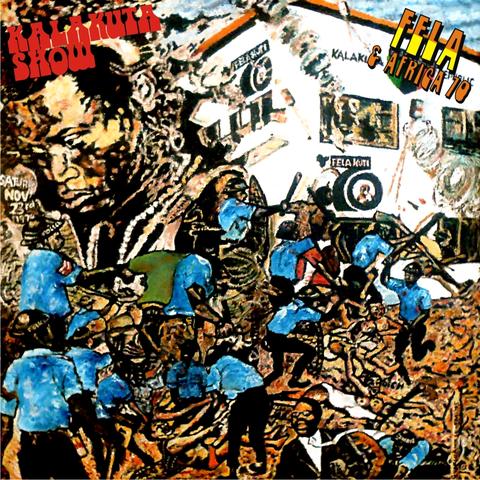
Fela Kuti's music incurred the wrath of Nigeria's military regimes, particularly after the 1977 release of his album "Zombie," which satirized government soldiers as obedient, brainless enforcers. The subsequent raid on his Lagos compound, known as the Kalakuta Republic, resulted in the property being burned, residents brutalized, and his mother, Funmilayo Ransome-Kuti, later dying from injuries sustained during the assault.
Rather than retreat, Fela responded through music and defiance. He took his mother's coffin to government offices and released the song "Coffin for Head of State," turning personal grief into powerful political protest. His ideology blended pan-Africanism, anti-imperialism, and African-rooted socialism, with influences from his politically active mother and American-born activist Sandra Izsadore.
Musical Evolution and West African Roots
Fela Kuti's musical evolution was shaped not only by Nigeria but also by Ghanaian highlife music. During the 1950s and 1960s, highlife pioneers like ET Mensah, Ebo Taylor, and Pat Thomas created a defining sound across West Africa that deeply influenced Fela's early musical direction. He spent time in Ghana absorbing highlife's structure, horn phrasing, and dance-oriented arrangements before fusing it with other influences.
This makes Afrobeat not only Nigerian but West African, pan-African, and diasporic in origin, carrying Ghana's musical imprint at its foundation. The DNA of highlife can be heard in Afrobeat's melodic sensibility and its balance between groove and sophistication.
Performance and Visual Identity
On stage, Fela Kuti cut an unmistakable figure—often bare-chested or draped in West African wax-print fabric, with a crisp Afro hairstyle, saxophone in hand, and eyes filled with intensity. He commanded large bands of more than 20 musicians, and his performances at the Afrika Shrine in Lagos were legendary, blending concert, political rally, and spiritual ceremony.
As Stein recalls, "When Fela played, nobody applauded. The audience wasn't separate. They were part of it." Music was not spectacle but communion. His visual identity was further shaped by artist Lemi Ghariokwu, who created 26 of his album covers between 1974 and 1993.

Continuing Influence and Family Legacy
Today, Fela Kuti's music remains popular with millions worldwide, and his influence is audible in modern artists from Burna Boy to Kendrick Lamar. Award-winning actor and DJ Idris Elba, a huge fan, has curated an official vinyl box set and publicly compared Fela to icons like Sade and Frank Sinatra to illustrate his unique sound.
Seun Kuti, who was just 14 when his father died, now leads Egypt 80, continuing the musical legacy. He recalls that "Fela never made me feel like I was a child. He didn't hide anything from me. He talked about everything openly." What stayed with him most was "the human part of him, leadership, musicianship, fatherhood—that was the epitome of who he was."
Conclusion: A Legacy of Liberation
As Stein notes, "He wasn't doing what he was doing to win awards. He was interested in liberation. Freeing the mind." This Grammy Lifetime Achievement Award, while significant, represents institutional recognition of what fans have known for decades: Fela Kuti was a revolutionary artist whose impact transcends music. His fearless determination, musical innovation, and unwavering commitment to social justice created a legacy that continues to inspire new generations nearly 30 years after his death.
The award ceremony will see Fela Kuti's family, friends, and colleagues accepting the honor on his behalf, bringing his story full circle from underground revolutionary to globally recognized icon. As Ghariokwu observes, "Fela has been an ancestor for 28 years. His legacy is growing by the day. This is immortality."