Read on France 24
Iran's 1979 Revolution Anniversary: A Nation Under Dual Pressure
Iran recently commemorated the 47th anniversary of its 1979 Islamic Revolution, an event marked by significant internal and external tensions. The theocratic government faces mounting pressure from a domestic public outraged by a violent crackdown on protests, while simultaneously navigating renewed geopolitical threats from the United States. This article examines the dual challenges confronting Iran's leadership as it seeks to project strength on the anniversary of its founding while managing profound societal discontent and international isolation.
On a recent Wednesday, Iran marked the 47th anniversary of the 1979 Islamic Revolution, a pivotal event that overthrew the monarchy and established the current theocratic system. This year's commemoration unfolded against a backdrop of unprecedented strain, as the government confronts simultaneous crises from within its borders and beyond. The official celebrations aimed to project national unity and revolutionary fervor, yet they were shadowed by the reality of a nation grappling with internal dissent and external geopolitical maneuvering.

The Legacy of 1979 and Current Political Reality
The 1979 revolution fundamentally reshaped Iran's political landscape, replacing the Western-aligned Pahlavi dynasty with an Islamic Republic governed by a Supreme Leader. For nearly five decades, this system has endured through war, sanctions, and periodic unrest. The annual anniversary serves as a cornerstone of state propaganda, reinforcing the revolutionary narrative and the legitimacy of the clerical establishment. However, the 47th anniversary arrives at a moment when this legitimacy is being challenged more forcefully than perhaps at any time since the revolution's early years.
Internal Pressure: Public Anger and Protest Crackdowns
A primary source of pressure stems from the Iranian public itself. Widespread protests have erupted across the nation in recent years, driven by economic hardship, political repression, and social restrictions. The government's response, described by international observers and domestic critics as a "bloody crackdown," has fueled public anger and deepened the rift between the state and a significant portion of its citizenry. This domestic discontent forms a critical undercurrent to the anniversary events, suggesting that the revolutionary compact between the people and the state is under severe stress.
External Pressure: Renewed U.S. Posturing
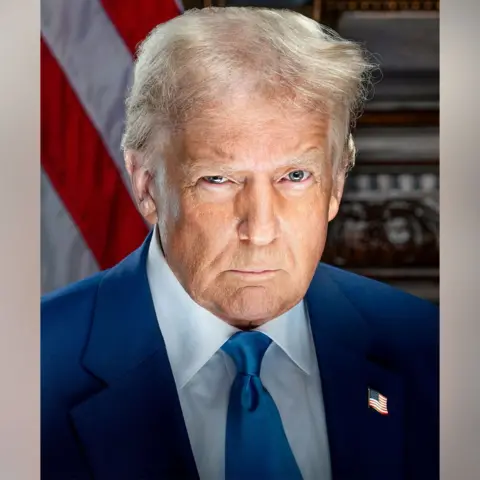
Compounding the internal challenges is renewed external pressure from the United States. According to reports, former U.S. President Donald Trump suggested deploying another aircraft carrier group to the Middle East. Such a move represents a significant escalation in military posturing and is interpreted as a direct threat to the Iranian regime. This external pressure revives longstanding tensions and places the Iranian military and diplomatic corps on high alert, forcing the government to allocate resources and attention to national defense at a time of internal fragility.
The Dual Challenge for Iran's Theocracy
The convergence of these pressures creates a dual challenge for Iran's leadership. On one front, it must manage and suppress domestic dissent to maintain internal control. On the other, it must navigate a hostile international environment and respond to military threats from a superpower. This balancing act is extraordinarily difficult; heavy-handed internal security measures can further alienate the population, while aggressive foreign posturing can invite devastating economic sanctions or military conflict. The anniversary celebrations, therefore, are not just a look backward but a high-stakes performance of resilience aimed at both domestic and international audiences.

Looking Forward: Implications for Regional Stability
The situation has profound implications for regional and global stability. A Iran that feels besieged both internally and externally may adopt more risk-acceptant or aggressive foreign policies, potentially destabilizing the already volatile Middle East. The potential for miscalculation is high, whether in confronting protest movements at home or in interpreting the intentions of foreign powers. The international community watches closely, as the outcome of this pressure will influence everything from global oil markets to the prospects for nuclear diplomacy.
In conclusion, the 47th anniversary of Iran's Islamic Revolution reveals a regime at a critical juncture. The revolutionary state survives, but it is besieged by the very people it claims to represent and by an external adversary seeking to curb its influence. How the theocracy manages this dual pressure—whether through reform, intensified repression, or strategic diversion—will determine not only its own future but also the geopolitical landscape of the Middle East for years to come. The anniversary is less a celebration of past victory and more a testament to the enduring and complex struggles that define contemporary Iran.