
 Read on the Guardian
The European Defence Dilemma: Can Europe Stand Alone Without the US?
NATO Secretary General Mark Rutte's stark dismissal of European strategic autonomy has ignited a critical debate. As the specter of a second Trump presidency looms, European leaders are grappling with the urgent need to reduce military dependency on the United States. This article examines the growing calls for a stronger European defence pillar, the immense practical and financial challenges involved, and the divergent visions for achieving credible deterrence in an increasingly unstable world. The path forward requires unprecedented coordination, investment, and a fundamental rethinking of European strategic interests.
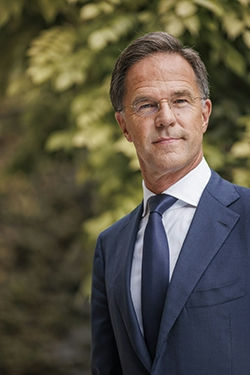
The blunt assessment from NATO Secretary General Mark Rutte that Europe cannot defend itself without the United States has laid bare a fundamental vulnerability at the heart of European security. His comments, delivered to European Parliament members in Brussels, dismissed the prospect of strategic autonomy as a dream, highlighting that replacing the US nuclear deterrent alone would require doubling current defence spending. This stark reality check arrives at a pivotal moment, as the potential return of Donald Trump to the White House forces a long-deferred conversation about European self-reliance. The age of unquestioned American security guarantees is fading, compelling Europe to confront its fragmented capabilities and define its own defence future.
The Stark Reality of Dependency
Rutte's comments, as reported by The Guardian, underscore a deep-seated military and strategic reliance. Europe's defence architecture, built over seven decades within the NATO framework, is fundamentally integrated with and dependent on American capabilities. Critical "strategic enablers"—including intelligence, satellite networks, long-range missiles, airlift capacity, and ballistic missile defence—are domains where US dominance is overwhelming. As defence expert Camille Grand, a former NATO assistant secretary-general, notes, achieving autonomy is not a switch that can be flipped on a specific date but a sustained effort requiring the right capabilities. The dependency is so entrenched that even with increased spending, Europe would likely need continued access to some American assets beyond 2030, the date by which policymakers aim to establish "credible deterrence" against potential threats like Russia.
Divergent European Visions
The response from European capitals to Rutte's provocation reveals a spectrum of ambition and frustration. France's Foreign Minister, Jean-Noël Barrot, publicly chided the NATO chief, asserting that "Europeans can and must take charge of their own security." This aligns with a long-standing French advocacy for European strategic autonomy. Spain's Foreign Minister, José Manuel Albares, went further, explicitly calling for a "European army," while acknowledging such a project cannot be built overnight. However, the concept of a European army remains nebulous, raising more questions than answers. Is it an EU force, a pan-European coalition, a new command structure, or an enhancement of existing frameworks? As Sophia Besch of the Carnegie Endowment observes, the idea is vague enough to avoid detailed planning, serving as a visionary goal for supporters and a symbol of overreach for critics.

The Immense Practical Hurdles
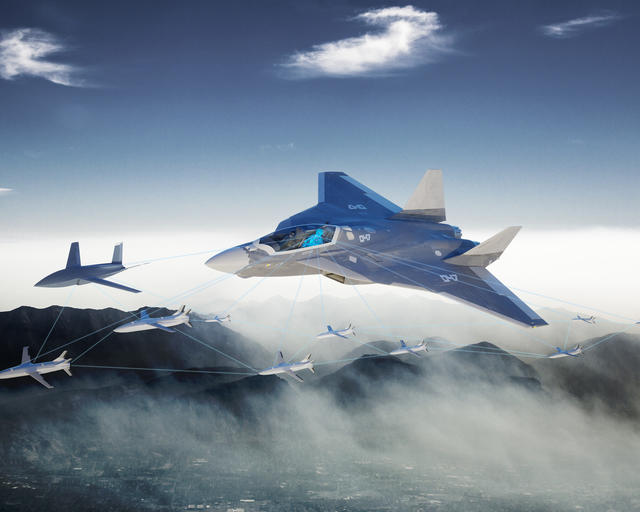
Moving from rhetoric to reality involves overcoming monumental practical obstacles. The first is financial. While the NATO alliance has pledged to increase defence spending to 5% of national income by 2035, and the EU has launched an €800 billion defence spending plan, money alone is insufficient if spent incoherently. Europe's defence landscape is plagued by costly duplication and fragmentation. A report by former Italian Prime Minister Mario Draghi highlighted that EU member states provided Ukraine with 10 different types of 155mm howitzers, creating serious logistical problems. Similarly, European nations operate 12 different main battle tank models, compared to a single standard model used by the US. This lack of standardization severely hampers interoperability and battlefield effectiveness. Troubled joint projects, like the €100 billion Franco-German fighter jet initiative now at risk of being scaled down, exemplify the mistrust and coordination failures that stymie progress.
Redefining Strategic Success
The core challenge may be conceptual. Besch argues that Europe is asking the wrong question by focusing on whether it can replace the US in every capacity. This standard, she suggests, sets Europe up for failure. Instead, the continent must first define its own strategic interests and the specific security tasks it needs to perform independently. This could mean developing a European concept of nuclear deterrence or investing in "cheaper, faster" systems to safeguard interests from the Arctic to the Pacific, rather than attempting to replicate the entire US military apparatus. The goal should not be autarky but the development of a robust, complementary European pillar within NATO that can act decisively when American support is uncertain or unavailable. This requires a fundamental shift in strategic thinking, moving beyond a reactive posture shaped by Washington's priorities.
The Path Forward
The consensus, as voiced by EU foreign policy chief Kaja Kallas, is that "Europe must step up." The task is to translate political will into coordinated capability development. This demands not just increased budgets but a ruthless prioritization of joint projects, standardization of equipment, and the nurturing of a truly European defence technological and industrial base. It also requires an honest dialogue with the United States about a managed transition toward a more balanced transatlantic partnership. The threat environment, with a revanchist Russia committed to long-term aggression, provides a compelling imperative. As former Swedish Foreign Minister Tobias Billström notes, Europe must be prepared to defend itself for the foreseeable future, regardless of the US political climate. The dream of autonomy may be distant, but the necessity of pursuing it with concrete, coordinated action has never been clearer.



/dq/media/media_files/2024/10/23/Be5BH7dOooLeTf2cQcjX.png)
