Burkina Faso Dissolves Political Parties in State Rebuilding Effort
Burkina Faso's military-led government has issued a decree dissolving all political parties, citing a review that found the multiplication of parties had fueled divisions and weakened social cohesion. Interior Minister Emile Zerbo stated the move is part of a broader effort to 'rebuild the state' following alleged widespread abuses and dysfunction in the country's multiparty system. This action follows years of suspension since the 2022 coup and occurs amid an ongoing crackdown on dissent as the government struggles with insurgencies linked to al-Qaeda and ISIL.
In a significant move to reshape its political landscape, Burkina Faso's military-led government has formally dissolved all political parties. The decision, announced by Interior Minister Emile Zerbo, is framed as a critical step in a broader state-rebuilding initiative. According to a government review cited by Zerbo, the proliferation of political factions had exacerbated national divisions and eroded the social cohesion necessary for stability, particularly as the country contends with severe security challenges.
The Decree and Its Justification
The council of ministers passed the decree on Thursday, formally disbanding all political parties and political formations. This action legally finalizes what had been a de facto reality since the military coup in September 2022, when political activities were forced to suspend. All assets belonging to these parties are now set to be transferred to the state. Before the coup, Burkina Faso's political scene was highly fragmented, with more than 100 registered political parties and 15 represented in parliament following the 2020 general election.
Interior Minister Zerbo explicitly linked the dissolution to the need for national unity. He argued that the previous multiparty system was characterized by dysfunction and alleged abuses, which hindered effective governance. In the context of an ongoing struggle against insurgencies linked to al-Qaeda and ISIL (ISIS), the government presents a consolidated, non-partisan administration as essential for security and state survival.
Context of Military Rule and Regional Shifts
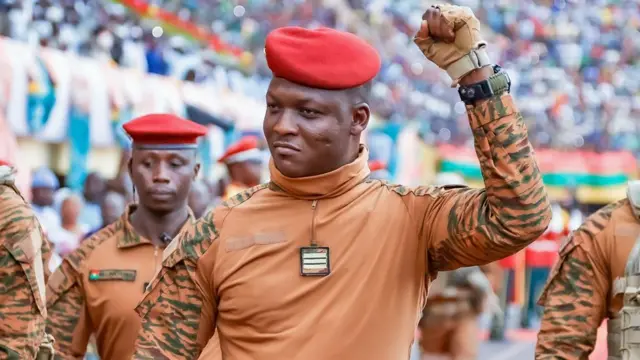
Burkina Faso is currently led by Captain Ibrahim Traore, who seized power in the September 2022 coup. This event occurred just eight months after an earlier military coup had overthrown democratically elected President Roch Marc Kabore. The current junta has pursued a dramatic shift in foreign policy, cutting ties with former colonial ruler France and turning to Russia for security support and cooperation.

This geopolitical realignment is institutionalized through the Alliance of Sahel States (AES), a bloc formed with neighboring Mali and Niger—both also ruled by military governments. The AES aims to strengthen economic and military cooperation among the three nations, creating a united front independent of Western influence. The dissolution of political parties aligns with the centralizing, security-first governance model seen across the AES partners.
Crackdown on Dissent and Information
The decree to dissolve parties is not an isolated act but part of a wider pattern of restricting dissent and controlling information. In 2024, as part of its crackdown, the government ordered internet service providers to suspend access to the digital platforms of major international media outlets and watchdogs, including the BBC, Voice of America, and Human Rights Watch. These measures reflect a governance approach that prioritizes control and a singular narrative, especially regarding the security situation and the government's performance.
By eliminating organized political opposition, the junta further consolidates its authority. The move effectively removes a potential platform for criticism and alternative policy proposals, centralizing all political discourse within the framework established by the military government. Supporters of the decree argue it removes obstacles to decisive action against jihadist threats, while critics see it as the final step in dismantling democratic institutions.
Implications for Governance and Social Cohesion
The government's stated goal is to rebuild state institutions and foster national unity. However, the method—abolishing the entire multiparty system—raises significant questions about long-term stability and inclusive governance. While the immediate aim may be to present a unified front against insurgency, the absence of formal political channels could suppress legitimate grievances and limit civic participation.
The transfer of party assets to the state also increases the government's resource control, potentially strengthening its administrative and patronage networks. The success of this state-rebuilding project will likely be judged on two fronts: its effectiveness in improving security and its ability to deliver tangible economic and social benefits to the Burkinabè population without the checks and balances of a political opposition.
In conclusion, the dissolution of political parties in Burkina Faso marks a definitive turn away from pluralistic politics. Framed as a necessary measure for unity and state survival amid security crises, it consolidates the military government's power and aligns with its broader geopolitical shift towards Russia and regional alliances like the AES. The long-term impact on social cohesion and national stability remains to be seen, as the country navigates its complex challenges under a new, centralized model of governance.


/dq/media/media_files/2024/10/23/Be5BH7dOooLeTf2cQcjX.png)