Read on bbc.com
Kim Ju Ae Designated as North Korea's Heir: South Korean Intelligence Assessment
South Korea's National Intelligence Service has informed lawmakers that North Korean leader Kim Jong Un has designated his teenage daughter, Kim Ju Ae, as his political successor. The assessment is based on her increasingly prominent public appearances at high-profile events, including a visit to Beijing and military inspections. This development raises significant questions about succession in North Korea's patriarchal society and the future direction of the isolated regime under potential female leadership.
South Korea's primary intelligence agency has made a significant declaration regarding the future leadership of North Korea. According to reports from lawmakers briefed by the National Intelligence Service (NIS), North Korean leader Kim Jong Un has officially designated his teenage daughter, Kim Ju Ae, as his political heir. This assessment marks a pivotal development in understanding the secretive succession plans within the Kim dynasty, which has ruled North Korea for three generations.
The Intelligence Assessment
On Thursday, South Korean lawmakers revealed details from a briefing by the National Intelligence Service regarding North Korea's succession plans. According to lawmaker Lee Seong-kwen, the NIS stated that Kim Ju Ae has progressed from being "trained" as a potential successor to the stage of "successor designation." This assessment is based on what the agency described as "a range of circumstances" including her increasingly prominent public presence at official events over recent months.
The intelligence agency specifically noted that signs have been detected of Ju Ae voicing her opinion on certain state policies, indicating her growing involvement in governance matters. This represents a significant shift in her role within the North Korean power structure and suggests she is being prepared for eventual leadership responsibilities.
Kim Ju Ae's Public Profile
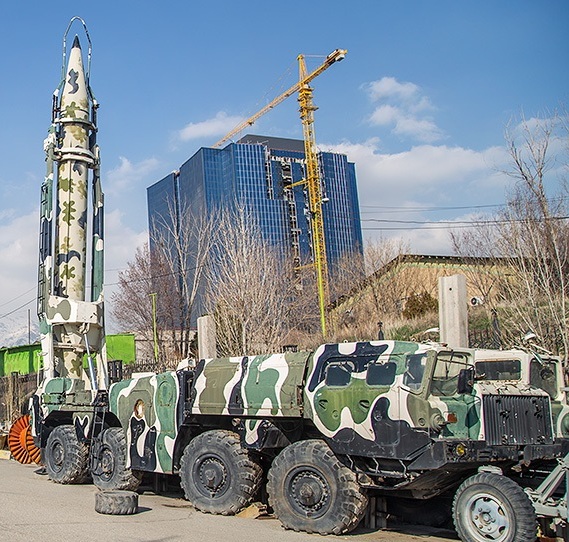
Kim Ju Ae, believed to be approximately 13 years old, has emerged from complete obscurity to become a regular presence in North Korean state media over the past two years. Her first appearance on state television occurred in 2022 when she was shown inspecting North Korea's latest intercontinental ballistic missile while holding her father's hand. Since then, she has made frequent appearances that have served to soften her father's image as a ruthless dictator.
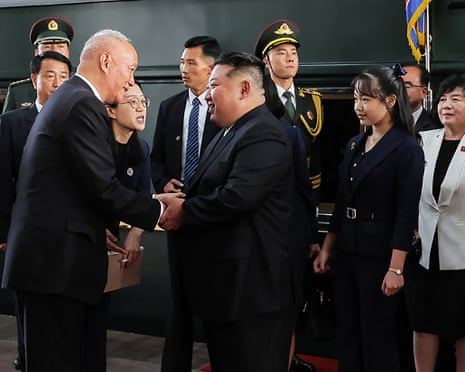
Her public profile reached new heights in September when she accompanied her father to Beijing for China's largest-ever military parade, marking her first known trip abroad. During this visit, she was photographed stepping off Kim Jong Un's armored train at Beijing Railway Station, demonstrating her inclusion in high-level diplomatic engagements.

Symbolic Significance of Public Appearances
In North Korea, where state media photographs carry substantial symbolic weight, the positioning of individuals in official imagery is carefully choreographed to convey political messages. Recent months have shown Ju Ae standing taller than her father and walking beside him rather than following him—a significant departure from protocol that typically reserves such prominent positioning exclusively for Kim Jong Un himself.
Lawmaker Park Sun-won noted that the role Ju Ae has taken on during public events indicates she has started to provide policy input and is being treated as the de facto second-highest leader. These visual cues, combined with her attendance at major military and political events, form the basis of South Korean intelligence's assessment regarding her designated successor status.
Questions and Implications
The designation of Kim Ju Ae as heir raises several important questions about North Korea's future. First, it is puzzling why a daughter would be selected above an older son in North Korea's deeply patriarchal society. The NIS believes Kim Jong Un has an older son who has never been acknowledged or shown in North Korean media, making Ju Ae's selection particularly noteworthy.
Second, Kim Jong Un's decision to designate a 13-year-old as his heir while he remains relatively young and healthy suggests either concerns about his own longevity or a desire to establish succession plans early to ensure regime stability. The upcoming Workers' Party Congress, scheduled for later this month, may provide further clues about these plans as Pyongyang outlines its priorities for the next five years.
Historical Context and Precedents
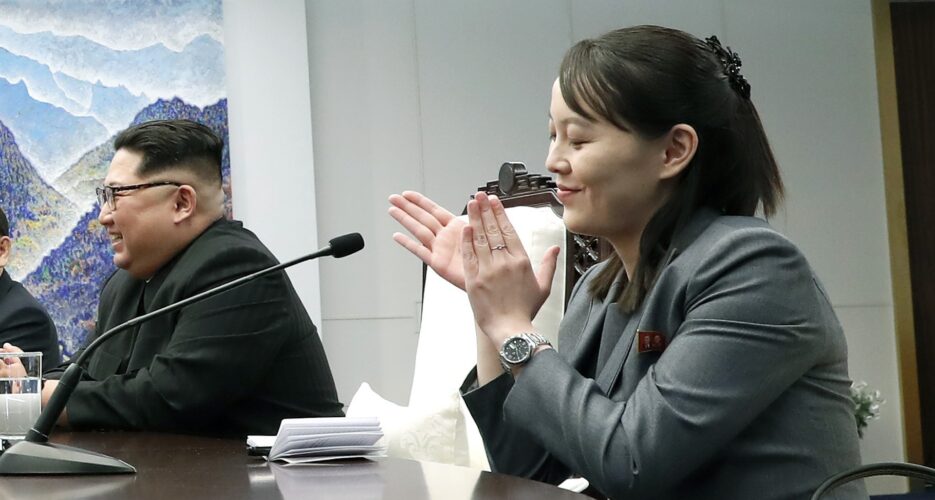
While female leadership would represent a departure from North Korea's traditional gender roles, there is precedent for female authority within the regime. Kim Yo Jong, Kim Jong Un's sister, currently holds a senior position in the Central Committee of the Workers' Party of Korea and is reported to have significant influence over her brother. Her prominent role demonstrates that women can occupy positions of power within the North Korean system, though supreme leadership has always been male.
The Kim family has maintained power through three generations, with leadership passing from Kim Il-sung to Kim Jong-il to Kim Jong Un. The potential transition to a fourth generation under Kim Ju Ae would continue this dynastic pattern, though with the unprecedented element of female succession.
Future Implications
The implications of Kim Ju Ae's potential succession remain uncertain. When Kim Jong Un succeeded his father, many North Koreans hoped that his Western education might lead to opening the country to the outside world—hopes that ultimately went unfulfilled. Similarly, whatever plans this teenager may have for her country would likely be shaped by the singular power structure she would inherit.
South Korea's National Intelligence Service has indicated it will closely monitor whether Ju Ae attends the upcoming party congress, which represents North Korea's largest political event held once every five years. This gathering is expected to provide more details about Pyongyang's priorities regarding foreign policy, war planning, and nuclear ambitions for the coming years.
Conclusion
The South Korean intelligence assessment regarding Kim Ju Ae's designation as North Korea's heir represents a significant development in understanding the secretive regime's succession planning. Based on her increasingly prominent public appearances and indications of policy involvement, the NIS has concluded she has moved from potential successor training to official designation. While this development raises questions about gender dynamics in North Korea's patriarchal society and the timing of succession planning, it provides important insights into the future direction of one of the world's most isolated nations. As with all matters related to North Korean leadership, the situation remains fluid and subject to change based on internal dynamics within the Kim family and the ruling Workers' Party.