Iran Draws Red Line on Missiles as US Talks Loom
As the United States and Iran consider a second round of negotiations, a significant obstacle has emerged. Iranian officials, while expressing willingness to discuss their nuclear program, have declared their ballistic missile capabilities 'non-negotiable.' This firm stance, articulated by senior advisers to Supreme Leader Ayatollah Ali Khamenei, sets up a potential impasse with Washington, which seeks a broader agreement addressing Iran's regional influence and military arsenal. The diplomatic maneuvering continues amid regional tensions and mixed signals from US leadership.
Diplomatic efforts between the United States and Iran appear headed for a critical juncture, with both sides signaling a willingness to return to the negotiating table. However, a fundamental disagreement over the scope of talks threatens to derail progress before they even begin. While Iran has indicated readiness to engage on nuclear issues, it has drawn a clear red line, declaring its ballistic missile program off-limits for discussion. This position, a cornerstone of Iran's national defense strategy, presents a direct challenge to US demands for a comprehensive agreement.
Iran's Unwavering Position on Missile Defense
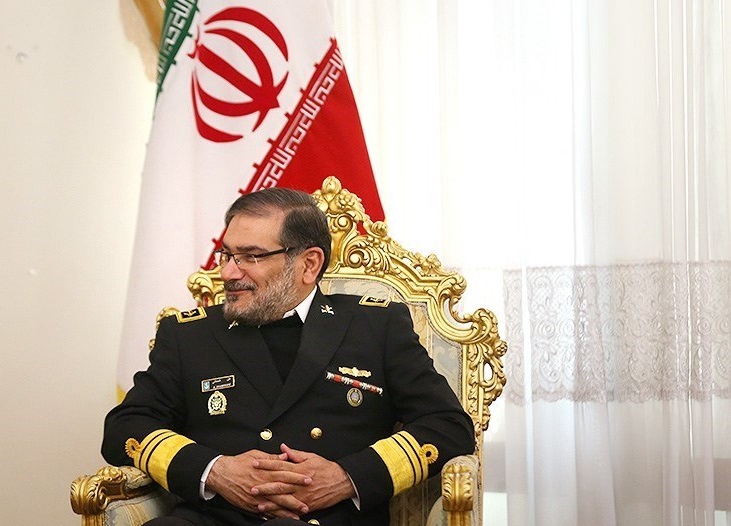
The Iranian stance was made unequivocally clear by Ali Shamkhani, a senior adviser to Supreme Leader Ayatollah Ali Khamenei. During a public address marking the anniversary of the Islamic Revolution, Shamkhani stated, "The Islamic Republic’s missile capabilities are non-negotiable." This declaration, reported by state media, is not merely a bargaining tactic but is rooted in a deeply held strategic doctrine. For Iran's leadership, the missile program represents a vital deterrent and a non-negotiable element of national sovereignty.
The Strategic Rationale Behind the Red Line
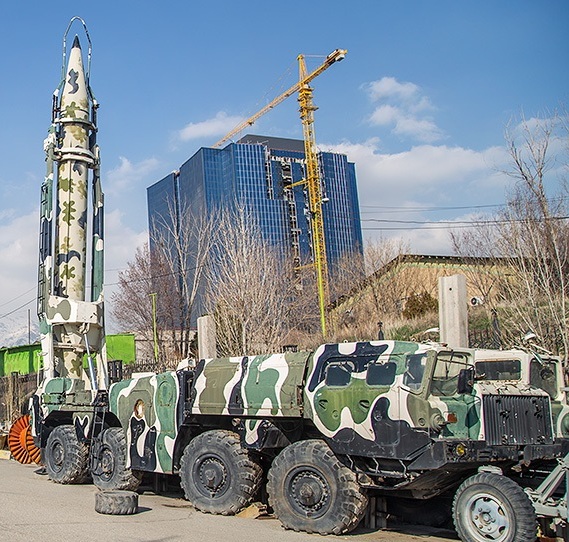
Analysts and officials within Iran argue that the missile program is a purely defensive necessity. This perspective has been hardened by recent regional conflicts, including what Iranian media refers to as last June's 12-day war with Israel. Hassan Ahmadian, an associate professor at the University of Tehran, articulated this view to Al Jazeera, stating that expecting Iran to negotiate away its "main means of defence" after being attacked is an "absurd argument." This sentiment reflects a broader national consensus that views military self-sufficiency as essential for survival in a volatile region.
The Stalemate from the First Round of Talks
The current impasse follows an initial round of mediated discussions held in Oman, which failed to produce a breakthrough. The core disagreement was precisely this issue of scope. According to reports from Al Jazeera's correspondent in Tehran, Iran entered the talks prepared to discuss its nuclear activities but refused to engage on its ballistic missiles or its network of regional alliances. The United States, conversely, pushed for a deal that would address all these interconnected issues, viewing Iran's missile arsenal and proxy networks as direct threats to its allies and interests in the Middle East.
Mixed Signals from Washington
The path forward is further complicated by ambiguous messaging from the United States. President Donald Trump has offered conflicting statements, at times characterizing the first round of talks as "very good," while simultaneously issuing threats. In an interview, Trump warned, "Either we will make a deal, or we will have to do something very tough like last time," a clear reference to previous US military actions against Iranian nuclear facilities. He also suggested deploying a second aircraft carrier to the region, a move interpreted as a show of force. This combination of diplomacy and menace creates an unpredictable environment for negotiations.
Regional Diplomacy and Coordination
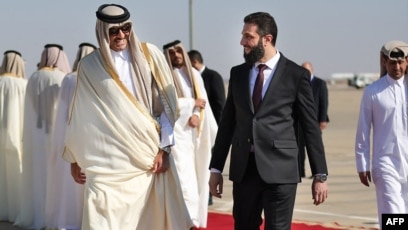
Even as the public rhetoric remains firm, behind-the-scenes diplomatic channels remain active. Iran's Ali Larijani, another key adviser to the Supreme Leader, recently visited Qatar to discuss the status of talks with Emir Sheikh Tamim bin Hamad Al Thani. Larijani described the discussions as positive and confirmed that Iran remains in contact with "all sides" regarding a potential second round. Concurrently, the Qatari Emir spoke with President Trump, highlighting Qatar's ongoing role as a potential mediator in the complex US-Iran relationship.
The Israeli Factor
No discussion of US-Iran negotiations is complete without considering Israel's influence. Israeli Prime Minister Benjamin Netanyahu met with President Trump, where he was expected to advocate for a hardline US stance. Netanyahu's office stated he emphasized Israel's "security needs... in the context of negotiations," a likely reference to demands that any deal must curb Iran's missile development and support for groups like Hezbollah. While Trump stated "nothing definitive" was agreed upon with Netanyahu, he affirmed his preference for a deal with Tehran, leaving the final US position somewhat unclear.
Conclusion: A Narrow Path to Dialogue
The prospect of successful US-Iran talks hinges on whether either side can find a formula to bridge the chasm over ballistic missiles. Iran, citing legitimate defensive needs and historical precedent, has entrenched itself. The United States, pressured by allies and its own security assessments, demands concessions. The willingness to talk, evidenced by continued diplomatic outreach via intermediaries like Qatar, suggests neither party has abandoned the process entirely. However, without a creative diplomatic solution that addresses core security concerns on both sides, the red line drawn on missiles may well become the line where negotiations end. The world watches to see if dialogue can prevail over discord.