Read on PBS News
El Paso Airspace Closure: Pentagon Anti-Drone Test or Cartel Threat?
The sudden and confusing closure of commercial airspace over El Paso, Texas, on February 11, 2026, sparked a major controversy between federal agencies. While the Trump administration initially blamed Mexican drug cartel drones, multiple reports indicate the shutdown was triggered by a Pentagon test of a new high-energy laser anti-drone system. The Federal Aviation Administration (FAA) acted without sufficient coordination, grounding flights and diverting emergency medical aircraft, highlighting critical communication failures in national security protocols.
The temporary shutdown of El Paso's airspace on February 11, 2026, represents a significant breakdown in interagency coordination and public communication regarding national security and aviation safety. What began as an FAA announcement of a 10-day flight halt over "unspecified security concerns" quickly unraveled into a chaotic narrative with conflicting explanations from the Trump administration and the Pentagon. This incident exposes the fragile protocols governing America's airspace when military testing and civilian aviation intersect.
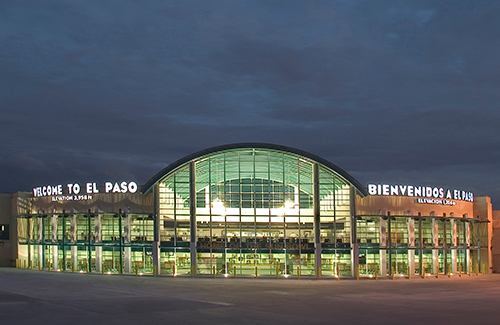
The Conflicting Narratives
In the immediate aftermath of the airspace closure, the Trump administration presented a straightforward explanation: Mexican drug cartels had sent drones near the airport, necessitating defensive action. Secretary of Transportation Sean Duffy publicly supported this version of events. However, this narrative quickly collapsed under scrutiny from multiple news organizations, including reporting from the Associated Press, which indicated the real trigger was a Pentagon test of new anti-drone technology at nearby Fort Bliss.
The Pentagon's High-Energy Laser System
According to security expert Juliette Kayyem, former assistant secretary at the Department of Homeland Security, the technology in question involves "high-energy laser technology" capable of emitting powerful electrical charges through laser beams. While the public doesn't know the full capacity of this technology, it's suspected to be powerful enough to potentially bring down a commercial airplane. The Pentagon reportedly conducted tests without providing the FAA adequate time to assess the danger to commercial flights operating in the region.

Communication Failures and Local Impact
The FAA's decision-making process during this crisis revealed multiple layers of communication failure. Most notably, local officials in El Paso received no advance warning about the airspace closure. Mayor Renard Johnson expressed outrage at the lack of coordination, stating, "You cannot restrict airspace over a major city without coordinating with the city, the airport, the hospitals, the community leadership. That failure to communicate is unacceptable."
Emergency Services Disruption
The practical consequences were immediate and severe. Medical evacuation flights had to be diverted to facilities 45 minutes away, potentially putting patients' health at risk. Commercial airlines were caught unprepared, having to reroute flights with minimal notice. Representative Veronica Escobar, who represents El Paso, confirmed she received no official communication about the closure, highlighting the breakdown in established protocols that typically involve daily coordination between local, state, and federal agencies.
Broader Implications for Aviation Security
This incident occurs against the backdrop of ongoing tensions between the Department of Defense and the FAA regarding communication and clarity in shared airspace. Kayyem notes that new security rules implemented after the January 2025 crash of a regional jet and Black Hawk helicopter that killed 67 people were recently unwound, creating renewed uncertainty about interagency coordination. The El Paso closure suggests these unresolved issues continue to pose risks to aviation safety.

Analysis of the FAA's Decision
While the FAA's communication failures are evident, security experts suggest the agency may have been justified in taking immediate action if they genuinely believed commercial aviation was at risk from untested military technology. Kayyem argues, "You don't mess around with commercial aviation space. Maybe the FAA did this to get people's attention, which they did." However, she emphasizes that the primary responsibility lies with the Pentagon to ensure their testing doesn't endanger civilian aircraft.
Conclusion: Lessons for Future Coordination
The El Paso airspace closure serves as a cautionary tale about the consequences of poor interagency communication and inadequate planning for military-civilian airspace integration. As new defense technologies continue to develop, establishing clear protocols and communication channels between the Pentagon, FAA, and local authorities becomes increasingly critical. The incident underscores the need for transparent decision-making processes that prioritize both national security and public safety without creating unnecessary confusion or endangering civilian operations.