Read on bbc.com
The Perilous Task of Clearing Sea Mines in Active Conflict
Clearing sea mines is one of the most dangerous military operations, but performing this task during active combat presents extraordinary challenges. Ukrainian Navy divers are currently undertaking this perilous mission in the Black Sea, where thousands of Russian mines and unexploded ordnance threaten maritime traffic. This article explores the technical complexities, constant dangers, and strategic importance of underwater demining operations in wartime conditions, highlighting how these efforts are essential for maintaining Ukraine's vital maritime export corridor despite the ongoing conflict.
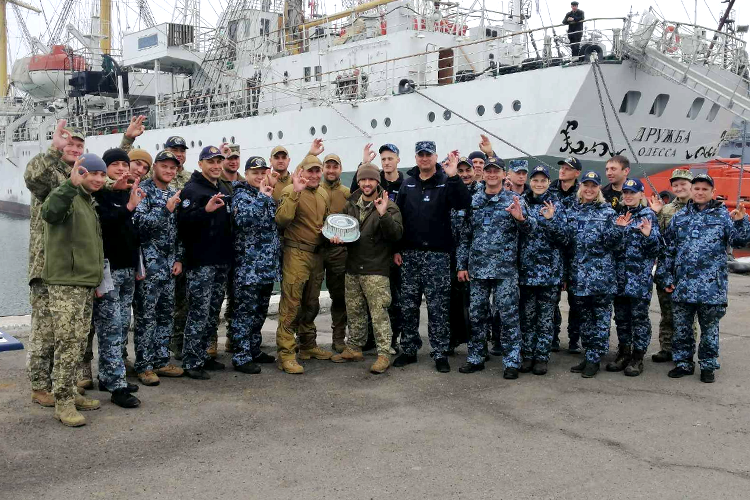
In the dark waters of the Black Sea, a silent and deadly threat lurks beneath the surface—thousands of sea mines and unexploded ordnance that could detonate at any moment. For Ukrainian Navy divers, clearing these underwater hazards represents one of the most perilous military operations imaginable, made exponentially more dangerous by the fact that they must perform this work while an active war rages around them. The stakes are extraordinarily high: maintaining maritime export routes that provide essential revenue for Ukraine's war effort while preventing civilian casualties from drifting or submerged explosives.
The Scale of the Underwater Threat
The Black Sea has become a massive underwater minefield since Russia's full-scale invasion of Ukraine began. According to Ukrainian Navy estimates, the number of sea mines alone reaches into the thousands, with additional dangers including missiles, artillery shells, bombs, and land mines that were washed downstream when the Kakhovka dam was destroyed in 2022. The commander of Ukraine's mine countermeasures group, known by the callsign Fox, explains that the total number of unexploded ordnance is "many times higher" than several thousand. These weapons remain active and deadly for decades, with sea mines presenting particular risks as they can drift with currents and storms, making their locations unpredictable.
The Technical Challenges of Underwater Demining
Sea mines generally fall into two categories: contact mines that detonate when struck, and influence mines that explode when sensors detect changes in sound, pressure, or magnetism. Commander Fox notes that "usually, the acoustic sensor is on duty" and that large commercial ships are particularly vulnerable to magnetic mines that respond to changes in magnetic fields. The demining process is extraordinarily slow and methodical. As described by Ukrainian Navy diver Vitalii, "We move carefully and extremely slowly so that the mine does not detonate. One second you move, then you stay still for some time, and you repeat this until you reach the object." This painstaking approach can take hours to cover just 20 meters.

Operating in Active Combat Conditions
What makes Ukraine's demining operations uniquely dangerous is that they occur during ongoing hostilities. Divers work under constant threat of Russian missiles and drones—both aerial and seaborne—that could easily trigger the mines they're attempting to neutralize. During air strikes, GPS signals are scrambled, making sonar readings imprecise and increasing the risk of accidental detonation. As Commander Fox bluntly states, "Everything can go wrong" in these conditions. The operation requires two days, several boats, and the work of 20 people for each mine neutralized, with all personnel exposed to multiple layers of danger simultaneously.
Strategic Importance for Ukraine's Economy
Despite the extraordinary risks, these demining operations are strategically vital for Ukraine. Maritime exports account for over two-thirds of Ukrainian agricultural exports, generating approximately $9 billion in essential revenue. Navy spokesman Dmytro Pletenchuk notes that "judging by the fact that vessel traffic has not decreased, commercial companies are willing to take these risks" to maintain the grain corridor. In 2025 alone, Ukraine's demining group neutralized more than 50 mines, though this represents only a fraction of the total threat. The effort to clear the seabed is part of a broader attempt to keep Black Sea ports usable, particularly for commercial ships that provide a continuous stream of much-needed revenue for Ukraine's war effort.
Equipment Limitations and Future Challenges
Ukraine faces significant equipment limitations in its demining efforts. In 2023, the British Navy gifted Ukraine two mine-hunting vessels that could potentially speed up the work, but these ships remain stationed in the UK because large vessels in the Black Sea are easy targets for Russian attacks. They won't be deployed until a ceasefire has been agreed—a prospect that still seems remote years after the vessels were handed over. Under current conditions, diver Vitalii estimates that clearing the seabed will take dozens of years. This timeline presents a sobering reality for Ukraine's long-term maritime security and economic recovery.

Conclusion: A Necessary Peril
The men clearing deadly undersea Russian mines undertake one of the most dangerous military operations in modern warfare, performing delicate surgical procedures on explosive devices while active combat continues around them. Their work represents a critical component of Ukraine's maritime strategy, allowing the country to maintain essential export routes despite Russia's naval threats. As the war continues, revenue from maritime exports will only grow more essential for Ukraine, meaning divers like Vitalii will keep returning to the water, alternating movement and stillness as they swim toward danger. Their efforts highlight both the extraordinary risks of modern naval warfare and the determined resilience required to maintain economic lifelines during prolonged conflict.