Read on the Guardian
Ebo Taylor: Remembering the Ghanaian Highlife Pioneer and Guitar Legend
Ghanaian music icon Ebo Taylor, a foundational architect of the highlife genre and a guitarist hailed by many as the greatest rhythm player in history, has died at age 90. His passing, announced by his son, marks the loss of a colossus who spent a lifetime weaving Ghanaian musical traditions with global influences, from classical to funk, to create a sound that resonated worldwide. Taylor's legacy is not only in his own recordings but in his profound influence on artists from Fela Kuti to a generation of modern musicians who sampled his work, cementing his role as a pivotal figure in putting African music on the global map.
The world of music has lost a foundational pillar with the passing of Ghanaian highlife pioneer Ebo Taylor at the age of 90. Announced by his son Kweku Taylor, the news marks the end of an era for a musician whose innovative guitar work and genre-defining compositions earned him the title of "the greatest rhythm guitarist in history" and cemented his status as a colossus of African music. Taylor's death comes just a day after the launch of a music festival in his honor and exactly one month following his 90th birthday, leaving behind a legacy that profoundly shaped the sound of Ghana and influenced artists across the globe.

Born Deroy Taylor on January 6, 1936, in Cape Coast, Ghana, his musical journey began at the piano at age six, influenced by American and English music during Ghana's colonial period. He later switched to guitar while in college, joining bands like the Stargazers, whose members would go on to form the famous Afro-rock group Osibisa. This early period placed him at the heart of highlife's blossoming, a genre he would come to define.
The Architect of a Sound: Highlife and Beyond
Ebo Taylor's genius lay in his unique synthesis of musical traditions. He was rare in his mastery and fusion of both highlife—typically played in major modes—and the minor-key driven sounds of Afrobeat. His time studying at the Eric Gilder School of Music in London in the early 1960s exposed him to the complex compositions of Antonín Dvořák, which he cited as a key influence. However, he often noted that his real education came from London's vibrant music scene, jamming in jazz and highlife clubs and even crossing paths with bands like the Beatles and the Rolling Stones.
A Historic Friendship with Fela Kuti
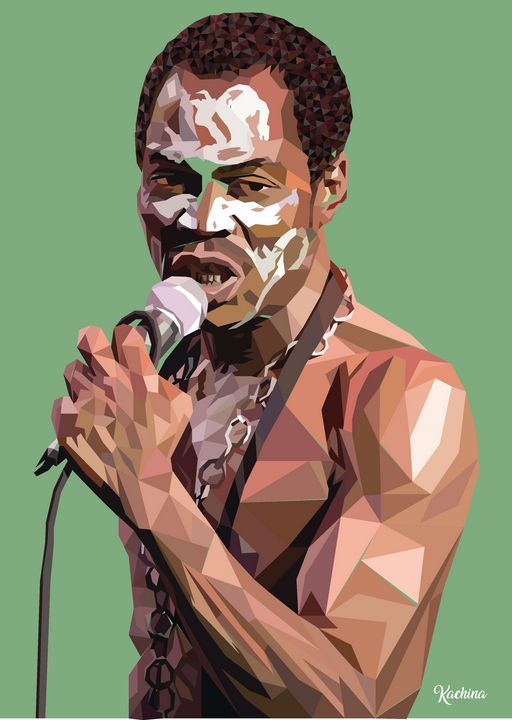
Perhaps one of the most significant relationships in modern African music was Taylor's friendship with Nigerian legend Fela Kuti, who was studying in London at the same time. The two bonded over a shared love for highlife and a desire to achieve the stature of jazz greats like Miles Davis. "We had the same mood … He was such a playful and lively person," Taylor recalled in a 2025 interview. This friendship became a creative crucible. As Taylor explained to the BBC, "With the advent of James Brown and funk music there was the opportunity to develop highlife music. Fela did a lot of work introducing the funk into the Yoruba music while comparatively I did almost the same thing in Ghana." Kuti encouraged Taylor to write distinctly African music, advice that guided Taylor's lifelong mission to blend global influences with deep roots in Ghanaian and Malian traditions.
A Prolific Career and Enduring Legacy
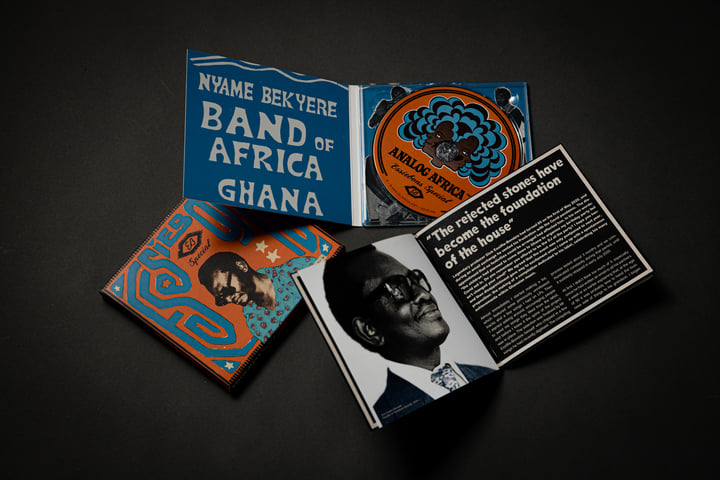
Returning to Ghana in 1965, Taylor formed influential groups like the Black Star Highlife Band, the New Broadway Dance Band, and the Blue Monks. In the 1970s, he became the in-house guitarist, arranger, and producer for Dick Essilfie-Bondzie's Essiebons label, a hub for modern highlife where he worked on records for artists like Pat Thomas and Gyedu-Blay Ambolley while releasing his own seminal albums.
Although he stepped back from fronting bands in the 1980s, a global rediscovery of highlife in the 2000s brought Taylor back to international prominence. His first internationally released album, Love and Death, arrived in 2010, leading to renewed touring and further albums like Appia Kwa Bridge and Yen Ara. His music found new audiences as his compositions were sampled by major artists including Usher, the Black Eyed Peas, and Jidenna.
Final Years and Tributes
In his later years, Taylor lived in Saltpond, Ghana, affectionately known locally as "Uncle Ebo." A stroke in 2018 impaired his ability to speak English, but his musical spirit endured. He collaborated on the 2025 album Ebo Taylor JID022 with Ali Shaheed Muhammad and Adrian Younge's Jazz Is Dead project, with his son Henry facilitating communication. He received numerous lifetime achievement awards for his contribution to Ghanaian music.
News of his passing prompted an outpouring of respect. A spokesperson for the Ghanaian president stated Taylor would "be remembered as one of our greatest musicians ever ... a man who strove to put Ghanaian music on the global map." Contemporary Ghanaian star Black Sherif paid tribute, calling Taylor "a legend whose contribution to music has created worldwide ripples." Ebo Taylor's light, as his son promised, will indeed never fade. His work remains a vital bridge between tradition and innovation, a timeless testament to the power of African musical expression.