Read on the Guardian
Ramaphosa Condemns Trump's 'Racist' Policy and 'White Genocide' Claims as 'Truly Uninformed'
South African President Cyril Ramaphosa has issued a rare, direct rebuke of former US President Donald Trump, labeling his policy to grant refugee status to white Afrikaners as 'racist' and dismissing claims of 'white genocide' in South Africa as false and harmful. In an interview with the New York Times, Ramaphosa described a 2025 Oval Office meeting where Trump staged what he called an 'ambush' by playing a misleading video. This article examines the diplomatic rift, the factual inaccuracies behind the claims, and the broader implications for US-South Africa relations.
In a striking diplomatic confrontation, South African President Cyril Ramaphosa has publicly denounced former US President Donald Trump's foreign policy approach towards his nation, branding it as fundamentally misinformed and racially charged. The criticism centers on Trump's promotion of the false 'white genocide' narrative and a subsequent policy offering refugee status to white Afrikaners, which Ramaphosa explicitly called 'racist'. This rare instance of direct censure from a sitting head of state highlights a significant fracture in international relations and underscores the enduring impact of misinformation on global diplomacy.
The Oval Office 'Ambush' and Ramaphosa's Rebuttal
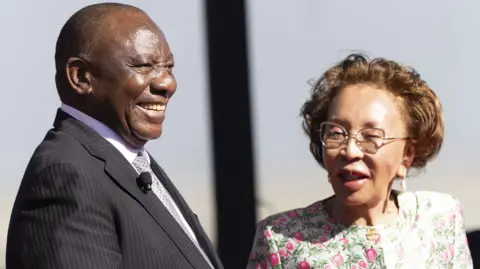
According to President Ramaphosa's account in an interview with the New York Times, a May 2025 meeting in the Oval Office devolved into what he described as a 'spectacle' and an 'ambush'. President Trump reportedly turned down the lights and played a video that falsely purported to show evidence of a 'white genocide' occurring in South Africa. Ramaphosa's reaction was one of astonishment and dismay at the US leader's lack of understanding. "I just thought that he is so uninformed, truly uninformed," Ramaphosa stated. "I realised that he is looking at South Africa through a completely, sort of, foggy lens, without realising the real, real harm that apartheid did."
Deconstructing the 'White Genocide' Myth and the 'Racist' Policy
The core of Ramaphosa's criticism targets the factual inaccuracy of Trump's claims and the policy derived from them. The South African president was unequivocal in his denial: "There's no white genocide and there is no grabbing of land, of white people's land. And white farmers are not being driven out of the country and badly treated." These claims, often propagated by far-right circles, have been repeatedly debunked by experts and fact-checkers. Despite this, the Trump administration acted upon this narrative in May 2025 by extending refugee status to Afrikaners—descendants of the Dutch settlers who instituted the apartheid regime—while simultaneously cutting refugee programs for others fleeing conflict and persecution. Ramaphosa condemned this selective policy, stating, "I do think the Afrikaner policy is racist. It is that racist sort of demeanour that we want to be able to whittle down so that he can see the truth of the situation."
Broader Diplomatic Fallout and South Africa's Stance
The policy and the rhetoric have triggered a tangible diplomatic chill. President Trump refused to attend the G20 summit in Johannesburg in November 2025 and has excluded South Africa from the US-hosted gathering scheduled for Miami. This isolationist move contrasts sharply with South Africa's perspective of its place in the world. "We are rather amazed at the attention he gives to us," Ramaphosa remarked. "We are a small country, and we are no threat to the United States." The White House, in a statement to the New York Times, defended Trump's actions, saying he was calling attention to "the harrowing stories of Afrikaners" and that "President Trump has a humanitarian heart. He will continue to speak the truth about these injustices." This defense underscores a deep divide in the perception of reality and justice between the two administrations.
Conclusion: The High Cost of Misinformation in Foreign Policy
Cyril Ramaphosa's candid interview serves as a powerful case study in how baseless claims can poison international relations and legitimize discriminatory policies. By labeling Trump's actions as 'racist' and 'uninformed', Ramaphosa is not only defending his nation's complex social reality but also challenging the global spread of dangerous falsehoods. The incident reveals how historical ignorance—specifically a dismissal of apartheid's devastating legacy—can fuel modern political agendas. As South Africa continues its journey of reconciliation and development, this episode highlights the critical need for foreign policy grounded in factual accuracy and a genuine understanding of historical context, rather than sensationalist and divisive narratives.