Read on Global News
Iranian Kurdish Fighters in Iraq: Caught Between Attack and Alliance
Iranian Kurdish militant groups operating from bases in northern Iraq's Kurdistan region face a critical strategic dilemma. Their camps have come under repeated missile and drone attacks from Iran's Islamic Revolutionary Guard Corps, intended to prevent them from opening a new front in the ongoing U.S.-Israeli war against Tehran. While many fighters express readiness to join the conflict to topple the regime they despise, their leaders are engaged in cautious negotiations with American and Israeli officials, weighing the risks of involvement against the potential for achieving long-sought Kurdish autonomy. The situation creates complex geopolitical tensions, with Iraq reluctant to be drawn into another regional conflict and Kurdish groups wary of historical patterns of being used and abandoned by Western powers.
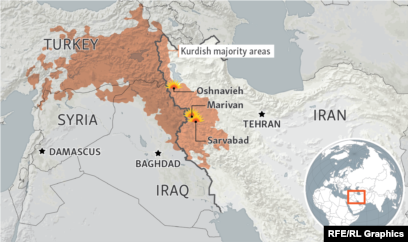
The rugged hills of northern Iraq's Kurdistan region have become a tense staging ground in the shadow war between Iran and its adversaries. Iranian Kurdish militant groups, operating from bases near cities like Erbil and Sulaymaniah, find themselves in a precarious position: their camps are under direct attack from Iran, while simultaneously being courted as potential allies by the United States and Israel in their military campaign against the Islamic Republic. This has sparked intense internal debate among Kurdish fighters and leaders about whether to join the conflict, a decision that carries profound implications for regional stability and the decades-long Kurdish struggle for autonomy.

The Strategic Position of Iranian Kurdish Groups
Several armed Iranian Kurdish groups operate from the relative safety of Iraq's autonomous Kurdistan Region, including the Kurdistan Freedom Party (PAK) and the Kurdish Democratic Party of Iran (KDPI). These organizations share a common ultimate goal: greater autonomy or independence for the millions of ethnic Kurds living in Iran, who have long faced cultural and political suppression from Tehran's central government. Their bases in Iraq provide strategic positions just across the border from Iran's predominantly Kurdish western provinces, making them potential launching points for military operations.
The outbreak of open warfare between the U.S./Israel and Iran on February 28, 2026, fundamentally altered the calculus for these groups. Suddenly, their long-standing enemy was engaged in a major conflict with global powers, creating both opportunity and danger. As Ali Mahmoud Awara, a fighter with the Kurdistan Freedom Party, told Global News, "All of our bases have been targeted by the Iranians." This defensive action by Iran's Islamic Revolutionary Guard Corps aims to prevent Kurdish fighters from crossing the border to open a new northern front that would further stretch Iran's military resources.

The Internal Debate: To Fight or Not to Fight?
Within Kurdish ranks, opinions are divided about whether to actively join the U.S.-Israeli war effort. Many fighters like Awara, who was born in Iran but crossed into Iraq over a decade ago, express strong personal motivation to participate. "I want nothing more than to return home to topple the Islamic regime I despise," he stated, adding he longs for this "with my heart and my body." This sentiment reflects deep-seated grievances among Iranian Kurds who have faced systematic discrimination.
However, Kurdish leadership approaches the decision with greater caution. According to reports, groups are engaged in talks with American and Israeli officials but have not yet committed to coordinated action. Khalil Kani Sanani, spokesperson for the Kurdistan Freedom Party, confirmed these discussions while denying his organization had received weapons from either country. The hesitation stems from complex geopolitical considerations and historical experience. As Yerevan Saeed, director of the Global Kurdish Initiative for Peace at American University, explained to the Atlantic Council, Kurdish groups have a history of being "used when they are needed to advance American interests and then abandoned." This makes them wary of committing without concrete political assurances.
Regional Implications and Iraqi Concerns
The potential involvement of Iraqi-based Kurdish fighters carries significant risks for regional stability. Iraq, which shares a long border with Iran and suffered through a devastating war with its neighbor from 1980-1988, is deeply reluctant to be drawn into another conflict. The country is still recovering from the destruction wrought by ISIS and faces its own internal political challenges. Northern Iraq's Kurdistan Region has already experienced attacks on U.S. assets, hotels, and Kurdish bases, and Iran has threatened worse consequences if the area becomes a staging ground for operations against it.
Furthermore, analysts express concern that a U.S.-backed Kurdish offensive could trigger broader ethnic conflict within Iran itself. Iran is home to multiple ethnic minorities including Arabs, Azeris, and Baloch, in addition to Kurds. A Kurdish uprising supported by external powers might encourage other groups to seek greater autonomy, potentially leading to the fragmentation of the Iranian state along ethnic lines—a scenario that could create instability across the entire region for decades.
The Current State of Attacks and Diplomacy
Despite Iranian President Masoud Pezeshkian's March 2026 statement that Tehran was ending attacks on neighboring countries and calling for diplomacy, strikes on Kurdish bases in Iraq have continued. On March 4, 2026, three Iranian Fattah missiles struck the Kurdistan Freedom Party base outside Erbil, specifically targeting the office of leader Hussein Yazdanpanah. The attack killed veteran fighter Kawan Rashidi and injured three others. Subsequent attacks hit bases in Sulaymaniah and near Erbil airport, prompting a stern warning from Kurdistan Region President Masoud Barzani that "patience and restraint have limits."
These attacks have effectively dragged Kurdish groups into the conflict regardless of their official stance. Hassan Sharafi, a senior member of the Kurdish Democratic Party of Iran, noted that although his organization had refrained from crossing the border, its facilities had been attacked six times in ten days. The persistent targeting suggests Iran views these groups as legitimate threats that must be neutralized preemptively, regardless of their current level of involvement in the broader war.
The situation remains fluid and dangerous. Kurdish fighters like Awara continue their training and preparation while awaiting orders that may never come. "We are ready for fighting," he says. "The Kurdish people need freedom. We are waiting." This waiting game reflects the complex intersection of local aspirations, regional power dynamics, and global geopolitical strategy that defines the Kurdish position in the escalating conflict between Iran and its adversaries.