Read on bbc.com
Drone Strike on RAF Akrotiri Reignites Debate Over UK Military Bases in Cyprus
A recent drone strike on the UK's RAF Akrotiri airbase in Cyprus has intensified long-standing local opposition to the British military presence on the island. The attack, which damaged a hangar, has fueled protests under the slogan 'British Bases Out,' with demonstrators arguing the bases make Cyprus a target in regional conflicts. While the UK maintains the bases are crucial for regional security, Cypriot activists and residents call for transparency and renegotiation of the 1960 treaty that established these sovereign territories, highlighting the complex legacy of colonialism and contemporary geopolitical tensions in the Eastern Mediterranean.
A drone strike on the Royal Air Force base at Akrotiri in Cyprus has punched a hole in more than just a military hangar; it has reopened a deep and enduring debate about the United Kingdom's sovereign military presence on the island. The incident, which occurred a week ago, has galvanized local protesters who see the British bases as a colonial relic that now places Cyprus in the crosshairs of Middle Eastern conflicts. As chants of "British Bases Out" echo outside the presidential palace in Nicosia, the event underscores the complex geopolitical and historical tensions surrounding the UK's strategic foothold in the Eastern Mediterranean.

The Historical Context of British Bases in Cyprus
The UK's military presence in Cyprus is rooted in the 1960 Treaty of Establishment, which granted the island independence from British colonial rule. As part of this agreement, Britain retained sovereignty over two areas: RAF Akrotiri in the south and the Dhekelia base in the southeast. These Sovereign Base Areas (SBAs), covering approximately 98 square miles, operate under UK jurisdiction with their own police force and legal system. For many Cypriots, this arrangement has long been a point of contention, viewed as a continuation of foreign occupation rather than a partnership. The situation was further complicated in 1974 when Turkey invaded and took control of the northern third of Cyprus following a Greece-backed coup, leaving the island—and its capital Nicosia—divided to this day.
The Drone Attack and Immediate Fallout
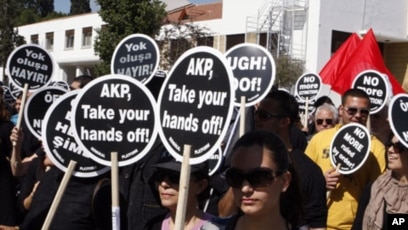
The direct trigger for the renewed protests was a drone strike that hit a hangar at RAF Akrotiri. British military assessments indicate the drone was launched from Lebanon by the Iranian-backed militia Hezbollah, likely in retaliation for US-Israeli strikes in the region. While the UK government has stated its bases in Cyprus are not being used for offensive strikes against Iran, the reported use of Akrotiri by American U-2 spy planes for surveillance may have made it a target. The Cypriot government has been quick to distance itself, emphasizing that it was a UK base, not Cyprus, that was attacked and that the nation has no involvement in the conflict. However, for local residents like business owner Natasha Theodotou, the attack is a direct consequence of the base's presence. "We just want to have an independent Cyprus," she stated at a protest, holding a banner that read "British Bases Out."
Local Protests and Calls for Independence
The drone strike catalyzed a demonstration of roughly 200 to 300 people in Nicosia. Protesters, carrying signs critical of the US, Israel, and in support of Palestine, chanted slogans like "Say it loud, say it clear, British bases out of here." For participants like Shona Muir, the issue is one of safety. "I think that we'd be a lot safer without them here," she said. "Their presence alone here makes us more of a target." The sentiment reflects a broader desire among some Cypriots for a unified, independent nation where Greek Cypriots and Turkish Cypriots can coexist without the shadow of foreign military installations. The protest also highlighted demands for transparency, with demonstrator Stephanos Stavros expressing concern over unknown activities within the bases. "We don't know what's happening in [the] British bases," he said, calling for the treaty to be complied with and for "full transparency" about their use.
The UK's Strategic Position and Regional Role
From the UK's perspective, the bases in Cyprus are indispensable assets. A spokesperson for the Ministry of Defence told the BBC that the bases "play a crucial role in supporting the safety of British citizens and our allies in the Mediterranean and in the Middle East." They pointed to recent operations where Typhoon and F-35 fighter jets launched from Cyprus shot down Iranian drones, defending civilians from attacks. RAF Akrotiri serves as a critical logistics and operations hub, supporting missions across the Middle East and, more recently, surveillance flights over Gaza. This strategic value makes any discussion of withdrawal or significant renegotiation politically and militarily sensitive for London.
The Path Forward: Complexity and Diplomacy
Addressing the future of the British bases is fraught with diplomatic complexity. Cyprus' Foreign Minister, Constantinos Kombos, acknowledged that the matter has been "on the agenda" for a long time but suggested any conversation must follow "careful reflection" on recent events. Renegotiating the foundational 1960 agreements would involve not just the UK and Cyprus, but also Greece and Turkey, as well as representatives from both Cypriot communities—a monumental diplomatic undertaking. The bases are also deeply interwoven into the local economy, providing employment and supporting communities within the SBAs. Any change would have significant social and economic repercussions.

The drone strike on RAF Akrotiri has acted as a catalyst, forcing a re-examination of a 64-year-old military arrangement. It has amplified local voices calling for sovereignty and safety, while underscoring the UK's continued reliance on these bases for power projection in a volatile region. The hole in the hangar at Akrotiri symbolizes more than physical damage; it represents the persistent gaps in post-colonial relationships and the ongoing challenges of hosting foreign military installations in an era of asymmetric warfare. As Cyprus navigates its position between regional conflicts and great power interests, the debate over the British bases is likely to remain a defining feature of its political landscape.