Read on PBS News
Mojtaba Khamenei: The Secretive Son Ascends to Iran's Supreme Leadership
Following the death of his father, Supreme Leader Ayatollah Ali Khamenei, in an Israeli airstrike, Mojtaba Khamenei has been named as his successor. This article examines the rise of this previously secretive figure, who, despite never holding an elected office, now commands Iran's military, its nuclear program, and the powerful Revolutionary Guard. We explore his background, the circumstances of his selection by the Assembly of Experts, and the significant implications for Iran's domestic politics and its ongoing conflict with Israel and the United States.
The political landscape of the Islamic Republic of Iran has undergone a seismic shift with the formal selection of Mojtaba Khamenei as the country's new supreme leader. This succession follows the death of his father, Ayatollah Ali Khamenei, who was killed alongside Mojtaba's wife in an Israeli airstrike targeting the supreme leader's offices at the onset of a broader regional war. The ascension of Mojtaba, a figure long shrouded in secrecy and operating from behind the scenes, marks a critical juncture for Iran, transferring immense military, political, and theological authority to a man with no prior official government position.
The Path to Power
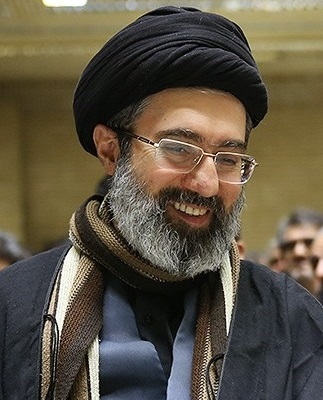
Mojtaba Khamenei's rise defies the conventional political pathways within the Islamic Republic. Unlike presidents or parliamentary speakers, he was never elected or appointed to a public office. Instead, his influence grew organically from his position as the son and closest aide to the former supreme leader. For decades, he served as a key gatekeeper, confidant, and power broker within his father's inner circle, a role likened to that of Ahmad Khomeini, son of the revolution's founder, Ayatollah Ruhollah Khomeini. This behind-the-scenes authority was acknowledged in U.S. diplomatic cables published by WikiLeaks, which referred to him as "the power behind the robes" and noted his role in forming a distinct power base.
Martyrdom and Political Capital
The Israeli strike that killed Ayatollah Ali Khamenei fundamentally altered Mojtaba's political standing. The deaths of his father and wife, Zahra Haddad Adel, transformed them into martyrs in the ongoing war against Israel and the United States, particularly in the eyes of Iran's hard-line factions. This martyrdom significantly boosted Mojtaba Khamenei's stock as a successor, overshadowing prior criticisms that his appointment would create a "theocratic monarchy." His candidacy was indirectly commented on by U.S. President Donald Trump, who labeled him a "lightweight" and insisted on American involvement in the selection process—a statement that likely further galvanized his support among Iranian hardliners.
The Vast Powers of the Supreme Leader
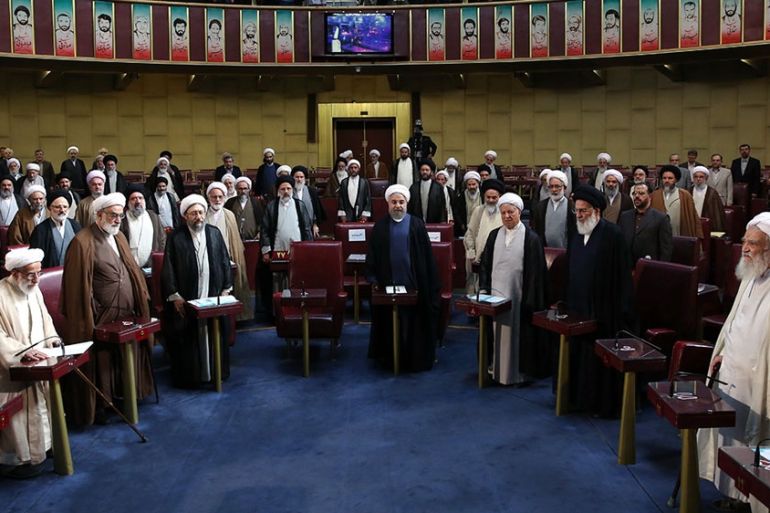
Mojtaba Khamenei now assumes one of the most powerful positions in the Middle East. As supreme leader, he holds final say over all matters of state and serves as commander-in-chief of Iran's conventional military and the Islamic Revolutionary Guard Corps (IRGC). The IRGC, a U.S.-designated terrorist organization, is not only a military force but also controls vast economic holdings and leads the "Axis of Resistance" across the region. Furthermore, Khamenei gains control over Iran's stockpile of highly enriched uranium, placing the decision to potentially pursue a nuclear weapon squarely in his hands. His immediate task is to steer Iran's war strategy amid an ongoing conflict with Israel.
Background and Allegiances
Born in 1969 in Mashhad, Mojtaba Khamenei grew up in a family of dissent against the Shah. He later fought in the Iran-Iraq war with a Revolutionary Guard battalion, forging early ties with individuals who would rise to powerful intelligence roles. His father's ascension to supreme leader in 1989 granted the family access to the wealth of Iran's bonyads (foundations). Mojtaba has maintained deep connections with the IRGC, including its expeditionary Quds Force and the Basij militia, which suppressed domestic protests. The U.S. Treasury sanctioned him in 2019 for advancing his father's "destabilizing regional ambitions and oppressive domestic objectives," alleging behind-the-scenes interference in the 2005 and 2009 presidential elections.
Implications for Iran and the World
The selection of Mojtaba Khamenei concludes a period of uncertainty but opens a new chapter of significant challenges. Domestically, he must consolidate power and address any latent rifts within the establishment, as hinted by reported disagreements before the Assembly of Experts' decision. Internationally, he inherits a nation at war, facing direct military confrontation with Israel and the U.S. aimed at degrading its nuclear and military capabilities. The world now watches to see how this once-secretive figure will wield the formidable tools of the Iranian state—its military, its regional proxies, and its nuclear program—during a period of intense crisis. His leadership will test the resilience of Iran's theocratic system and shape the future of Middle Eastern geopolitics.