 Read on cbsnews.com
Escalating Conflict: Trump Demands Iran's Unconditional Surrender as Strikes Intensify
The U.S.-Israeli war with Iran entered a critical new phase as President Trump demanded the country's 'unconditional surrender' and warned it would be 'hit very hard.' The conflict, now in its second week, has seen intense airstrikes on both sides, targeting military infrastructure, leadership compounds, and oil facilities. Israeli Prime Minister Benjamin Netanyahu vowed to continue the campaign 'with full force,' while Iran retaliated with missile and drone attacks across the region. The war has expanded to involve Lebanon, disrupted global oil supplies, and prompted mass evacuations of civilians and foreign nationals from the Middle East.
The geopolitical landscape of the Middle East has been fundamentally reshaped over the past week as a full-scale war between the United States, Israel, and Iran continues to escalate. Following the initial strikes that killed Iran's Supreme Leader Ayatollah Ali Khamenei, President Donald Trump has now issued a stark ultimatum, demanding Iran's 'unconditional surrender' and warning that the country will be 'hit very hard.' This article examines the latest developments in the conflict, the strategic objectives of the involved parties, and the widening regional and global consequences of this unprecedented military confrontation.
Trump's Ultimatum and the Strategic Stance
President Trump has taken an uncompromising position in the conflict, explicitly ruling out any negotiated settlement short of total capitulation. In a statement on Truth Social, he declared, 'There will be no deal with Iran except UNCONDITIONAL SURRENDER!' He later clarified to Axios that this surrender might not require a formal declaration but could be achieved when Iran 'can't fight any longer because they don't have anyone or anything to fight with.' White House Press Secretary Karoline Leavitt echoed this, stating Iran would be in a position of surrender once U.S. strategic goals were met, whether Tehran acknowledged it or not.
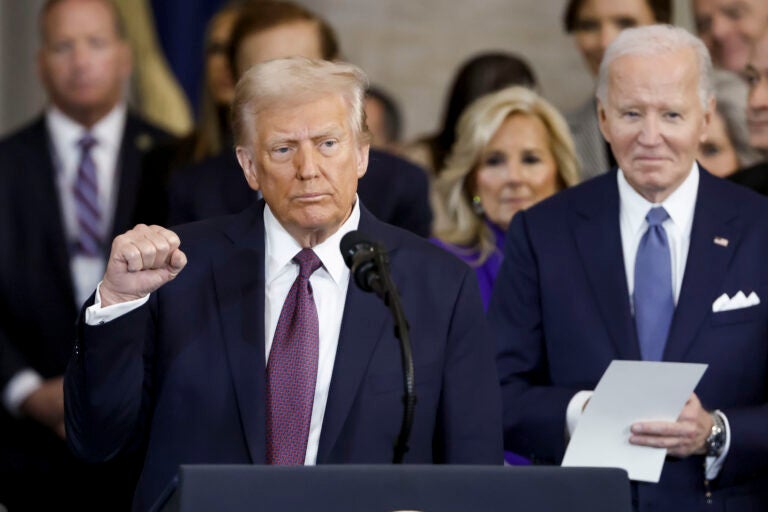
The U.S. military campaign, dubbed Operation Epic Fury, has been extensive. U.S. Central Command reported that in the first seven days, over 3,000 targets were hit and 43 Iranian ships were damaged or destroyed. President Trump has claimed significant degradation of Iranian capabilities, stating the country's navy, air force, and communications networks have been severely compromised. The objective, as articulated by Trump, extends beyond military degradation to regime change, with the President telling NBC News the goal is to 'go in and clean out' Iran's theocratic leadership and install a U.S.-friendly successor.
Israeli Military Campaign and Coordination
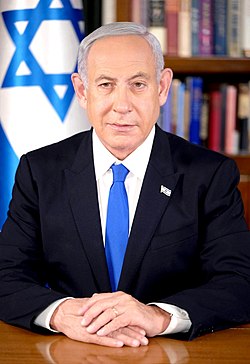
Israel, under Prime Minister Benjamin Netanyahu, has been a full partner in the offensive, conducting waves of airstrikes deep into Iranian territory. Netanyahu stated Israel is 'continuing with full force' and that the alliance with the U.S. is 'deeper than ever,' aiming to 'change the face of the Middle East.' Israeli officials confirmed that Trump and Netanyahu have been speaking daily to coordinate strategy.
The Israeli Defense Forces (IDF) have executed precision strikes on high-value targets. In a significant operation, the IDF used approximately 50 fighter jets to destroy a massive underground bunker complex in Tehran that served as a command center for the former Supreme Leader. Other strikes have targeted Mehrabad International Airport in Tehran, where Israel claimed it hit 16 aircraft used by the Iranian Revolutionary Guard's Quds Force, and Isfahan airport, where F-14 Tomcat fighter jets were struck. The IDF also reported attacking Iran's oil refining infrastructure to cripple the military's fuel supply.
Iran's Response and Regional Retaliation
Despite the pounding from U.S. and Israeli forces, Iran has maintained its ability to launch retaliatory strikes across the region. Iran has fired hundreds of ballistic missiles and drones at neighboring Gulf states that host U.S. forces, including the United Arab Emirates, Saudi Arabia, Qatar, Kuwait, and Bahrain. The UAE reported intercepting 205 ballistic missiles and 1,184 drones since the conflict began, though some strikes caused casualties and damage.
Iranian President Masoud Pezeshkian issued a contradictory message. He first apologized to Gulf neighbors for attacks, suggesting they resulted from miscommunication following the decapitation of Iran's leadership, and promised to suspend strikes unless attacks originated from those countries. Hours later, he backtracked, claiming Iran was only targeting 'U.S. military bases, facilities, and installations' in the region and asserting Iran's 'inherent right to defend itself.' Iran's Revolutionary Guard affirmed it would continue to target all U.S. and Israeli interests across the Middle East.
Expansion of the Conflict and Humanitarian Toll
The war has rapidly expanded beyond the U.S.-Israel-Iran triangle. Lebanon has been drawn into the conflict after Hezbollah, an Iran-backed militant group, launched attacks on Israel. Israel has responded with extensive airstrikes on Beirut and southern Lebanon, and even conducted a ground operation in the town of Nabi Chit. Lebanon's health ministry reported at least 217 killed and 798 wounded, while the Norwegian Refugee Council said over 300,000 people have been displaced, warning of a potential 'humanitarian crisis.'
The human cost within Iran is also mounting. Iran's health ministry reported over 1,200 killed in the strikes over seven days. A particularly controversial incident involved a strike on a girls' primary school in southern Iran that killed dozens, including children. U.S. investigators are reportedly examining whether the U.S. was responsible, though no conclusions have been reached. President Trump, without evidence, claimed the strike was 'done by Iran.'

Global Repercussions and Diplomatic Fallout
The war has triggered significant global economic and diplomatic shockwaves. Oil prices have surged, with Brent crude jumping to over $92 per barrel—the highest level in nearly two years—as the conflict threatens the Strait of Hormuz, a vital chokepoint for global oil shipments. Kuwait has already cut oil production as a precaution. The spike is felt directly by consumers, with U.S. national average gas prices rising sharply to approximately $3.32 per gallon.
Diplomatically, the conflict has exposed fractures. The United Kingdom granted the U.S. use of its bases for defensive operations but has not joined the war, drawing criticism from Trump. Russia is reportedly providing intelligence to Iran on U.S. positions, according to U.S. officials. China, a major buyer of Iranian oil, has seen its energy supply lines disrupted and has sent an envoy to the region to try to de-escalate tensions. United Nations Secretary-General Antonio Guterres warned the violence 'could spiral beyond anyone's control.'
Conclusion: An Unpredictable Path Forward
The U.S.-Israeli war with Iran has moved rapidly from a targeted decapitation strike to a sprawling regional conflict with no clear end in sight. President Trump's demand for unconditional surrender sets a high bar for conclusion, while Iran's continued ability to retaliate suggests a protracted struggle. The humanitarian costs are rising, the global economy is feeling the strain, and the risk of further escalation remains high. As both sides dig in, with the U.S. expediting arms shipments to Israel and Iran vowing continued resistance, the path to peace appears distant, leaving the Middle East and the world to brace for further volatility.