Read on France 24
Mojtaba Khamenei Appointed as Iran's New Supreme Leader, Cementing Hardliner Control
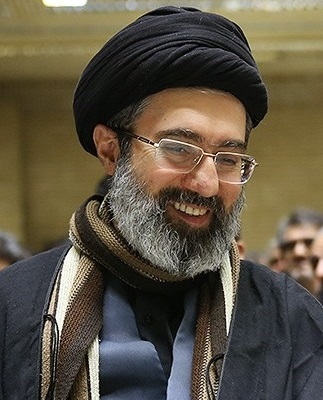
Iran's Assembly of Experts has formally named Mojtaba Khamenei as the country's new supreme leader, succeeding his slain father, Ayatollah Ali Khamenei. This appointment signals the continued dominance of hardline factions within Tehran's power structure amid an ongoing conflict with the United States and Israel. The younger Khamenei, a secretive but influential figure long considered a contender for the role, assumes control of Iran's military, the Revolutionary Guard, and the nation's nuclear program at a critical geopolitical juncture.
In a decisive move that solidifies the political trajectory of the Islamic Republic, Iran's clerical leadership has confirmed a dynastic succession at its highest level. The Assembly of Experts has appointed Mojtaba Khamenei to succeed his father, the late Supreme Leader Ayatollah Ali Khamenei, who was killed in an Israeli airstrike. This transition occurs more than a week into a heightened military conflict involving Iran, the United States, and Israel, underscoring a commitment to continuity from the hardline establishment in Tehran.

The Appointment and Its Immediate Context
The selection by the 88-seat Assembly of Experts comes amidst ongoing American and Israeli airstrikes on Iranian territory. Mojtaba Khamenei has not been seen publicly since the February 28 strike that killed his father and his wife, Zahra Haddad Adel, with analysts suggesting he has likely gone into hiding for security reasons. His appointment, however, was widely anticipated among observers of Iranian politics. For decades, U.S. diplomatic cables, such as those published by WikiLeaks, referred to him as "the power behind the robes," a secretive figure wielding significant influence from within his father's inner circle.
Profile of the New Supreme Leader
Born in 1969 in Mashhad, Mojtaba Khamenei grew up during his father's activism against the Shah. After the 1979 Islamic Revolution, the family moved to Tehran. He later fought in the Iran-Iraq war with the Revolutionary Guard, building connections with individuals who would rise to powerful intelligence roles. Following his father's ascension to the supreme leadership in 1989, Mojtaba Khamenei gained access to substantial resources through Iran's state-funded bonyad foundations.

He worked at the heart of the supreme leader's office, known as the "Beyt," functioning as an aide-de-camp, confidant, and key power broker. Critics have often pointed to his intermediate clerical rank of hojatoleslam—below the constitutionally suggested rank of ayatollah marja for a supreme leader—and allegations of corruption stemming from his privileged position. A 2022 analysis cited by FRANCE 24 described him as a figure who "benefits from his position... because he is the son of Ali Khamenei."
Power, Sanctions, and International Stance
Mojtaba Khamenei's rise has been accompanied by increased scrutiny and sanctions from the West. The United States sanctioned him in 2019 for allegedly advancing his father's "destabilizing regional ambitions and oppressive domestic objectives." More recently, the U.S. Treasury stated he worked closely with the Revolutionary Guard to suppress nationwide protests. His network of influence reportedly extends beyond Iran's borders; a Bloomberg investigation in late January found secret investments and real estate acquisitions through shell companies in London, Frankfurt, and Dubai.
Implications for Iran and the Region
The new supreme leader assumes control during an unprecedented direct military confrontation. He gains command of Iran's military, the Revolutionary Guard, and the country's stockpile of highly enriched uranium, placing him at the center of decisions regarding Iran's nuclear program. His leadership is expected to maintain, if not intensify, the hardline foreign policy and domestic repression associated with his father's rule. The appointment also highlights the paradox of a potential theocratic dynasty in a republic founded in opposition to hereditary monarchy, sidelining other contenders from the clerical establishment.
The path forward for Mojtaba Khamenei is fraught with challenges, including managing a wartime economy, confronting international isolation, and navigating the complex power structures within Iran's theocracy. His appointment ensures that the hardline vision championed by his father will guide the Islamic Republic's actions in a volatile regional landscape, with significant consequences for Middle Eastern stability and global non-proliferation efforts.