
 Read on the Guardian
Deported to Eswatini: US Deportees File Landmark Human Rights Case
Three men deported by the United States to the African kingdom of Eswatini, rather than their home countries, have initiated a significant legal challenge against their detention. The claimants, originally from Cuba, Jamaica, and Yemen, have filed a case with the African Union's human rights body, alleging unlawful imprisonment and rights violations after completing criminal sentences in the US. This case highlights the controversial US policy of deporting individuals to third countries and raises critical questions about international human rights obligations.
The controversial practice of deporting individuals to third countries has sparked a significant international legal challenge. Three men, originally from Cuba, Jamaica, and Yemen, who were deported by the United States to the Kingdom of Eswatini in Southern Africa, have filed a formal complaint against the Eswatini government with the African Commission on Human and Peoples' Rights (ACHPR). This case represents a critical test of regional human rights mechanisms and brings international scrutiny to US deportation policies under the current administration.
The Case and the Claimants
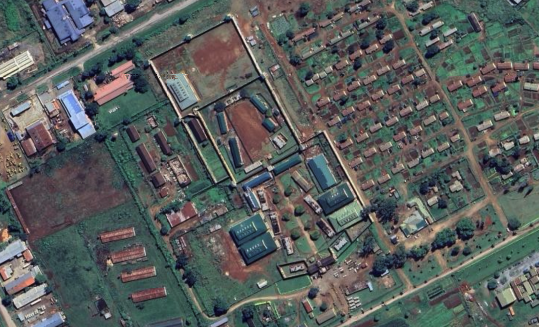
The legal action centers on three individuals who were among a group of five men deported by the US to Eswatini in July, with additional deportations occurring in October. According to reporting from The Guardian, two of the claimants—from Cuba and Yemen—have been detained in Eswatini for eight months. The third claimant, Orville Etoria from Jamaica, was eventually repatriated to his home country in September 2025, but his experience forms part of the broader legal challenge.
These individuals had all completed criminal sentences in the United States before being deported. While US authorities have labeled them as dangerous criminals, their legal representatives argue that they have already served their sentences for any offenses committed in the US and have committed no crimes in Eswatini. Their detention in the African kingdom, therefore, represents what they claim is an arbitrary deprivation of liberty.
Legal Framework and Human Rights Arguments
The case has been filed with the African Commission on Human and Peoples' Rights, a body established by the African Union to monitor member states' compliance with regional human rights agreements. Although the commission can issue recommendations and refer cases to the African Court on Human and Peoples' Rights, neither body possesses direct enforcement powers, making their moral and political authority crucial to the case's potential impact.
Legal representatives from the Global Strategic Litigation Council, one of the organizations bringing the case, have outlined multiple alleged rights violations. Beatrice Njeri, a lawyer with the organization, stated that the detainees "have committed no crime [in Eswatini] and continue to undergo various human rights violations" and are being "held indefinitely." She further reported that the men have been denied in-person access to their legal counsel, and one detainee undertook a 30-day hunger strike late last year that resulted in signs of organ failure.

Government Response and Diplomatic Context
The Eswatini government has presented a different characterization of the situation. Thabile Mdluli, a government spokesperson, emphasized the kingdom's "longstanding commitment to upholding human rights" and stated that the individuals are "not detained or imprisoned" but rather "accommodated in a secure environment while the necessary administrative and diplomatic processes relating to their repatriation are under way." She declined to provide a specific timeline for when the remaining individuals might be returned to their countries of origin.
This case unfolds within a broader context of US immigration policy. The Trump administration has pursued the deportation of immigrants to third countries as part of its efforts to carry out mass deportations. US Immigration and Customs Enforcement (ICE) currently detains over 68,000 people within the United States. Financial arrangements often accompany these deportation agreements; Reuters has reported that the US agreed to pay Eswatini $5.1 million to accept up to 160 third-country nationals.
Broader Implications and Legal Precedents
The Eswatini case is not an isolated incident. Other African nations, including Ghana, Rwanda, South Sudan, and Uganda, have also accepted third-country deportees from the United States. The legal strategy employed by the claimants' lawyers follows an unsuccessful domestic challenge in February, when Eswatini's high court dismissed a case from local NGOs that argued the government's imprisonment of the deportees was unconstitutional. The court ruled the NGOs lacked standing as they did not have a direct interest in the matter.
This new case at the African Union level represents an attempt to find an alternative avenue for accountability. The outcome could set a significant precedent for how regional human rights bodies address the complex issues arising from international deportation agreements, particularly when individuals are sent to countries with which they have no prior connection. It raises fundamental questions about state responsibility, the extraterritorial application of human rights obligations, and the limits of sovereign immigration enforcement actions.
As the African Commission considers this petition, the world watches to see how it will balance member states' sovereignty with the imperative to protect fundamental human rights. The detainees' simple plea, as relayed by their lawyer—"They just want to go back – some of them home, some of them to the US"—encapsulates the human dimension of a policy debate with profound legal and ethical ramifications.


