Read on PBS News
Proposed USPS Rule Would Withhold Mail Ballots from States Refusing to Share Voter Rolls
Postmaster General David Steiner testified before a Senate committee that under a proposed regulation, the U.S. Postal Service would refuse to deliver mail ballots to states that do not provide the federal government with lists of absentee or mail ballot requesters. The proposed rule cites a March executive order by President Donald Trump aimed at tightening mail voting regulations, though election administration is constitutionally delegated to states. This development raises significant questions about federal authority over elections and the future of mail-in voting access across the country.
The U.S. Postal Service (USPS) could soon refuse to deliver mail ballots to states that do not comply with a proposed federal regulation requiring them to share lists of absentee and mail ballot requesters. Postmaster General David Steiner made this clear during a Senate Homeland Security Committee hearing, sparking debate over federal authority and voting access.

Understanding the Proposed USPS Regulation
During the June 24 hearing, Sen. Gary Peters, the top Democrat on the committee, directly asked Steiner whether the Postal Service would deliver ballots to a state's voters if that state refused to turn over its absentee voter roll. Steiner responded unequivocally: "Under our proposed regulation? No." He added that the Postal Service would "tell the state that we need the manifest." The proposed rule, as described by Steiner, would require states to provide the USPS with a list of individuals who have requested a mail-in or absentee ballot for an election.
The justification for this requirement, as stated in the proposed regulation, is that it "will help determine adherence to federal law and facilitate law enforcement efforts." This language suggests that the Postal Service views the provision as a tool for verifying compliance with existing federal election statutes and potentially identifying instances of fraud or improper voting.
Connection to the President’s Executive Order
The proposed USPS rule is directly linked to President Donald Trump's March executive order, which seeks to tighten mail voting rules and create eligible voter lists. This executive order represents a significant federal intervention into election administration, a domain traditionally reserved for state governments under the U.S. Constitution. Despite the president's own use of mail ballots in past elections, he has repeatedly characterized the voting method as "cheating."
This tension between federal directives and state authority is at the heart of the debate surrounding the proposed regulation. The Constitution explicitly grants states the primary authority to run elections, while Congress has a limited oversight role in adopting election regulations. The executive order and the subsequent USPS rulemaking could be seen as an attempt to expand federal influence over how states administer their elections, particularly regarding mail-in voting.
Implications for States and Voters
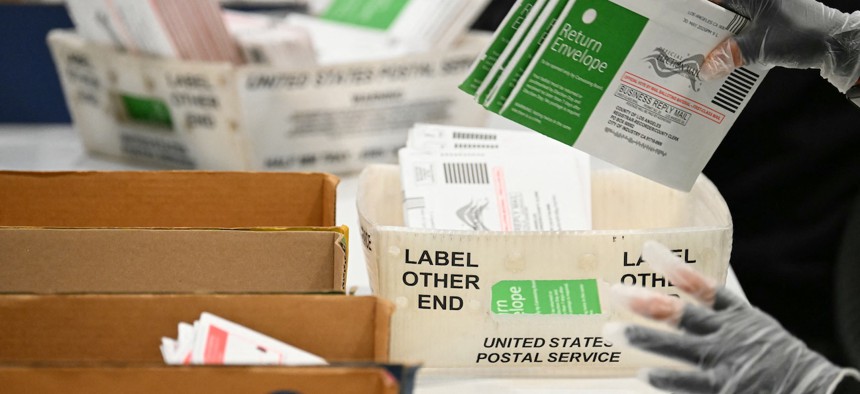
If adopted, the proposed rule could have far-reaching consequences for voters in states that choose not to comply. States that refuse to provide the requested absentee voter rolls could find themselves unable to use the Postal Service to deliver ballots to their citizens. This would create a significant logistical challenge, potentially disenfranchising voters who rely on mail-in ballots due to health concerns, travel, or other reasons.
The rule also raises questions about privacy and data security. States would be required to share lists of individuals who have requested absentee or mail ballots with a federal agency, potentially creating new channels for data sharing that could be subject to different privacy protections than those maintained by state election offices. Critics may argue that this represents an overreach of federal authority and an unnecessary intrusion into state election processes.
Furthermore, the timing of the proposal, coming in the midst of an election cycle, adds urgency to the debate. Election officials in non-compliant states would need to quickly adapt their procedures or risk disruptions to ballot delivery. The USPS, which already faces operational challenges and public scrutiny over its role in elections, would be thrust into an even more central position in the nation's voting infrastructure.
Looking Ahead
The Senate hearing marks an early step in what is likely to be a contentious process. The proposed rule will undergo a formal rulemaking procedure, which includes a public comment period. Legal challenges are almost certain, as states and voting rights groups may argue that the regulation exceeds the Postal Service's statutory authority or conflicts with constitutional principles of federalism.
Ultimately, the fate of the proposed rule will depend on the outcome of the rulemaking process, potential litigation, and the broader political landscape. What is clear is that the debate over mail-in voting, federal authority, and election security continues to evolve, with the USPS now playing a pivotal role in shaping the future of how Americans cast their ballots. Voters and state officials alike will be watching closely as this regulatory proposal moves forward.