Read on the Guardian
Philippines Earthquake Induces Coastal Uplift, Exposing Seabed and Marine Life
A devastating 7.8-magnitude earthquake in the Philippines has caused significant coastal uplift, raising the seabed by up to two meters and extending shorelines by as much as 200 meters. The phenomenon has exposed coral reefs and seagrass beds, leading to the death of marine organisms. At least 61 people were killed, and 40 remain missing.
A powerful earthquake that struck the southern Philippines on Monday has resulted in a rare geological phenomenon known as "coastal uplift," raising the seabed by as much as two meters and exposing vast stretches of coral reef and seagrass beds. The 7.8-magnitude quake, which originated off the coast of Mindanao island, has claimed at least 61 lives, with 40 people still reported missing according to the national disaster agency. The environmental impact is now becoming apparent as authorities assess the damage.

The Philippine Institute of Volcanology and Seismology attributed the coastal uplift to a shift in the Cotabato Trench, which lies approximately 50 kilometers off the coast. This movement "pushed upward part of the coastlines of Sarangani and Davao Occidental provinces," exposing the seafloor that was once submerged. Residents first noticed the changes two days after the quake, reporting that shorelines had extended by up to 200 meters in some areas.
Environmental Consequences of Coastal Uplift
The exposure of the seabed has had immediate and severe consequences for local marine ecosystems. According to the Philippine Department of Environment and Natural Resources, a team dispatched to the affected area discovered "long stretches of shoreline, coral reef, and seagrass beds have been exposed," leading to the death of numerous organisms. Images released by the department show large swathes of dead coral, with fish, clams, eels, and shells lying lifeless on the exposed seabed.
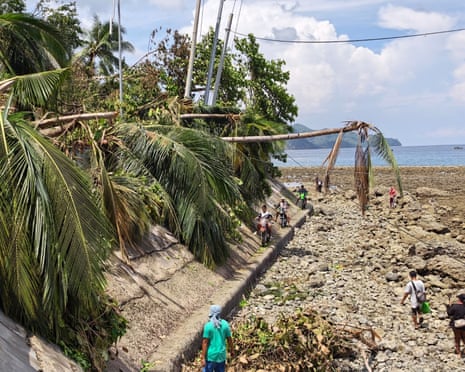
These fragile ecosystems, once submerged and thriving, are now vulnerable to air exposure and direct sunlight. The department warned that the "exposed corals and seagrass beds had begun dying off alongside their resident organisms." The scale of the area affected is still being determined, as an official noted that a comprehensive survey is challenging due to the extensive coastline that needs assessment.
Community Response and Safety Concerns
Local residents were the first to report the changes to the seabed, initially expressing fears that fumes from decaying marine life could pose a health risk. The environment department is working to address these concerns and monitor air quality. The earthquake itself, described as the strongest in decades for the region, has caused widespread destruction and displaced thousands of families. Recovery efforts are ongoing, with the government coordinating aid and rescue operations.

This event underscores the powerful forces of nature at play in the seismically active region, where the Cotabato Trench is a frequent site of seismic activity, including a swarm of thousands of small earthquakes recorded earlier in the year. The long-term ecological recovery of the affected marine habitats will be a significant challenge, requiring careful monitoring and potential restoration efforts.
Conclusion
The 7.8-magnitude earthquake in the Philippines has not only caused tragic loss of life and widespread destruction but has also dramatically altered the coastal landscape through coastal uplift. The exposure and subsequent death of coral reefs and seagrass beds represent a severe blow to local marine biodiversity and fisheries. As authorities continue search and rescue operations, the environmental damage will require sustained attention and action. For more information, read the full report from The Guardian.