Tragedy at Edwards: B-52 Bomber Crash Claims Eight Lives During Routine Test Flight
A US Air Force B-52 bomber crashed shortly after takeoff at Edwards Air Force Base in California on June 15, 2026, killing all eight people on board, including military personnel and government contractors. The aircraft, a Boeing-manufactured mainstay that has been in operation since 1955, was on a routine test mission supporting a radar modernisation program when the accident occurred. Military officials confirm an investigation that could take up to six months has been launched to determine the cause. The tragedy marks a somber moment for the 412 Test Wing community and highlights the risks inherent in test flight operations.
In a tragic incident that has sent shockwaves through the military aviation community, a United States Air Force B-52 Stratofortress bomber crashed shortly after takeoff at Edwards Air Force Base in Southern California on June 15, 2026. The accident claimed the lives of all eight individuals on board, including military personnel and civilian contractors from Boeing. The aircraft, a cornerstone of America's strategic bomber fleet for over seven decades, was conducting a routine test mission when it plunged to the ground in the Mojave Desert.
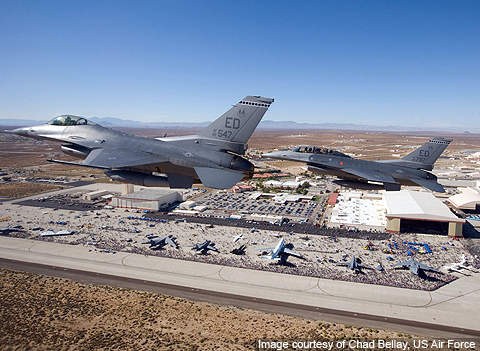
The crash occurred at approximately 11:20 AM local time (19:20 GMT) on Monday, just moments after the bomber had departed from the base. Witnesses reported seeing the aircraft burst into flames upon impact, leaving little more than a charred scar on the desert landscape. Military officials, after reviewing footage of the accident, concluded that there could not have been any survivors, according to a news conference held by base leadership.
What Happened at Edwards Air Force Base
Colonel James Hayes, the deputy commander for the 412 Test Wing at Edwards, addressed the media with a heavy heart. "We lost eight great Americans," he stated, confirming that officials were working diligently to notify the families of the victims. The colonel's remarks underscored the profound loss felt by the base community and the wider Air Force family. The airfield was immediately closed following the accident, with all inbound aircraft being diverted to other facilities.
Aerial footage captured by local media showed a wide patch of charred earth near the base's runway, with thick black smoke rising from the crash site. Firefighters responded swiftly, dousing the flames as emergency vehicles stood by. California Governor Gavin Newsom expressed his condolences on social media, writing, "My thoughts are with the victims, their families, and the entire Edwards Air Force Base community impacted by this tragic incident. Grateful to the first responders and emergency crew currently on the ground." The base's own updates confirmed the airfield closure and provided reassurance that all necessary emergency protocols were being enacted.
The Victims: Military Members and Contractors
The US military has confirmed that the eight victims included a mix of active-duty service members and government contractors. Boeing, the manufacturer of the B-52, issued a statement on Monday evening confirming that two of its employees were on board the aircraft at the time of the crash. The identities of all victims are being withheld pending notification of their families, a standard procedure in such tragic circumstances.
The crew was engaged in a "routine test mission" when the accident occurred, officials said. This particular B-52 was part of a fleet supporting what Colonel Hayes described as a "radar modernisation programme," a key upgrade effort for the aging bomber fleet. The exact cause of the crash remains unknown, and Colonel Hayes indicated that a formal investigation could take up to six months to complete. The Air Force has grounded all B-52 operations at Edwards temporarily as a precautionary measure while the investigation proceeds.
What Makes the B-52 Bomber So Unique
Nicknamed the BUFF (big, ugly, fat fella) by generations of airmen, the B-52 Stratofortress is one of the most iconic and longest-serving bombers in the US Air Force inventory. First introduced in 1955, the aircraft has been a mainstay of American strategic air power for nearly 71 years. Its longevity is a testament to its rugged design and adaptability to modern warfare requirements.
The B-52 is renowned for its exceptional range and payload capacity. It can operate without refueling for approximately 14,000 kilometers (8,700 miles), making it capable of striking targets across continents. The bomber was initially designed to carry nuclear weapons for deterrence missions during the Cold War. By 2024, approximately 76 B-52s remained in active service, a number that underscores the aircraft's continued relevance despite its age.

Capable of launching nuclear missiles, the B-52 moves at high subsonic speeds and can carry up to 32,000 kilograms (70,550 pounds) of weapons. It is compatible with a wide array of munitions, including air-to-ground missiles and precision-guided bombs. More recently, the bomber has served as a launch platform for the D21 Lockheed reconnaissance drone, showcasing its versatility in modern intelligence-gathering operations. The US military has deployed the B-52 in numerous conflicts, from the Vietnam War to more recent operations in the Middle East.
The Radar Modernisation Program
The B-52 involved in the crash was supporting a critical radar modernisation program, a key component of the broader B-52J upgrade initiative. The current B-52H model, which has been in service for decades, is scheduled to be upgraded to the B-52J standard. This new model will be fitted with Rolls-Royce F130 engines and an electronically scanned array (ESA) radar system built by Raytheon Technologies.
The new radar represents a quantum leap over the former 1960s-era mechanical radar system. The ESA system is significantly more powerful and reliable, and it uses a unique "upside-down" display configuration that beams radar energy towards the ground rather than up at the sky. This design is optimized for low-altitude terrain-following missions and precision strike capabilities. While the exact connection between the upgrade program and Monday's crash is not yet clear, investigators will be examining all possible factors, including whether any modifications to the aircraft's systems played a role in the accident.
The Human Element and Military Aviation Safety
The loss of life in this B-52 crash serves as a sobering reminder of the inherent dangers associated with military flight testing. Test missions, by their very nature, push aircraft to the limits of their performance envelopes to validate new systems and capabilities. The 412 Test Wing at Edwards Air Force Base is the Air Force's premier flight test organization, responsible for evaluating new and modified aircraft systems. The tragedy has profoundly affected the tight-knit community of test pilots, engineers, and support personnel who work there.
Colonel Hayes's comments about reviewing footage to determine that no survivors were possible highlight the devastating nature of the crash. The high-speed impact and subsequent fire left virtually nothing of the aircraft, a stark testament to the forces involved. As the Air Force begins its investigation, the focus will be on understanding the sequence of events that led to the crash and implementing corrective measures to prevent future tragedies. The investigation will likely involve a thorough review of maintenance records, pilot training, the aircraft's recent modification history, and the circumstances of the takeoff itself.
The broader military aviation community has also expressed its condolences and solidarity. The incident has prompted a review of B-52 operations across the Air Force, with some units temporarily standing down for safety stand-downs. While the B-52 has a generally strong safety record for an aircraft of its age, this crash underscores that even the most reliable platforms can experience catastrophic failures. The Air Force's commitment to investigating thoroughly and transparently will be crucial in maintaining public trust and ensuring the safety of all aircrews who fly these aging but vital bombers.
A Legacy of Service and a Moment of Reflection
The B-52 Stratofortress has been a symbol of American military power for generations. From its Cold War deterrent missions to its current role in conventional and nuclear strike operations, the aircraft has adapted to meet evolving threats. The B-52J upgrade program, which includes the new radar and engines, is intended to keep the bomber viable well into the 2050s. Monday's crash, however, casts a shadow over that future and raises questions about the risks involved in upgrading such an old airframe.
As the investigation unfolds over the coming months, the Air Force will work to determine the root cause of the accident. For now, the focus remains on the eight individuals who lost their lives in service to their country. Their sacrifice is a poignant reminder of the price paid by those who test the limits of technology to ensure the nation's security. The Edwards Air Force Base community, along with the entire military aviation world, mourns their loss and honors their service.