Return of the Preventable: Navigating Measles in a Post-Elimination America
A resurgence of measles in the United States, exemplified by a severe and sustained outbreak in Utah, signals a troubling regression in public health. Once eliminated as a major threat, the virus is returning due to falling vaccination rates, powerful anti-vaccine misinformation, and a weakened public health infrastructure. This article explores the realities facing doctors, parents, and health officials as they shift from containment to mitigation strategies. It examines the role of online disinformation, the challenges of vaccine hesitancy in communities from religious sects to supplement-savvy wellness circles, and the heavy emotional and financial toll extracted by preventable diseases. The piece details what it means for a family to endure a 'year of sickness' and how medical professionals are adapting to protect the most vulnerable. The situation in Utah is a clear case study for a new, more perilous health landscape across the country.
The scene in a southern Utah hospital room earlier this year was one no pediatrician expects to encounter in the 21st century. A doctor, fully clad in a protective suit, faced a newborn exposed to measles in the womb. The parents, hesitant about a life-saving antibody injection, considered alternative remedies. This scenario, once unthinkable in a country that had declared measles eliminated 25 years ago, has become a grim reality. The ongoing outbreak in Utah, which has spread beyond isolated communities into general circulation, forces the US to confront a new and regressive chapter in public health: a world where vaccine-preventable diseases are no longer a distant memory but a present and persistent danger.
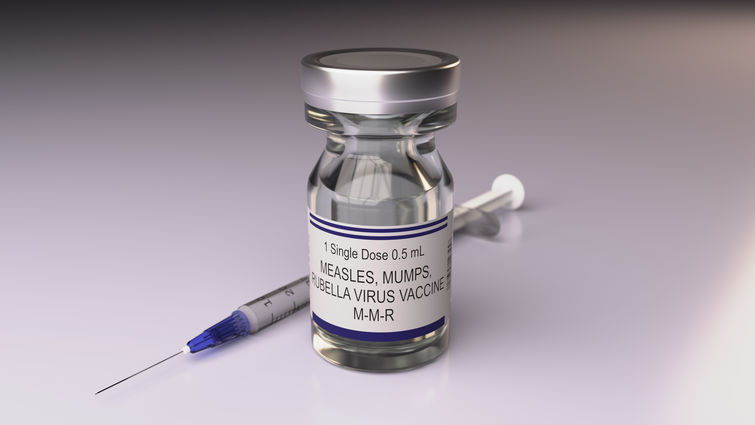
For decades after the development of the measles, mumps, and rubella (MMR) vaccine, the disease seemed like a relic of the past. Its elimination in the US in 2000 was a monumental public health achievement. However, the Utah outbreak, which began in the summer of 2025 and is still ongoing, illustrates how quickly progress can unravel. The virus has spread beyond its initial epicenter in southern Utah, reaching northern Arizona and every health jurisdiction in the state. The shift in public health strategy from containment to mitigation is a stark admission that the tools of the past—rapid contact tracing and quarantine—are no longer sufficient when community vaccination rates fall below the critical 95% threshold needed for herd immunity.
The Seeds of a Crisis: Why Measles Found Fertile Ground in Utah
The outbreak did not emerge from a vacuum. It is the result of a complex convergence of factors, including deep-seated community mistrust, a thriving alternative health economy, and a post-pandemic erosion of confidence in public health institutions. The virus first took hold in communities along the Utah-Arizona border, where vaccine exemptions are easily obtained for personal or religious reasons. In the town of Hildale, for example, only 30% of kindergartners are considered adequately immunized. This low rate is part of a broader trend; fewer than 80% of kindergartners in southwestern Utah were adequately immunized in the 2024–25 school year, leaving a vast population of susceptible individuals.
One of the most potent drivers of this hesitancy is the pervasive spread of online misinformation. Anti-vaccine organizations and influencers produce slick videos, podcasts, and social media campaigns that downplay the risks of diseases like measles while wildly exaggerating the side effects of vaccines. The appointment of Robert F. Kennedy Jr. as Secretary of Health and Human Services has only amplified these doubts. His public statements questioning vaccine safety and promoting a discredited link to autism have lent a veneer of official credibility to claims that medical science has thoroughly debunked. This has created a confusing environment for parents, making them more susceptible to dangerous alternatives.
Alternative Health and the Wellness Economy

Utah presents a unique case study in vaccine hesitancy. The state has a massive and influential supplement and alternative health industry, worth over $6 billion. This is fueled by a high concentration of multi-level marketing (MLM) companies and a culture that prizes natural remedies. Many of these networks, from essential oil sellers to wellness coaches, actively promote skepticism of mainstream medicine. For many residents, a distrust of pharmaceutical companies—justified by past sins like the opioid crisis—merges with a general suspicion of authority. This creates a powerful ideological wall that public health messaging struggles to penetrate, as people find confirmation for their beliefs within their own peer networks, often led by people they trust.
The New Reality for Doctors and Hospitals
The outbreak has placed an immense and exhausting burden on healthcare providers. Pediatricians like those in Utah are now on the front lines of a conflict they never trained for. They describe treating children struggling to breathe in the ICU with measles pneumonia, running on fumes after 12-hour shifts. The emotional toll is heavy. Doctors watch parents grapple with the suffering of their unvaccinated children while knowing that a simple, safe, and effective shot could have prevented the entire ordeal. They beg families not to rely on vitamin A or essential oils to combat a virus that can cause permanent brain damage or death.
The logistical challenge is also immense. Hospitals have enacted labor-intensive protocols to prevent the virus from spreading through their own facilities. When an unvaccinated child with measles walks into a waiting room, entire wings may need to be shut down for cleaning. Infants too young to be vaccinated and immunocompromised patients who are exposed require expensive and time-sensitive infusions of concentrated antibodies, costing hundreds to thousands of dollars per dose. A single hospitalization for measles can cost over $33,000, a cost that strains families and the healthcare system alike.
"I wish that people could see what I see. This train is going in the wrong direction, and it can feel like a helpless situation, because we’re just not seeing the public messaging and leadership that’s needed to turn this around."
Life in an Active Outbreak Zone

For families living in affected areas, the outbreak has fundamentally changed daily life. Parents of infants are making difficult choices about whether to start day care, knowing that their baby could be exposed by an unvaccinated staff member or child. Many are requesting early MMR vaccinations at 6 months of age, which are not a standard recommendation but are offered in areas of active transmission. Some mothers report avoiding public places entirely, leading to social isolation. Others, like a marketing director in Salt Lake County, are pushing for policy changes, such as requiring day care staff to disclose their vaccination status, only to be told that the state lacks the legislative authority to mandate such measures. The burden of protection has fallen squarely on individual parents, many of whom feel they have no real choice.
Adapting the Public Health Playbook
The shift from containment to mitigation marks a profound change in the public health approach. Health departments, already hamstrung by budget cuts and political backlash from the COVID-19 era, have had to triage their efforts. Instead of trying to identify and quarantine every single contact of an infected person—an impossible task when cases are in the hundreds—they now focus on the highest-risk settings. For example, when a case is identified in a school, health officials meet with the school nurse to determine which specific classroom or group of unvaccinated children needs to be quarantined, rather than shutting down the entire school. This targeted approach is an attempt to conserve resources and minimize community disruption, but it is a clear sign that officials have lost control of the virus's spread.
The Long Shadow: A Future of Constant Vigilance
The measles outbreak in Utah is not a one-time anomaly; it is a harbinger of things to come. The US is likely to lose its measles elimination status in the coming year. This means that measles will no longer be a rare import but an endemic disease that circulates within the population. The health, economic, and social consequences are severe. Children will suffer from infections that could have been prevented, miss weeks of school, and in rare cases, die. The workforce will be impacted as parents stay home with sick kids or fall ill themselves. The cost to the public health system—for outbreak investigations, antibody infusions, and hospitalizations—will run into the millions.
The path forward is clear but politically fraught. Reversing this trend requires a full-throttle, nationwide campaign to educate communities about the safety and necessity of vaccines. This means using the same powerful tools of mass communication and community outreach that the anti-vaccine movement has employed for years. It requires political leadership that unequivocally supports science-based public health measures, not one that sows doubt. Without such a concerted effort, the story of the Utah outbreak will become a template for the future of public health in America: a constant, exhausting battle against a preventable disease that we once thought we had conquered forever. The choice for the nation is stark: invest in the proven tools of prevention, or continue to pay the incalculable cost of a return to the past.