Read on the Guardian
Ebola Spread in Central Africa Could Match 2014 Record Outbreak, US Health Officials Say
A new analysis by the US Centers for Disease Control and Prevention (CDC) warns that the ongoing Ebola outbreak in Central Africa could reach a scale comparable to the devastating 2014-2016 West African epidemic, which killed over 11,000 people. The CDC's computer models project a range of scenarios, from 10,000 to over 20,000 cases, depending largely on the effectiveness of public health interventions. While health officials emphasize the outbreak is on a 'dangerous trajectory,' experts caution that accurately predicting the final toll is extremely challenging due to limited data. The situation is further complicated by ongoing armed conflict, population displacement, and the lack of specific treatments or vaccines for the current strain.
The ongoing Ebola outbreak in Central Africa is on a 'dangerous trajectory' and could rival the scale of the 2014-2016 West African epidemic that killed more than 11,000 people, according to a new analysis by US health officials. The US Centers for Disease Control and Prevention (CDC) has published a range of scenarios generated by computer models, projecting between 10,000 and more than 20,000 cases if the spread is not effectively controlled. The 2014-2016 outbreak saw more than 28,000 reported cases.

The CDC analysis indicates that the final number of cases will depend heavily on how quickly infected individuals are isolated to slow transmission. Dr. Satish Pillai, incident manager for the CDC's Ebola response, stated that without strong public health interventions, 'the modelling work suggests an outbreak of that scale is possible.' Jennifer Nuzzo, director of Brown University's Pandemic Center, noted that the modelling 'affirms what we have worried about since the beginning: this outbreak is following a dangerous trajectory' if more is not done to halt its spread.
Current Situation and Challenges
As of early June, the Africa Centers for Disease Control and Prevention reported approximately 400 confirmed cases, including 63 deaths. Experts acknowledge that the actual number of infections is likely higher, as many cases may go undiagnosed or unreported. The current outbreak is caused by the Bundibugyo virus, for which there are no specific treatments or vaccines. The disease is often fatal, with the Ebola virus spreading through contact with body fluids such as vomit, blood, and semen.
The Role of Conflict and Displacement
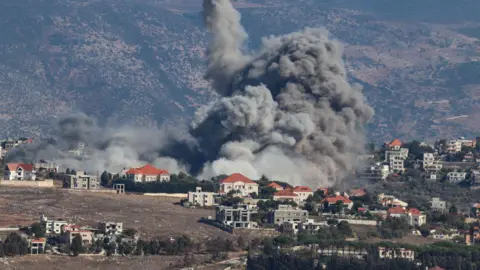
The response to the outbreak has been severely complicated by an ongoing armed conflict between the Democratic Republic of the Congo's government and the Rwanda-backed M23 rebel group, as well as attacks by the Islamic State-affiliated Allied Democratic Force. This violence has caused massive displacement of people living in conflict areas, making it difficult for health workers to reach affected communities and implement control measures. The World Health Organization (WHO) declared the outbreak a global health emergency in May, underscoring the seriousness of the situation.

Modelling Scenarios and Uncertainties
The CDC's modelling report attempts to project how the outbreak might evolve based on various factors, including the number of infections and deaths that have already occurred, and how quickly responders can identify and isolate infected individuals. Higher isolation rates, of 50% or 70%, could keep the number of cases closer to 10,000. However, if the actual number of deaths in late May was greater than currently recognized, the outcome could be worse. Dr. Pillai noted that the actual isolation rate is considered to be 'on the lower end of the scenarios' modelled.
Jennifer Nuzzo cautioned against placing too much weight on the specific numbers, stating, 'I wouldn’t read too much into the specific numbers. It’s really hard to make an accurate projection when you have limited data.' The CDC's own modelling from the 2014 West African outbreak proved to be wildly inaccurate at one point, with a worst-case scenario projecting as many as 1.4 million infections—more than 50 times the actual number. This highlights the inherent difficulty in predicting the trajectory of an outbreak, especially one unfolding in a complex environment.

Conclusion
The CDC's latest analysis serves as a stark warning about the potential scale of the Ebola outbreak in Central Africa. While the modelling underscores a 'dangerous trajectory,' the actual outcome remains highly uncertain, contingent on both the effectiveness of public health interventions and the ability to navigate the challenging security environment. The situation demands a robust and sustained international response to prevent a repeat of the 2014-2016 disaster. Continued vigilance, rapid case identification, and community engagement are critical to containing the spread of this deadly virus.