International Dark Sky Week: China's Legal Path to a Starry Economy
As the 2026 International Dark Sky Week begins, China is pioneering a unique approach to combating light pollution by merging environmental legislation with economic development. This article explores how the newly passed Ecological Environment Code establishes national standards for light pollution control, transforming the issue from a niche environmental concern into a driver for rural revitalization and sustainable tourism. From the pristine dark sky reserve in Lenghu, Qinghai, to the thriving star-gazing destinations in Zhejiang and Shaanxi, communities across China are demonstrating that protecting the night sky can create tangible economic value. The legal framework and practical examples highlight a potential model for other nations seeking to balance development with the preservation of natural darkness.
As darkness falls on April 13, the 2026 International Dark Sky Week kicks off with a simple yet powerful call: go dark. The annual campaign, running April 13 to 20, invites people around the world to step outside after sunset, reconnect with the night sky and take meaningful action to protect the vanishing resource that is darkness itself. The urgency has never been greater, with light pollution growing at an alarming rate globally and pushing truly dark skies farther out of reach for more than 80% of the world's population.

China is emerging as an unexpected but significant force in the global dark sky movement. On March 12, the National People's Congress passed the Ecological Environment Code, which will take effect on August 15. For the first time in the nation's legislative history, light pollution control has been systematically codified at the national level. The Code establishes clear definitions, regulatory standards and enforcement mechanisms for light pollution, filling a long-standing legal void that has allowed this invisible pollutant to spread unchecked for decades. The breakthrough was widely celebrated by environmental advocates and legal scholars alike, who noted that the Code directly addresses what citizens have long experienced as a "hidden pollution" affecting quality of life.
The Legal Framework for Light Pollution Control
The Ecological Environment Code represents a landmark shift in China's approach to environmental governance. By integrating light pollution regulations into a comprehensive legal framework, the government has signaled that artificial light at night is now considered a serious environmental issue deserving of regulatory attention. The Code provides local governments with the authority to set specific standards for outdoor lighting, curfew hours for commercial signage, and guidelines for public lighting in sensitive areas such as nature reserves and astronomical observatories.
This legal foundation is crucial for supporting the growing dark sky economy. Without clear national standards, communities investing in dark sky tourism faced uncertainty about whether their efforts to reduce light pollution could be sustained. The Code removes that uncertainty by giving legal backing to local dark sky protection initiatives, ensuring that the investments made by communities in infrastructure and tourism development are protected from future light pollution encroachment. The legal framework also provides tools for citizens to report violations and demand enforcement, creating a system of accountability that was previously absent.
Local Economies Transformed by Starry Nights
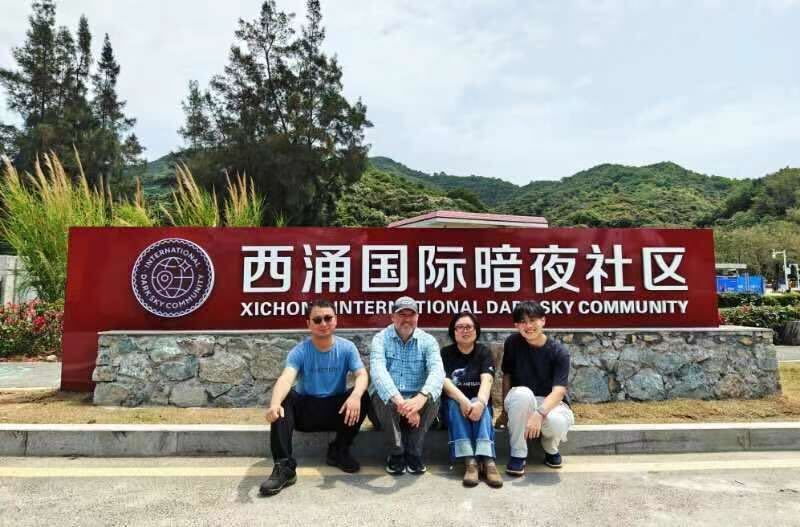
Across China, dark sky protection is no longer just a concept, it is transforming local economies. In south China's Shenzhen's Xichong community, the country's first International Dark Sky Community welcomed more than 2.5 million visitors in 2025, driving a 20.63% increase in collective economic income while safeguarding some of the most pristine stargazing conditions in the Pearl River Delta. This success story demonstrates how environmental protection and economic development can reinforce each other when properly aligned with community interests and regulatory support.
Lenghu: From Oil Town to Astronomy Hub
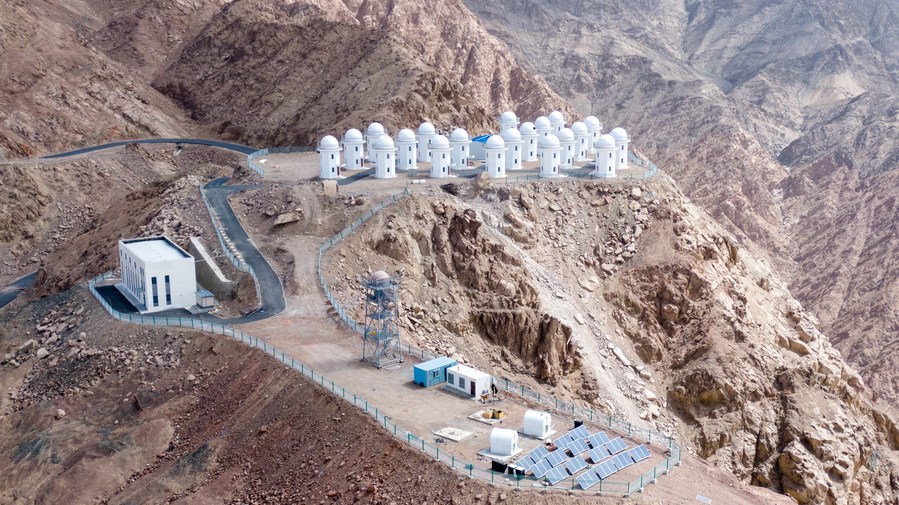
In northwest China's Qinghai Province, the remote town of Lenghu has placed its entire 17,800-square-kilometer territory under dark sky protection, transitioning from a depleted oil town into a world-class astronomical observatory hub. This transformation required significant investment in lighting retrofits, public education about light pollution, and the development of tourism infrastructure including observatories, accommodations, and guided stargazing programs. The result is a new economic identity built on the natural resource of darkness, replacing the extractive economy of the past with a sustainable model based on preservation and experience.
Gaotiankeng: A Thousand-Year-Old Stargazing Village
The story continues in other regions of China. In Kaihua County, east China's Zhejiang Province, a thousand-year-old village called Gaotiankeng has become a star-gazing destination where ancient stone houses share the hillside with astronomy-themed retreats. The village capitalizes on its remote location and minimal light pollution to offer visitors an immersive experience that combines cultural heritage with scientific wonder. Visitors can stay in traditional architecture while using modern telescopes, creating a unique tourism product that differentiates Gaotiankeng from other rural destinations.
Qinling Starry Town: A Thriving Dark Sky Brand
In Liuba County, north China's Shaanxi Province, the Huoshaodian Town, nestled deep in the Qinling Mountains, has transformed its pristine dark skies into a thriving tourism brand, complete with a rural astronomical observatory, star-themed accommodations and immersive night-sky experiences that attract urban visitors from across the region. The development of this "Qinling Starry Town" brand required coordination between local government, tourism operators, and environmental regulators to ensure that the very darkness that makes the location special is protected even as tourism grows.

Conclusion: A Model for Global Dark Sky Protection
As the 2026 Global Dark Sky Week invites the world to look up, China is demonstrating that protecting darkness is not about turning off the lights and walking away. It is about turning on new possibilities, where starry nights become the foundation for sustainable development, rural revitalization and a deeper connection to the cosmos. The integration of light pollution control into national environmental law provides a replicable model for other countries seeking to balance urban development with the preservation of natural darkness. The economic successes of communities like Xichong, Lenghu, Gaotiankeng, and Huoshaodian Town show that when legal frameworks support dark sky protection, the economic benefits can be substantial and sustainable. The message is clear: protecting the night sky is not just an environmental imperative, it is an economic opportunity waiting to be seized.