Read on PBS News
The Science and History of Splashdown: NASA's Enduring Return-to-Earth Method
Splashdown, the process of landing a spacecraft in water, remains NASA's primary method for returning astronauts to Earth despite its dramatic nature. This article explores the complex science behind reentry, from scorching atmospheric friction to the crucial role of parachutes and water's shock-absorbing properties. We trace the history from Gus Grissom's harrowing 1961 Liberty Bell 7 mission to the upcoming Artemis II lunar flyby, scheduled for April 10, 2026, examining how decades of experience and engineering have refined this critical phase of spaceflight.
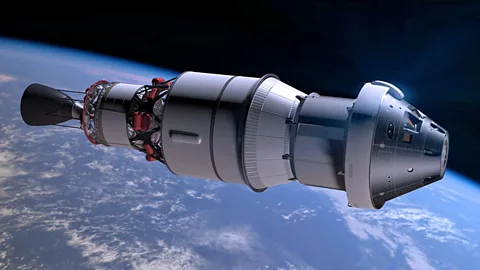
For over six decades, the final, fiery descent of a spacecraft through Earth's atmosphere and its subsequent plunge into the ocean—a maneuver known as splashdown—has been the dramatic climax of American human spaceflight. While the spectacle involves hurdling through the atmosphere faster than sound and enduring temperatures in the thousands of degrees, NASA has perfected this harrowing process through extensive experience. The upcoming return of the Artemis II crew on April 10, 2026, in their Orion capsule will once again put this method to the test, relying on physics and engineering honed since the Mercury program.
The Physics of Atmospheric Reentry
The fundamental challenge of splashdown is dissipating a spacecraft's immense kinetic energy. As a capsule careens back from space, friction with the atmosphere creates drag, converting that kinetic energy into intense thermal energy or heat. This process generates a scorching plasma flow around the vehicle, with temperatures reaching approximately 2,700 degrees Fahrenheit (1,500 degrees Celsius), as detailed in analyses of reentry physics. A robust heat shield bears the brunt of this inferno to protect the crew inside. The Artemis I mission revealed more heat shield damage than anticipated, leading engineers to carefully remap the trajectory for Artemis II to ensure a safer passage.
Slowing the Descent: The Role of Parachutes
Atmospheric drag alone is insufficient to slow the spacecraft to a non-destructive speed. Engineers employ massive, brightly colored parachutes—often over 100 feet in diameter—to manage the final stages of descent. The sequence begins with drag parachutes deploying when velocity drops below about 2,300 feet per second. These initial chutes stabilize the capsule and begin a critical deceleration, making way for the main parachutes that further reduce speed for the final impact.

Why Water? The Ideal Landing Medium
The choice of water as a landing zone is deliberate and based on its physical properties. Water has relatively low viscosity and density compared to land, making it an excellent natural shock absorber. Furthermore, water covers 70% of Earth's surface, providing a vast target for returning spacecraft. The final impact, or splashdown, occurs at roughly 80 feet per second (24 meters per second). This controlled crash is designed to be within structural limits, ensuring the capsule, its systems, and the crew inside can withstand the forces involved.
A History Forged by Experience: From Grissom to Artemis
The U.S. pioneered crewed splashdowns with the Mercury program in 1961. These early capsules used an ablative heat shield designed to boil away during reentry, carrying heat away from the vehicle. However, the practice was learned through trial and near-tragedy. Astronaut Gus Grissom's Liberty Bell 7 mission in July 1961 nearly ended in disaster when the hatch blew prematurely, flooding the capsule and forcing Grissom into a desperate struggle in the Atlantic Ocean before rescue. This dramatic event underscored the risks and informed future design and recovery protocols.
Following the space shuttle Challenger disaster in 1986, engineering focus intensified on "crashworthiness"—ensuring vehicles offer a chance of survival upon impact. Today, complex models and rigorous testing prove a spacecraft's ability to survive a water landing, a non-negotiable requirement for human-rating any vehicle.
The Modern Era and Future of Splashdown
Splashdown remains the standard for American crewed returns. Between 2021 and mid-2024, SpaceX's Dragon capsules completed seven flawless splashdowns from the International Space Station. Notably, the massive Starship rocket achieved a vertical splashdown in the Indian Ocean in June 2024. For commercial entities like SpaceX, splashdown enables reusability; recovering and refurbishing capsules like Dragon saves millions of dollars and reduces mission costs, a key economic driver for the future of spaceflight.
Conclusion
From the tense moments of the Mercury program to the planned return of Artemis II astronauts from lunar orbit, splashdown has proven to be a resilient and effective method for concluding space voyages. It is a testament to engineering that balances the brutal physics of reentry with the gentle cushion of the ocean. As more agencies and private companies pursue space exploration, the sight of a spacecraft plunging into the sea, surrounded by billowing parachutes, will continue to symbolize both the end of a journey and the enduring human capacity to solve complex challenges.