Read on the Guardian
UK Shelves Chagos Islands Treaty After US Withdraws Support
The UK government has announced it cannot complete the passage of a bill to cede sovereignty of the Chagos Islands to Mauritius, citing the withdrawal of US support as the primary reason. Foreign Office Minister Stephen Doughty stated that the treaty, which included leasing the Diego Garcia military base back to the UK and US, has become 'impossible to agree at political level' following a change in position from the Trump administration. This development represents a significant setback for Chagossian resettlement hopes and highlights growing tensions in US-UK relations.
The United Kingdom's plan to transfer sovereignty of the Chagos Islands to Mauritius has been effectively shelved after the United States withdrew its support for the agreement. Foreign Office Minister Stephen Doughty informed Parliament that the corresponding legislation, known as the Diego Garcia bill, cannot complete its passage this parliamentary session. This abrupt halt to a carefully negotiated diplomatic process underscores the complex geopolitical interests surrounding the strategically vital Indian Ocean territory and signals a notable shift in transatlantic coordination on foreign policy matters.

The Collapsed Treaty Framework
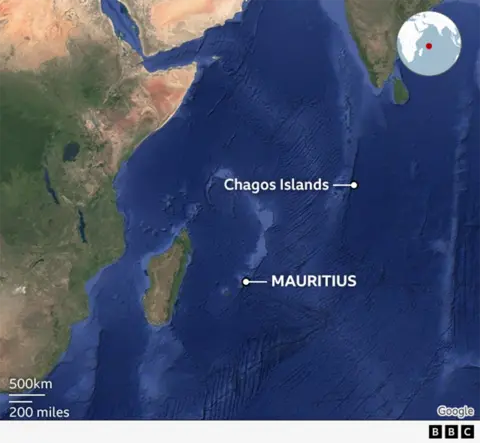
The proposed treaty, negotiated over several years, represented a significant diplomatic effort to resolve longstanding sovereignty disputes while addressing historical injustices. Under the agreement's terms, the UK would have ceded sovereignty of the entire Chagos archipelago to Mauritius, ending a colonial-era arrangement that has been contested for decades. In return, Mauritius would have leased back the island of Diego Garcia to the UK for 99 years, ensuring the continued operation of the strategically crucial military base jointly operated by British and American forces. This base serves as a key intelligence and logistics hub for operations across the Indian Ocean and Middle East regions.
US Role and Withdrawal
Minister Doughty revealed that the treaty was initially negotiated "in close coordination with the US" across two American administrations, with both finding the agreement "robust" after thorough testing at all levels of the US system. Former President Donald Trump had previously described the treaty as "very strong and powerful," indicating initial bipartisan support. However, Doughty stated that Trump's position "appears to have changed," leading to the US withdrawal of support that ultimately made the treaty politically unviable. This reversal highlights how changes in US foreign policy priorities can directly impact UK diplomatic initiatives, particularly those involving shared military assets.

Legal and Parliamentary Implications
The withdrawal of US support created an insurmountable legal obstacle for the UK government. Doughty explained that ratifying the treaty with Mauritius required updating the 1966 UK-US agreement, known as the "exchange of notes," which governs the availability of British Indian Ocean Territories for defense purposes. Without American cooperation to amend this foundational agreement, the treaty could not proceed to ratification. Consequently, the Diego Garcia bill "cannot complete its passage this parliamentary session and cannot be carried over due to its advanced progression through parliament." This parliamentary deadlock leaves the sovereignty issue unresolved and the legal status of the Chagos Islands in continued limbo.
Geopolitical Context and Relations
This diplomatic setback occurs against a backdrop of worsening US-UK relations following Trump's criticism of Prime Minister Keir Starmer over his stance on the Iran conflict. The Chagos Islands issue has now become entangled in broader geopolitical tensions, demonstrating how bilateral disputes can become collateral damage in larger international disagreements. The UK government nevertheless maintains that "the Diego Garcia treaty is the best means of protecting the full operation of the military base for future generations, for us and our allies," suggesting the agreement remains the preferred long-term solution despite current obstacles.
Impact on Chagossian Community
Minister Doughty acknowledged that "the delay to the treaty will be sad news to many Chagossians" who viewed it as "the only viable means to a sustainable programme of resettlement." The original inhabitants of the Chagos Islands were forcibly removed by the British government between 1967 and 1973 to make way for the military base. The treaty with Mauritius included provisions that would have enabled Mauritius to implement resettlement programs under the terms of sovereignty transfer. While not all Chagossians supported the agreement, its collapse represents another disappointment for a community that has sought justice and return rights for decades through various international legal avenues.
Future Prospects and Considerations
The UK government now faces difficult decisions regarding the future status of the Chagos Islands. Without the treaty framework, the sovereignty dispute with Mauritius remains unresolved, and the legal basis for the military base continues to rely on colonial-era arrangements that have been repeatedly challenged in international courts. The situation creates uncertainty for long-term strategic planning regarding the Diego Garcia facility, which remains critical to both UK and US military operations in the region. Future diplomatic efforts will need to address not only bilateral relations with Mauritius but also the evolving dynamics of US-UK cooperation and the legitimate aspirations of the Chagossian people for resolution and potential resettlement.
The collapse of the Chagos Islands treaty represents more than a failed diplomatic initiative—it highlights the intricate connections between historical justice, military strategy, and international alliance politics. As the UK government reassesses its approach, the fundamental tensions between sovereignty claims, strategic interests, and human rights considerations remain unresolved. The episode serves as a case study in how domestic political changes in allied nations can derail carefully constructed international agreements, leaving vulnerable communities and complex geopolitical arrangements in precarious positions awaiting future resolution.