Satellite Security Crisis: How $800 Equipment Exposed Global Communications
A groundbreaking study reveals that sensitive communications from T-Mobile users, US military operations, and critical infrastructure are being transmitted unencrypted via satellites. Using just $800 in basic equipment, researchers intercepted thousands of calls, text messages, military communications, and industrial control system data. The findings expose a widespread security vulnerability affecting cellular networks, government agencies, and essential services across North America, raising urgent questions about satellite communication security protocols.
In an era where digital security is paramount, a startling discovery has revealed that sensitive communications from major corporations, government agencies, and critical infrastructure are being transmitted through space completely unprotected. Using basic equipment costing less than $800, researchers from UC San Diego and the University of Maryland demonstrated how easily satellite communications can be intercepted, exposing a massive security gap in global telecommunications infrastructure.
The Research Methodology
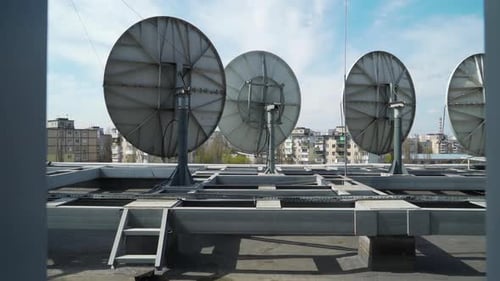
The three-year study involved setting up a simple satellite receiver system on a university building roof in San Diego's La Jolla neighborhood. The equipment consisted of standard consumer-grade components: a $185 satellite dish, $140 roof mount with a $195 motor, and a $230 tuner card. By pointing their dish at geostationary satellites visible from their Southern California location, the researchers were able to capture signals covering approximately 15 percent of global satellite transponder communications.
What they discovered shocked the cybersecurity community. Roughly half of geostationary satellite signals carrying sensitive consumer, corporate, and government communications were transmitted without any encryption protection. This meant that anyone with similar basic equipment could potentially access this data, which included everything from personal phone calls to military communications.
Exposed Communications
Cellular Network Vulnerabilities
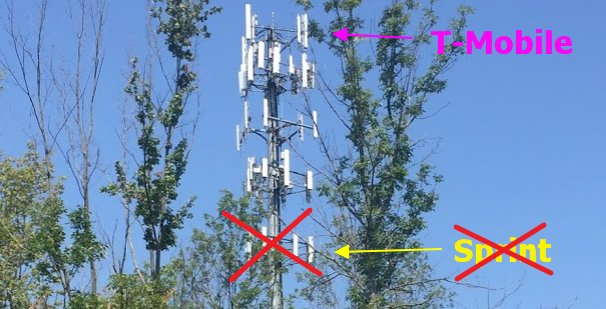
The researchers obtained particularly alarming data from T-Mobile's cellular network. In just nine hours of recording satellite communications, they collected phone numbers of more than 2,700 users along with their incoming calls and text messages. The exposure occurred because cellular towers in remote locations often use satellite connections for backhaul traffic—the internal communications that connect towers to the core network.
Similar vulnerabilities were found in Mexican telecom providers AT&T Mexico and Telmex, which also transmitted unencrypted voice calls and user data. The researchers even discovered decryption keys that could potentially have been used to decipher other sensitive information transmitted through these networks.
Military and Law Enforcement Exposure
Perhaps most concerning were the military and law enforcement communications intercepted by the researchers. They obtained unencrypted internet communications from US military sea vessels, including the vessels' names. For Mexican military and law enforcement, the exposures were even more severe, revealing communications with remote command centers, surveillance facilities, and sensitive intelligence about activities like narcotics trafficking.
The researchers also accessed military asset tracking and maintenance records for aircraft including Mil Mi-17 and UH-60 Black Hawk helicopters, sea vessels, and armored vehicles—complete with location data and mission details. This level of exposure could potentially compromise operational security and personnel safety.

Critical Infrastructure at Risk
The satellite interception revealed significant vulnerabilities in essential services and industrial systems. Researchers found that Mexico's state-owned electric utility, Comisión Federal de Electricidad (CFE), which serves nearly 50 million customers, was transmitting internal communications without encryption. This included work orders containing customers' names and addresses, along with communications about equipment failures and safety hazards.
Other critical infrastructure exposures included communications from offshore oil and gas platforms and industrial control system software. Some infrastructure owners expressed concern that sophisticated malicious actors could not only surveil these control systems but potentially disable or spoof them to tamper with facility operations.
Corporate and Consumer Data Exposure
The researchers captured a wide range of corporate and consumer data transmitted via satellite. This included in-flight Wi-Fi data from Intelsat and Panasonic systems used by 10 different airlines, containing unencrypted metadata about users' browsing activities and even the audio of news programs and sports games being broadcast to passengers.
Corporate communications were also exposed, including emails and inventory records from Walmart's Mexican subsidiary, satellite communications to ATMs managed by Santander Mexico, and data from Mexican banks Banjercito and Banorte. While much of this corporate data was eventually encrypted after the researchers alerted the companies, the initial exposure highlighted systemic security failures.

Global Implications and Response
The researchers' findings have significant implications for global security. Since their satellite dish could only capture signals from about 15 percent of global satellite communications—primarily focused on the western US and Mexico—similar equipment placed elsewhere in the world would likely reveal entirely different sets of sensitive data being transmitted unencrypted.
Following their discoveries, the research team spent nearly a year warning affected companies and agencies. Most, including T-Mobile, moved quickly to encrypt their satellite communications. However, some owners of vulnerable US critical infrastructure have yet to add encryption to their satellite-based systems, despite being alerted to the security risks.
Conclusion: The Urgent Need for Satellite Security
The satellite communication security crisis revealed by this research demonstrates that fundamental assumptions about the protection of sensitive data transmitted through space are dangerously flawed. The fact that basic consumer equipment can intercept military communications, corporate data, and personal communications highlights an urgent need for comprehensive encryption standards across all satellite communications.
As the researchers prepare to release their open-source software tool for interpreting satellite data, they acknowledge the dual-use nature of their work. While it may enable malicious actors, they argue it will also push more organizations to secure their satellite communications. In an increasingly connected world where satellite technology plays a crucial role in global communications, ensuring the security of these transmissions is no longer optional—it's essential for protecting national security, corporate integrity, and individual privacy.