Read on PBS News
The Rising Cost of Political Security: A Fivefold Increase in Campaign Spending
A new report reveals that security spending for U.S. congressional and presidential campaigns has surged fivefold over the past decade, exceeding $40 million in the 2023-24 cycle. This dramatic increase is driven by an increasingly hostile political environment marked by threats ranging from doxing to assassination plots. The findings highlight a troubling new financial and personal barrier for those considering public office, as threats increasingly target the private homes of candidates and officials.
In an era marked by heightened political tensions, the personal safety of candidates and public officials has become a paramount concern with significant financial implications. A recent report from the nonpartisan Public Service Alliance reveals a stark reality: security spending for federal political campaigns has skyrocketed, increasing fivefold over the last ten years. This surge reflects a dangerous shift in the American political landscape, where threats of violence have moved from the periphery to the center of campaign planning and budgeting.
Quantifying the Security Surge
According to the report, federal political committees spent more than $40 million on expenses explicitly labeled as security during the 2023-24 campaign cycle. This figure, drawn from publicly available Federal Election Commission filings, represents the most recent complete data. As noted by report author Justin Sherman, this total is likely a conservative estimate, as it only counts expenses explicitly marked for security purposes. Many other campaign expenditures may have security components that are not separately itemized, meaning the true financial burden is even greater.
The $40 million spent in the last cycle stands in dramatic contrast to spending levels a decade prior, illustrating the rapid escalation of security concerns. While this amount is a small fraction of the billions spent overall on elections every two years, it represents a new and growing line item that campaigns must now account for—a cost that was negligible for previous generations of candidates.
The Drivers of Increased Spending
The primary driver behind this spending explosion is a documented rise in threats against public officials. The political environment has grown increasingly hostile, with incidents ranging from online harassment and doxing—the malicious posting of personal addresses online—to physical assaults and assassination plots. The report references a grim chronology of political violence over the past decade that has reshaped the security calculus for anyone in public life.
This violence includes the 2017 shooting at a Republican congressional baseball practice, the 2022 hammer attack on Paul Pelosi (husband of then-Speaker Nancy Pelosi), the 2024 assassination attempt on then-candidate Donald Trump, and the 2025 murders of a Minnesota state lawmaker and commentator Charlie Kirk. Each event has contributed to a pervasive sense of vulnerability, pushing campaigns to invest more in protective measures.
The Changing Nature of Threats
A particularly disturbing trend identified in the report is the targeting of private residences. Historically, security was focused on public events like rallies, which might feature metal detectors and visible security personnel. Today, threats have migrated to the home front. The report found that campaigns spent nearly $1 million on home security over the past decade—a category that saw $0 spending in the 2015-16 cycle.
This spending covers contracts with private response companies, the installation of window bars, surveillance cameras, and other fortifications. The attacks on Paul Pelosi and Minnesota State Representative Melissa Hortman, both of which occurred at their homes, underscore why this has become a necessary expense. As Sherman notes, this shift means that "the security spend is becoming a greater barrier for someone running for office," as potential candidates must now factor the cost of securing their family's home into their decision to seek public service.
The Digital Security Frontier
Another area of explosive growth is digital security. Spending to protect against hackers and monitor online threats ballooned from just $50,000 in the 2015-16 election cycle to $900,000 in 2023-24. This eighteen-fold increase highlights how the threat landscape has expanded into cyberspace. Campaigns must now defend against data breaches, disinformation campaigns, and the coordinated online harassment of staff and candidates, requiring specialized expertise and technology.

Broader Implications for Democracy
The rising cost of security carries profound implications for American democracy. First, it creates a new financial hurdle that may deter qualified individuals of modest means from running for office, potentially narrowing the pool of candidates. Second, it changes the experience of campaigning, forcing candidates to operate behind a veil of heightened security that can distance them from the electorate they seek to serve.
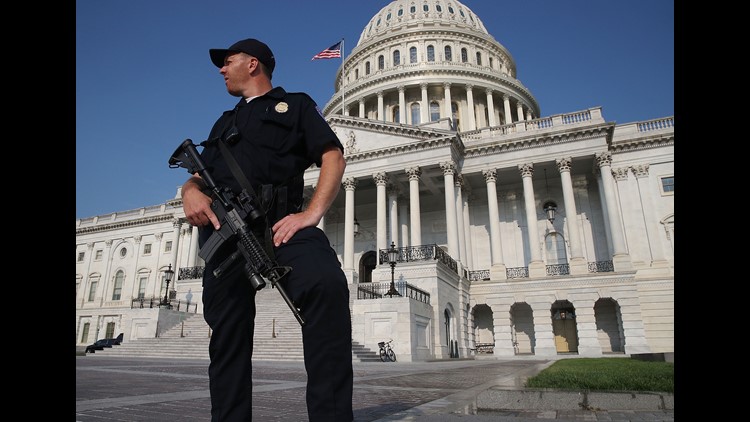
Furthermore, the report's tally does not include the massive, separate security costs borne by the federal government itself, such as augmented U.S. Capitol Police details for members of Congress or expanded U.S. Secret Service protection. When combined, the full cost of securing the political process—from campaigns to incumbency—paints a picture of a nation investing heavily to protect its leaders from its own citizens.
As Justin Sherman summarized, "This is not a good place to be as a country." The fivefold increase in campaign security spending is more than a budgetary statistic; it is a stark indicator of the erosion of civil political discourse and the tangible dangers now associated with public service. Addressing the root causes of this hostility is essential to ensuring that seeking office does not remain a prohibitively dangerous and expensive endeavor.