Read on France 24
France Arrests Nine in Far-Right Activist's Killing, Heightening Political Tensions
French authorities have detained nine individuals, including a parliamentary assistant, in connection with the fatal beating of 23-year-old far-right activist Quentin Deranque in Lyon. The attack occurred on the sidelines of a protest and has intensified the already fraught political climate between the far right and hard left. With key municipal elections in March and the 2027 presidential race on the horizon, the incident is being framed by opposing factions as a symbol of political violence, prompting a national moment of silence and planned memorial marches.
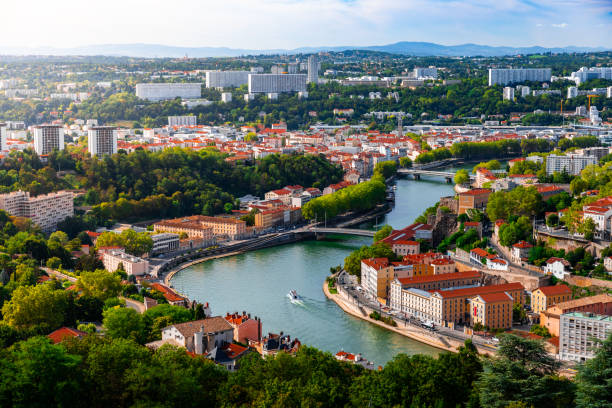
The fatal assault on a young far-right activist in Lyon has sent shockwaves through the French political landscape, leading to multiple arrests and escalating rhetoric between opposing ideological camps. French authorities announced the detention of nine suspects on Tuesday in connection with the killing of 23-year-old Quentin Deranque, who died from a severe brain injury sustained during an attack last week. The incident occurred on the fringes of a far-right protest against a left-wing politician at a university, quickly transforming from a local altercation into a national political flashpoint. As reported by FRANCE 24, the arrests include an assistant to a hard-left member of parliament, thrusting the case into the heart of France's legislative body and underscoring the deep divisions ahead of crucial elections.
The Incident and Immediate Aftermath
Quentin Deranque was attacked by at least six individuals, according to sources close to the investigation. Witnesses described a chaotic scene, with one stating that "people were hitting each other with iron bars." Video footage broadcast by TF1 television reportedly shows a dozen people assaulting three individuals on the ground. Deranque, associated with the anti-immigration collective Nemesis, was present at the protest to provide protection for its members, the group claimed. The collective has pointed the finger at La Jeune Garde (Young Guard), an anti-fascist youth group co-founded by Raphael Arnault of the hard-left France Unbowed (LFI) party before his election to parliament. La Jeune Garde, which was dissolved in June, has denied any involvement in what it called "tragic events."
Political Repercussions and Arrests
The legal response was swift. Lyon prosecutor Thierry Dran announced the arrests in two waves, first detaining four suspects and then five others, bringing the total to nine. A significant development was the identification of one detainee as an assistant to LFI MP Raphael Arnault. Arnault responded by immediately firing the assistant and called the killing horrific. The case has directly entered the halls of power; parliament speaker Yael Braun-Pivet had already banned one of Arnault's assistants from the chamber on Monday after the individual was named by witnesses. The National Assembly held a minute of silence in Deranque's memory on Tuesday afternoon, a rare show of unity for a figure from the political fringes.

Escalating Rhetoric Ahead of Elections
The killing has become a potent symbol in France's intensifying political warfare, with blame being aggressively assigned. The head of LFI, Jean-Luc Mélenchon, stated that those who attacked Deranque had "dishonoured" themselves, cautioning that "not all blows are allowed" even in defensive or offensive violence. On the far-right side, the reaction has been fierce. Marine Le Pen, the National Rally (RN) presidential hopeful, condemned the "barbarians responsible for this lynching." Her party leader, Jordan Bardella, went further, asserting that Mélenchon bore "moral and political responsibility" for the events, accusing him of having "opened the doors of the National Assembly to suspected murderers." This exchange highlights how the tragedy is being leveraged to galvanize respective bases.
Broader Context and Future Implications
This incident occurs against a backdrop of rising political stakes. France faces municipal elections in March and a pivotal presidential election in 2027, where the far-right RN, according to opinion polls, is seen as having its best chance yet of winning the presidency as centrist President Emmanuel Macron reaches his term limit. The Lyon prosecutor's office is investigating the case as a voluntary homicide and aggravated assault. A march is planned in Lyon next Saturday to honor Deranque. The event underscores the volatile nature of political activism in France and serves as a stark reminder of how quickly ideological conflict can turn physically violent, with consequences that resonate far beyond the immediate participants.