Impact Transfers for 2026: Key Portal Additions for Top College Football Teams
The 2026 college football season will be heavily influenced by the transfer portal, with elite programs reloading their rosters through strategic acquisitions. Following a 2025 season where Miami, Ole Miss, and Oregon reached the College Football Playoff thanks to portal talent, teams are doubling down on this strategy. This analysis examines the most impactful incoming transfers for each of the Way-Too-Early Top 25 teams, highlighting quarterbacks, playmakers, and defensive standouts poised to define the upcoming championship race. From Josh Hoover taking the reins at Indiana to Cam Coleman boosting Texas's offense, these moves will shape the national landscape.
The landscape of college football continues to be reshaped by the transfer portal, with elite programs leveraging it as a primary tool for instant roster enhancement and championship contention. The 2025 season served as definitive proof, as Miami, Ole Miss, and Oregon all reached the College Football Playoff semifinals powered by key transfer additions. However, the ultimate testament was the undefeated national champion Indiana Hoosiers, a squad built around a Heisman-winning quarterback and 16 other starters acquired via the portal. With the January transfer window closed and over 3,200 FBS scholarship players on the move, identifying the most impactful new arrivals is crucial for understanding the 2026 title race. This analysis highlights the premier portal addition for each team in ESPN's Way-Too-Early Top 25, focusing on the players destined to make the biggest immediate impact.

Top Contenders: Quarterbacks and Playmakers
The most critical portal moves often involve the quarterback position, and 2026 is no exception. The defending champion Indiana Hoosiers faced the monumental task of replacing Heisman winner and projected No. 1 NFL draft pick Fernando Mendoza. Their solution was TCU transfer Josh Hoover, a 31-game starter whose 9,629 career passing yards lead all returning FBS passers. Hoover, who was once committed to Indiana out of high school, now steps into an ideal situation in Bloomington, armed with talented receivers like Michigan State transfer Nick Marsh. His experience and production make him the favorite to continue Indiana's remarkable run of quarterback success under coach Curt Cignetti.
Similarly, the LSU Tigers secured a potential program-changer in quarterback Sam Leavitt from Arizona State. Ranked as the No. 3 overall transfer, Leavitt was a top-10 passer in QBR in 2024, leading the Sun Devils to a Big 12 title and CFP berth as a redshirt freshman. After an injury-shortened 2025, his move to Baton Rouge represents a major coup for coach Lane Kiffin, who beat out Miami and Tennessee for his services. Leavitt headlines a massive portal haul for LSU that also includes No. 1 tackle Jordan Seaton and top edge rusher Princewill Umanmielen.

For teams with established quarterbacks, adding elite weapons was the priority. The Texas Longhorns, with Arch Manning entering his second year as starter, won a fierce recruiting battle for Auburn wide receiver Cam Coleman, the No. 2 player in the transfer rankings. The 6-foot-3 junior, who had 93 catches for 1,306 yards and 13 TDs at Auburn, brings first-round pick potential to an already explosive offense. His arrival, alongside portal running backs Hollywood Smothers and Raleek Brown, significantly raises Texas's ceiling for 2026. The Texas A&M Aggies also addressed a major need, landing Alabama receiver Isaiah Horton to replace star KC Concepcion. Horton, with 112 career catches and 14 touchdowns, gets the chance to prove he can be a true No. 1 option in College Station.
Defensive Reinforcements for Championship Aspirations
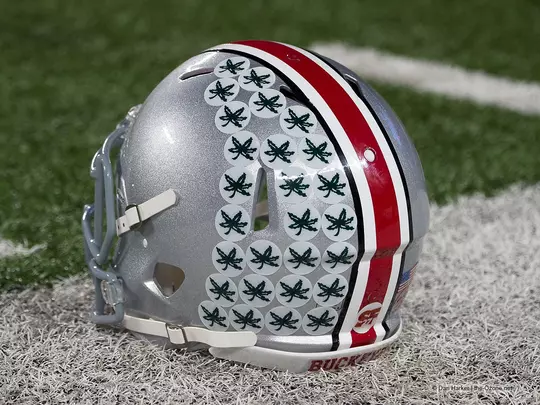
While offensive fireworks grab headlines, championship teams are often built on defensive foundations strengthened through the portal. The Ohio State Buckeyes made a pivotal addition to their defensive line with Alabama transfer James Smith, the No. 3 defensive tackle available. Smith started for the Crimson Tide in 2025, recording 6.5 tackles for loss, and now steps into the role vacated by Big Ten Defensive Lineman of the Year Kayden McDonald. He is part of a defensive reload for Ohio State that includes four top-100 transfers.
The Oregon Ducks, looking to maintain their defensive prowess, secured Minnesota safety Koi Perich. A dynamic playmaker, Perich had six interceptions in two seasons with the Gophers and also excelled as a return specialist. He follows the path of Purdue transfer Dillon Thieneman, who used a year at Oregon to solidify his draft stock, and will compete for All-America honors. On the edge, the Georgia Bulldogs are betting on the potential of Auburn transfer Amaris Williams. Though his production was limited behind a projected first-round pick at Auburn, Williams has shown flashes of explosive pass-rush ability that the Bulldogs hope he can harness as a full-time starter.
New coaching staffs also used the portal to import familiar talent. At Michigan, new coach Kyle Whittingham brought edge rusher John Henry Daley with him from Utah. Daley was an All-American in 2025 with 11.5 sacks before a season-ending injury. Similarly, after Matt Campbell moved from Iowa State to Penn State, he brought veteran quarterback Rocco Becht with him. A 39-game starter with over 9,000 passing yards, Becht will attempt to lead a quick turnaround for the Nittany Lions, joined by 23 of his former Cyclone teammates.
Strategic Moves for the Next Tier
Beyond the perennial contenders, several programs made strategic portal moves to elevate their standing. The Texas Tech Red Raiders, the defending Big 12 champions, landed the portal's top-ranked quarterback in Brendan Sorsby from Cincinnati. The second-team All-Big 12 performer, who threw for 2,800 yards and accounted for 36 total TDs last season, chose Texas Tech over LSU and will aim to lead another CFP run. The Miami Hurricanes pulled off a stunner at the deadline, luring ACC standout quarterback Darian Mensah away from Duke. Mensah led the ACC with 3,973 passing yards in 2025 and now takes over a Miami offense that just played for the national title.
In the Big Ten, the Iowa Hawkeyes added FCS All-American running back L.J. Phillips Jr. from South Dakota, who rushed for 1,920 yards last season, to power their traditionally strong ground game. The Notre Dame Fighting Irish bolstered their defensive line with Oregon transfer Tionne Gray, a massive 336-pound tackle with significant upside. For Ole Miss, new coach Pete Golding focused on rebuilding his defense, with LSU offensive tackle transfer Carius Curne headlining an offensive line addition, while adding several potential new starters on defense to sustain the Rebels' CFP momentum.
Conclusion: The Portal as a Championship Catalyst
The 2026 college football season will be a direct reflection of the transfer portal's growing dominance in team building. The strategic acquisitions made by top programs—from proven quarterbacks like Josh Hoover and Sam Leavitt to elite playmakers like Cam Coleman and Isaiah Horton—demonstrate a clear blueprint for immediate contention. As the success of Indiana in 2025 conclusively proved, a well-executed portal strategy is no longer just a supplement; it is a fundamental pillar for competing at the highest level. The teams that best integrated these new pieces during spring practice and fall camp will separate themselves, making the analysis of these key transfers essential for predicting the next national champion. The era of portal-powered championships is fully underway.