Read on France 24
Trump's 'Carnival Framework': How Mixed Messaging Defines US Foreign Policy
US President Donald Trump's approach to foreign policy, particularly regarding the war in Iran, is characterized by contradictory signals and bombastic rhetoric. According to political analyst Lisa Gaufman, this behavior operates within a 'carnival framework' that deliberately breaks established rules and norms. This article explores how this unconventional strategy functions, its impact on international relations, and what it signals about the future direction of US foreign policy under Trump's leadership.
The foreign policy of US President Donald Trump, especially concerning the ongoing conflict in Iran, has been marked by a pattern of contradictory statements and unpredictable actions. This approach, far from being accidental, represents a deliberate political strategy that operates within what scholar Lisa Gaufman describes as a 'carnival framework.' This framework allows for the systematic breaking of established diplomatic and political rules, creating a dynamic where traditional norms of statecraft are suspended in favor of performative, attention-grabbing tactics.
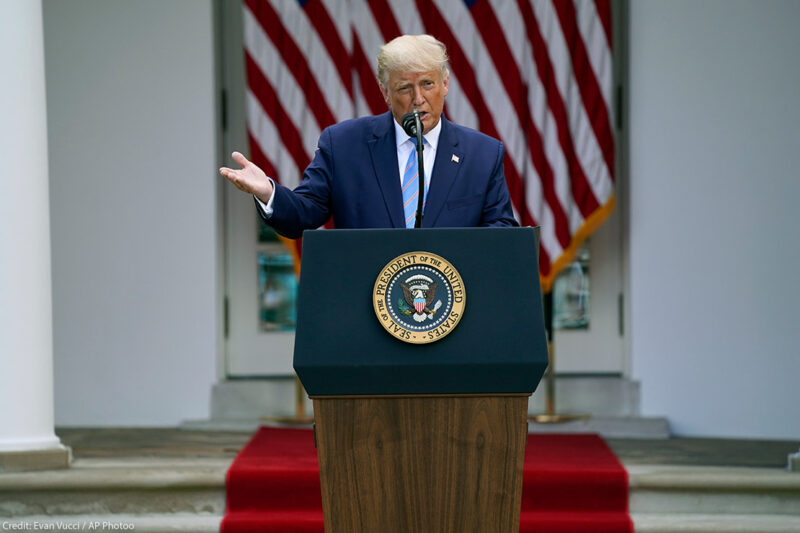
Understanding this carnival framework is crucial for deciphering the Trump administration's foreign policy moves. Unlike conventional diplomatic approaches that prioritize consistency and predictability, this model thrives on disruption, mixed messaging, and the constant generation of spectacle. The result is a foreign policy landscape where allies and adversaries alike struggle to discern clear intentions, forcing them to navigate a reality shaped by rhetoric and performance as much as by traditional strategic calculus.
The Carnival Framework Explained
Lisa Gaufman, an assistant professor at the University of Groningen and author of 'The Trump Carnival: Populism, Transgression and the Far Right,' provides a theoretical lens for this behavior. The carnival framework, as applied to politics, inverts normal hierarchies and rules. It creates a temporary space where transgression is not just permitted but is the central activity. In this context, Trump's bombastic rhetoric and conflicting signals are not signs of incompetence but are instrumental. They serve to dominate the news cycle, keep opponents off-balance, and reinforce a narrative of disruptive change against a corrupt 'establishment.'
This approach fundamentally challenges the protocols of international relations. Diplomacy traditionally relies on clear communication, credible commitments, and the slow building of trust. The carnival framework substitutes these with volatility, where today's threat can be tomorrow's negotiation point, and public pronouncements may directly contradict private communications. This environment makes traditional statecraft difficult, as it replaces reasoned dialogue with a contest of political theater.
Application in the Iran Conflict
The war in Iran has become a prime case study of this framework in action. Trump's messaging has oscillated between aggressive, maximalist threats and hints of de-escalation, often within the same news cycle. This creates a state of perpetual uncertainty for all actors involved. For domestic audiences, it projects an image of strong, unpredictable leadership. For international observers, including allies in Europe and adversaries in the region, it generates confusion and complicates coordinated responses.
The strategic ambiguity inherent in this mixed messaging can be a double-edged sword. On one hand, it may deter adversaries from certain actions due to fear of an unpredictable and disproportionate response. On the other, it erodes the credibility of the United States as a negotiating partner and can lead to miscalculations by other nations who cannot reliably interpret US intentions. The framework prioritizes short-term tactical advantage and media dominance over long-term strategic stability.
Implications and What Comes Next
Operating within a carnival framework has profound implications for global stability. It undermines international institutions and alliances that are built on predictability and shared rules. The constant rule-breaking normalizes a form of political conduct that other leaders, both democratic and authoritarian, may seek to emulate, further eroding global norms. The focus on performative politics can also crowd out substantive policy discussion, reducing complex geopolitical issues to simplistic narratives of conflict and victory.
Looking ahead, this pattern is likely to continue defining Trump's foreign policy. The carnival framework is not a phase but a core component of his political identity and strategy. For analysts and world leaders, the challenge will be to develop new models for engagement that account for this reality. This may involve looking beyond official statements for signals, building redundancy into international agreements, and finding ways to achieve policy objectives even within an environment deliberately designed to be chaotic and norm-less.
In conclusion, Donald Trump's mixed messaging on Iran is a feature, not a bug, of a foreign policy operating within a deliberate carnival framework. This approach, which privileges transgression and spectacle over consistency and norms, represents a significant departure from post-war American statecraft. As Lisa Gaufman's analysis suggests, understanding this framework is key to interpreting current events and anticipating the future trajectory of US power on the world stage, where the rules of the game are being rewritten in real time.