Read on the Guardian
US Peace Proposal Links Security Guarantees to Ukrainian Territorial Concessions
Ukrainian President Volodymyr Zelenskyy has revealed that a US-proposed peace deal includes a controversial condition: Ukraine must cede the entire Donbas region to Russia in exchange for American security guarantees. This development, occurring on day 1,492 of the war, highlights increasing US pressure on Kyiv as Washington's focus shifts to its conflict with Iran. The proposal emerges alongside continued battlefield violence, international diplomatic maneuvers, and economic warfare targeting Russia's energy exports.
The geopolitical landscape of the Ukraine war has entered a critical new phase, marked by a stark proposal from the United States that links long-term security for Ukraine to painful territorial concessions. According to President Volodymyr Zelenskyy, Washington is conditioning its offer of security guarantees on Kyiv ceding all of the eastern Donbas region to Russia. This revelation comes as the conflict reaches day 1,492, with the US reportedly applying significant pressure to secure a quick resolution, partly driven by its escalating confrontation with Iran.

The Core of the US Proposal
In an interview with Reuters, President Zelenskyy detailed the American position, stating that the security guarantees being discussed are explicitly tied to Ukraine relinquishing control of Donbas. This region, comprising Donetsk and Luhansk, has been a central battleground since 2014 and was partially occupied by Russian proxy forces before the full-scale invasion in 2022. Zelenskyy expressed his profound concern with this linkage, emphasizing that the eastern part of Ukraine is integral to the nation's overall security architecture. "I would very much like the American side to understand that the eastern part of our country is part of our security guarantees," he stated, highlighting the fundamental disconnect between Ukrainian and American negotiating positions.
Geopolitical Context and US Pressure
The timing and nature of this proposal are heavily influenced by broader global conflicts. Zelenskyy directly connected the US's hardened stance to the war between the US/Israel and Iran, suggesting that President Donald Trump's focus has shifted to the Middle East. "The Middle East definitely has an impact on President Trump, and I think on his next steps. President Trump, unfortunately, still chooses a strategy of putting more pressure on the Ukrainian side," Zelenskyy told Reuters. This pressure campaign appears to include elements of diplomatic blackmail. Zelenskyy further revealed that Russia has attempted to broker a deal with the US, offering to cease sharing military intelligence with Iran if Washington stops providing intelligence to Ukraine—a proposition the Ukrainian leader labeled as outright blackmail.

Ongoing Military and Economic Confrontation
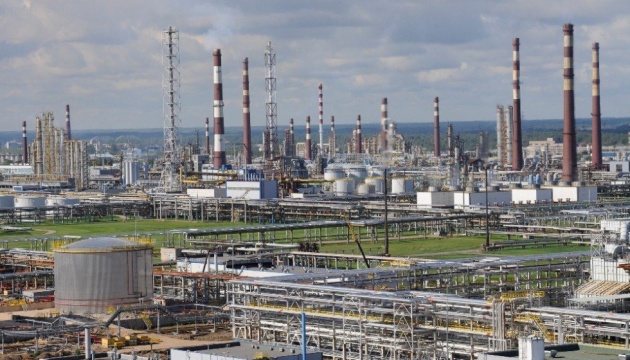
While diplomatic maneuvers unfold, the war continues to exact a heavy toll. Russian attacks killed civilians in Kharkiv and its surrounding region, while a strike damaged port infrastructure in Izmail on the Danube. Simultaneously, Ukraine has sustained its campaign against Russian economic targets. A drone attack damaged an industrial area near the Kirishi oil refinery, one of Russia's largest. These strikes are part of a broader effort that has reportedly halted at least 40% of Russia's oil export capacity, combining drone attacks, pipeline incidents, and tanker seizures. In a significant escalation of economic pressure, British Prime Minister Keir Starmer announced permission for UK forces to board and detain Russian "shadow fleet" tankers used to circumvent Western oil sanctions.
International Dimensions and Casualties
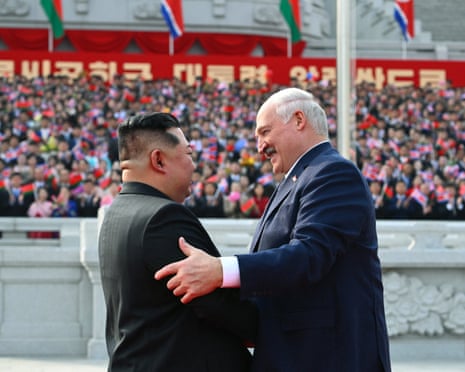
The war's ripple effects extend far beyond Europe. Zimbabwe confirmed that 15 of its citizens have been killed while fighting for Russia in Ukraine, with its information minister condemning the recruitment as human trafficking facilitated through social media. On the diplomatic front, Belarusian President Alexander Lukashenko, a key Putin ally, visited North Korea, where he was warmly received by Kim Jong-un. The visit underscored the alignment of authoritarian states against the Western-backed coalition supporting Ukraine. Furthermore, a Turkish-flagged crude oil tanker, the Altura, was hit by a drone in the Black Sea after leaving the Russian port of Novorossiysk, illustrating the persistent risks to maritime commerce in the region.
Analysis and Path Forward
The US proposal represents a pivotal moment that forces a difficult reckoning for Ukraine. The choice between guaranteed future security and the surrender of sovereign territory strikes at the heart of the nation's war aims. For the United States, the offer appears to be a calculated attempt to extract Washington from a prolonged conflict as it confronts a more immediate crisis in the Middle East. However, this strategy risks undermining the principle of territorial integrity that has been a cornerstone of international law since World War II. The pressure on Zelenskyy is immense, balancing the immediate need for security assurances against the long-term national and historical implications of ceding land. The coming weeks will reveal whether this proposal becomes the basis for serious negotiations or a point of irrevocable divergence between Kyiv and its most powerful ally.