Lukashenko's Gun Gift to Kim Jong Un: Symbolism and Strategic Implications
Belarusian President Alexander Lukashenko presented North Korean leader Kim Jong Un with a firearm during his first official state visit to Pyongyang in March 2026, following the signing of a bilateral friendship treaty. This symbolic gesture, occurring amidst heightened global tensions, underscores the deepening alignment between two authoritarian states increasingly isolated by Western sanctions. The gift represents more than diplomatic protocol—it signals a mutual commitment to strategic partnership and shared defiance of international pressure. This analysis explores the context of the visit, the treaty's significance, and what this growing alliance means for regional and global security dynamics.
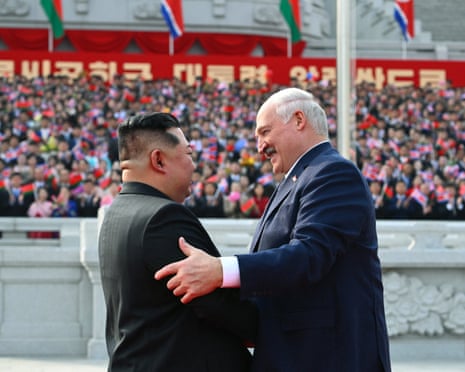
In March 2026, a significant diplomatic event unfolded between two nations often operating on the fringes of the international order. During Belarusian President Alexander Lukashenko's first official state visit to North Korea, he presented Supreme Leader Kim Jong Un with a firearm as a gift. This act followed the signing of a formal friendship treaty between Minsk and Pyongyang, marking a notable step in the consolidation of their bilateral relationship. While the specific type of gun was not detailed in initial reports, the symbolism of the gesture—occurring between two leaders of heavily militarized, sanctioned states—resonates far beyond a simple exchange of diplomatic pleasantries.

The context of this visit is crucial. As reported by Al Jazeera, the gift was exchanged after the two countries solidified their ties with a friendship treaty. For Lukashenko, whose regime has faced intense isolation and economic pressure from the West following its support for Russia's war in Ukraine and its own internal crackdowns, outreach to fellow pariah states represents a strategic diversification of partnerships. For Kim Jong Un, who presides over a country under long-standing and comprehensive United Nations sanctions, engagement with Belarus offers a potential conduit for circumventing some restrictions and gaining a diplomatic ally with connections to Russia's military-industrial complex.
The Friendship Treaty: A Foundation for Deeper Ties
The treaty signed during Lukashenko's visit provides the formal architecture for enhanced cooperation. While the full text has not been made public, such agreements typically encompass pledges of mutual political support, commitments to expand trade and economic collaboration, and frameworks for cultural and technical exchanges. For Belarus and North Korea, the treaty likely serves multiple purposes. Politically, it is a statement of solidarity against what both regimes describe as unjust Western hegemony and pressure. Practically, it opens doors for collaboration in areas where both have interests, such as agriculture, industrial technology, and potentially, given their militarized natures, defense-related sectors.

Symbolism of the Gun Gift
The choice of a firearm as a state gift is laden with meaning. In many cultures, gifting a weapon is a profound sign of trust and alliance, symbolizing a commitment to mutual defense or shared strength. For Lukashenko to present one to Kim Jong Un sends a clear message of solidarity and respect within the context of their authoritarian leadership styles, where martial symbolism holds significant weight. It visually reinforces the narrative of two strong, sovereign states standing together against external adversaries. This symbolism is particularly potent given that both leaders maintain tight control over their nations' militaries and champion national self-reliance in defense matters.
Strategic Implications and International Response
The burgeoning Belarus-North Korea axis has tangible strategic implications. It represents a further fragmentation of the global order, with sanctioned states forming their own networks of mutual support. This partnership could facilitate the exchange of goods, technology, and expertise that help each country mitigate the impact of international sanctions. For the West and allied nations in Asia, this development is concerning. It suggests that efforts to isolate regimes like those in Minsk and Pyongyang may not lead to capitulation but rather to the creation of alternative, anti-Western alignments that could prove more resilient and unpredictable.
The international community, particularly the United States, South Korea, and the European Union, is likely to view this treaty and the high-profile visit with deep suspicion. It will likely prompt increased scrutiny of transactions between Belarus and North Korea to prevent any violations of sanctions regimes, especially those related to arms or dual-use technologies. The alliance also complicates diplomatic efforts on the Korean Peninsula, as it provides Pyongyang with another source of political backing beyond its traditional patrons, China and Russia.
Conclusion: A Partnership of Convenience and Defiance
Alexander Lukashenko's gift of a gun to Kim Jong Un is far more than a curious diplomatic anecdote. It is a symbolic capstone on a formal agreement that deepens the strategic partnership between two authoritarian states united by their confrontational relationships with the West. The Belarus-North Korea friendship treaty and the high-visibility camaraderie between their leaders signal a deliberate pivot toward building alliances outside the traditional liberal international system. While the practical outcomes of this partnership remain to be seen, its emergence underscores a shifting geopolitical landscape where isolated states are increasingly willing to band together, presenting new challenges for global diplomacy and security architecture. The gun, in this case, is not just a gift but a statement—one that echoes a shared defiance and a mutual commitment to an alternative path.