Read on the Guardian
Burkina Faso's Military Ruler Declares Democracy 'Not For Us'
Burkina Faso's military president, Ibrahim Traoré, has publicly declared that democracy is 'not for us' and urged citizens to forget about it. In a stark interview with state broadcaster RTB, Traoré, who seized power in a 2022 coup, dismissed democratic processes as 'false' and cited violence as its outcome. This statement formalizes the junta's authoritarian shift, following the earlier ban on political parties and extension of military rule until 2029. The article examines the context of Traoré's rule, his anti-Western rhetoric, and the ongoing security and human rights crises in the country.
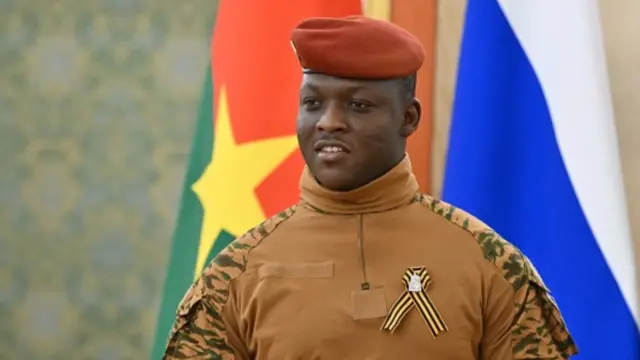
In a definitive rejection of democratic governance, Burkina Faso's military president, Captain Ibrahim Traoré, has declared that democracy is 'not for us' and instructed the nation's citizens to abandon the concept. This explicit statement, made during an interview with the state broadcaster Radiodiffusion Télévision du Burkina (RTB), marks a significant consolidation of authoritarian rule following his seizure of power in a September 2022 coup. Traoré's remarks provide a clear ideological framework for the junta's ongoing suppression of political opposition and civil liberties, signaling a prolonged period of military control for the West African nation.
The End of Democratic Aspirations
Traoré's interview leaves no room for ambiguity regarding the junta's intentions. 'We're not even talking about elections, first of all … People need to forget about the question of democracy … We must tell the truth, democracy isn't for us,' he stated. This pronouncement formally abandons the transitional timeline that had initially promised a return to civilian rule by 2024. Instead, the junta extended Traoré's rule until 2029, a move now justified by this outright rejection of democratic principles. The military government had already taken concrete steps to eliminate political competition, banning all political parties outright in January.
Traoré's Justification and Rhetorical Strategy
To justify his stance, Traoré employed a provocative critique of Western democracies, labeling them as 'false.' He argued, 'Democracy, we kill children. Democracy, we drop bombs, we kill women, we destroy hospitals, we kill civilian population. Is that democracy?' This rhetoric aligns with his broader populist and anti-Western narrative, which has garnered him support across parts of Africa. He frequently invokes the legacy of Thomas Sankara, the revolutionary Marxist leader of Burkina Faso in the 1980s, to bolster his nationalist credentials and position himself as an anti-imperialist figure standing against former colonial power France and the West.

Context of Seizure and Consolidation of Power
Captain Traoré came to power by overthrowing another military junta that had itself seized control just nine months earlier in January 2022. His 2022 coup was partly justified by the persistent failure to contain a devastating jihadist insurgency that has plagued the country since 2014. However, his tenure has been marked by an intensified crackdown on dissent and independent media. The government has banned several international human rights organizations and media outlets, including Human Rights Watch (HRW) and the Guardian, following their reports on alleged military atrocities.
The Security and Human Rights Crisis
Despite the justification of securing the nation, security under Traoré's rule has continued to deteriorate. The jihadist insurgency, led by groups linked to al-Qaida and Islamic State, has claimed thousands of lives and, as of the last official data three years ago, had displaced approximately 2.1 million people—about 9% of the population. Furthermore, Traoré's regime faces severe allegations of human rights abuses. A recent Human Rights Watch report accused the military and allied militias of committing crimes against humanity and war crimes, including the ethnic cleansing of Fulani civilians accused of supporting insurgents. The report stated that more than 1,800 civilians had been killed by various armed actors since 2023.
Conclusion: A Nation at a Crossroads
Ibrahim Traoré's explicit renunciation of democracy places Burkina Faso on a distinctly authoritarian path. By urging citizens to 'forget' about democracy and coupling this with the suppression of political parties and critical media, the junta is systematically dismantling the pillars of pluralistic society. While Traoré's anti-Western rhetoric may resonate domestically and regionally, it provides little solace to a population caught between a brutal jihadist insurgency and a military regime accused of grave human rights violations. The declaration that 'democracy isn't for us' not only closes the door on a near-term political transition but also raises profound questions about the future of governance, stability, and freedom in Burkina Faso.