Read on PBS News
Analyzing Trump's Erroneous Claim About Iran and Tomahawk Missiles
President Donald Trump made a significant error by claiming Iran possesses American-made Tomahawk cruise missiles, the weapon suspected in a deadly strike on a girls' school. This article examines the factual inaccuracy of the claim, the context of the tragic incident, and the implications of a leader publicly admitting a lack of knowledge on a critical foreign policy and military matter. We analyze the administration's response and the importance of accurate information in international relations.
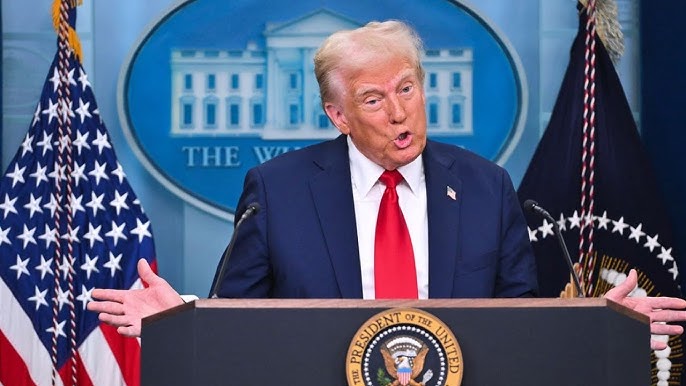
In a recent press conference, former President Donald Trump made a striking and factually incorrect statement regarding Iran's military capabilities, specifically claiming the nation has access to American Tomahawk cruise missiles. This assertion came in the context of a discussion about a devastating strike on a girls' school in Iran, which reportedly killed 165 people. The incident highlights the critical need for accuracy and responsibility in statements made by public figures, especially concerning sensitive international military affairs.
The Erroneous Claim and Its Context
During the exchange, Trump was asked about potential U.S. responsibility for the deadly school strike. In his response, he argued that the Tomahawk cruise missile, manufactured by the American defense contractor Raytheon, is "sold and used by other countries" and that Iran "also has some Tomahawks." He further described the weapon as "very generic." This claim stands in direct contradiction to established facts and available evidence. While it is true that Raytheon sells the Tomahawk missile to allied nations such as Japan and Australia, there is no credible evidence or intelligence suggesting that Iran has ever acquired this specific American weapon system.
Admission of Insufficient Knowledge
Perhaps more revealing than the initial error was Trump's response when questioned about why he was the sole member of his administration making this claim. He stated plainly, "Because I just don't know enough about it." This admission, while candid, raises serious questions about the preparation and briefing process for a leader discussing a matter with grave humanitarian and geopolitical consequences. He added that he was "willing to live with" whatever an official report might show, distancing himself from the assertion's factual basis.

Implications for Public Discourse and Policy
This episode serves as a case study in the challenges of modern political communication. The dissemination of incorrect information about military capabilities can fuel misinformation, affect public perception, and potentially escalate diplomatic tensions. In an era where statements from leaders are instantly global, the accuracy of claims about weapons systems and foreign adversaries is paramount. Reliable intelligence and expert consultation are essential before making definitive public declarations on such sensitive topics.
The Importance of Fact-Based Leadership
The tragedy of the school strike itself demands a sober and fact-based response from the international community. Attributing responsibility for such an act requires meticulous investigation, not speculative claims. Leaders have a responsibility to ensure their public comments are grounded in verified information, particularly when discussing events involving significant loss of life. Admitting a lack of knowledge, while potentially honest, underscores a failure in the information pipeline that should equip a decision-maker before they address the public and the press on a matter of this gravity.
In conclusion, the conflation of a tragic real-world event with an unsubstantiated claim about military technology creates a problematic narrative. It diverts attention from the humanitarian crisis and the need for a thorough investigation into the attack's origins. This incident reinforces the necessity for rigorous fact-checking, reliance on intelligence community assessments, and a commitment to precise language from those in positions of highest authority. The public's understanding of complex international events depends on the accuracy and responsibility of the information provided by its leaders.