Read on PBS News
Supreme Court Temporarily Blocks Full SNAP Payments Amid Government Shutdown
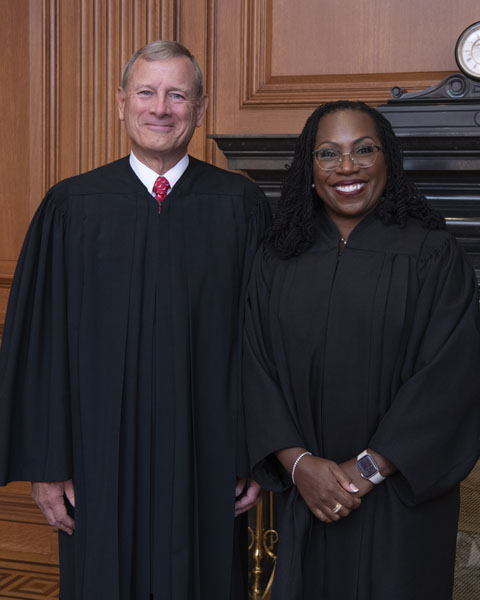
In a significant legal development, Supreme Court Justice Ketanji Brown Jackson has issued an emergency order temporarily blocking the requirement to distribute full SNAP food aid payments. The order comes after a Boston appeals court declined to immediately intervene in the ongoing legal battle between the Trump administration and federal courts over funding for the Supplemental Nutrition Assistance Program during the government shutdown. The temporary pause will remain in effect until the appeals court rules on whether to issue a more lasting suspension of the full payment requirement.
The ongoing government shutdown has created significant uncertainty for millions of Americans who rely on food assistance programs, culminating in emergency Supreme Court intervention regarding Supplemental Nutrition Assistance Program (SNAP) payments. The legal battle over funding for this critical safety net program reached the nation's highest court as conflicting lower court rulings created confusion about November benefit distributions.
Legal Timeline and Emergency Intervention
The legal dispute over SNAP funding escalated rapidly in early November 2025. Two federal judges had previously ruled that the Trump administration could not skip November's SNAP benefits entirely due to the government shutdown. U.S. District Judge John J. McConnell Jr. specifically ordered full payments to be distributed on Thursday, November 6, 2025, rejecting the administration's plan to cover only 65% of maximum monthly benefits.
The Trump administration quickly appealed to higher courts, arguing that the district court's order represented an unprecedented overreach of judicial authority. Solicitor General D. John Sauer contended in court filings that the injunction "makes a mockery of the separation of powers" by usurping both legislative and executive authority. The administration maintained that Congress, not the courts, should appropriate funds for the program.
State Responses and Distribution Patterns
Amid the legal uncertainty, states adopted varying approaches to SNAP distribution. Several states moved quickly to issue full November benefits following the initial court order. Wisconsin distributed over $104 million in monthly food benefits to approximately 337,000 households by working with their electronic benefit card vendor to process payments within hours of the court order. Oregon Governor Tina Kotek noted that state employees "worked through the night" to ensure full November benefits reached families.
Other states took more cautious approaches. Some distributed partial payments while awaiting further federal guidance, while others indicated full benefits would become available over the weekend or early the following week. The administration criticized states that moved quickly to distribute full benefits, arguing they were "trying to seize what they could of the agency's finite set of remaining funds, before any appeal could even be filed."
Impact on SNAP Recipients
The court wrangling prolonged weeks of uncertainty for the approximately 1 in 8 Americans who participate in SNAP, predominantly individuals and families with lower incomes. The program provides maximum monthly benefits of nearly $300 for individuals and up to nearly $1,000 for families of four, though many recipients receive less based on income calculations.
For participants like Jasmen Youngbey of Newark, New Jersey—a single mother attending college while caring for her 7-month-old and 4-year-old sons—the payment delays created immediate food security concerns. "Not everybody has cash to pull out and say, 'OK, I'm going to go and get this,' especially with the cost of food right now," Youngbey explained while waiting in line at a food pantry.
Legal Framework and Funding Mechanisms
The legal battle centered on whether the administration could access emergency reserve funds to maintain SNAP operations during the government shutdown. The courts had ordered the government to use one emergency reserve fund containing more than $4.6 billion to pay for November SNAP benefits, while allowing flexibility to tap other money sources to cover the full monthly cost of $8.5 billion to $9 billion.
The Trump administration declined to use additional funding beyond the contingency reserves, maintaining that Congress must appropriate funds for the program and that remaining money was needed for other child hunger programs. This position created the fundamental disagreement that ultimately required Supreme Court intervention to resolve temporarily.
Justice Jackson's order represents a temporary pause in the legal requirements, providing breathing room for the appeals court to consider the substantive legal questions involved. The order will remain in place until 48 hours after the appeals court rules, giving the administration additional time to return to the Supreme Court if necessary. This emergency intervention highlights the critical importance of SNAP benefits for millions of American families and the complex interplay between different branches of government during funding crises.