Read on the Guardian
US Designates Colombia's Gulf Clan as Foreign Terrorist Organization: Implications and Analysis
The United States has formally designated Colombia's largest and most powerful criminal group, the Gulf Clan, as a Foreign Terrorist Organization. This significant policy shift by the Trump administration marks the first such designation under the current presidency and targets a notorious drug-trafficking militia with roots in far-right paramilitary forces. The Gulf Clan, also known as the Gaitanist Self-Defense Forces of Colombia (AGC), dominates smuggling routes through the Darién Gap and operates in at least 20 Colombian departments. This designation is likely to exacerbate existing tensions between the US and Colombian President Gustavo Petro, who has strongly opposed US military actions in the region.
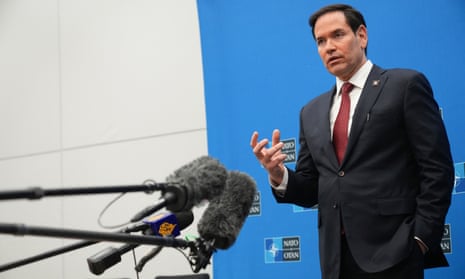
The United States has taken a significant step in its international counter-narcotics and security policy by formally designating Colombia's Gulf Clan as a Foreign Terrorist Organization (FTO). This move, announced by Secretary of State Marco Rubio, represents a major escalation in the US approach to combating transnational criminal organizations in Latin America. The Gulf Clan, Colombia's largest and most powerful illegal armed group, now joins other designated terrorist organizations in the region, marking the first such designation under the current Trump administration. This decision carries profound implications for US-Colombia relations, regional security dynamics, and the ongoing struggle against drug trafficking networks that have plagued Colombia for decades.
The Gulf Clan: Colombia's Most Powerful Criminal Organization
The Gulf Clan, officially known as the Gaitanist Self-Defense Forces of Colombia (AGC), represents the most significant criminal threat in Colombia today. With roots tracing back to far-right paramilitary forces that operated during Colombia's decades-long internal conflict, the group has evolved into a sophisticated transnational criminal enterprise. According to US officials, the organization maintains thousands of members and operates in at least 20 of Colombia's 32 departments, giving it a nationwide presence that few other criminal groups can match.
The group's primary source of income is cocaine trafficking, which it uses to fund its extensive operations and violent activities. The Gulf Clan dominates critical smuggling routes through the Darién Gap, the dense jungle region connecting Colombia and Panama that serves as a major corridor for both drug and human trafficking. Additionally, the organization has engaged in violent confrontations with leftwing rebel groups along the Venezuelan border as they compete for control of lucrative criminal networks in the region.

US Policy Shift and Diplomatic Implications
The designation of the Gulf Clan as a Foreign Terrorist Organization marks a significant policy shift for the Trump administration. While other Colombian criminal organizations, including the National Liberation Army (ELN) and dissident factions of the Revolutionary Armed Forces of Colombia (Farc), have been on the US terrorist list for years, this represents the first such designation under the current administration. The move follows similar actions against six cartels in Mexico and two in Venezuela, indicating a broader regional strategy targeting Latin American criminal networks.
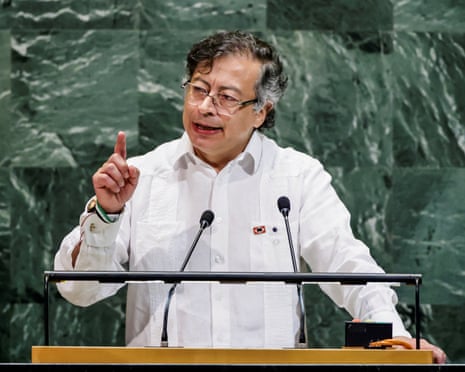
This decision is likely to exacerbate existing tensions between the United States and Colombia's President Gustavo Petro. The two leaders have engaged in public disagreements for weeks, with Trump warning that any country producing narcotics was a potential target and specifically singling out Colombia. Trump recently stated that Petro "is going to have himself some big problems if he doesn't wise up," to which Petro responded with a warning to "not wake the jaguar" with threats of military action.
Operational and Security Consequences
The terrorist designation carries significant operational consequences for both US and Colombian authorities. Under US law, the designation makes it illegal for persons in the United States to knowingly provide material support or resources to the Gulf Clan. It also requires US financial institutions to block the group's assets and report them to the Treasury Department. This creates additional legal and financial pressure on the organization's international operations and funding networks.
Despite hopes that the Gulf Clan might be weakened by the capture and extradition of its main leader to the United States in 2022, the group has instead intensified its violent campaign. Following the leadership change, the organization unleashed a wave of terror, assassinating police officers and local leaders while holding large swaths of Colombian territory hostage through intimidation and violence. The group's resilience demonstrates the challenges of combating deeply entrenched criminal networks through traditional law enforcement approaches alone.
Impact on Colombia's Peace Process
The Gulf Clan's designation as a terrorist organization presents complex challenges for Colombia's ongoing peace efforts. The group is currently engaged in halting talks with the Colombian government but is widely considered the main obstacle to President Petro's "total peace" plan, which aims to end the country's multifaceted armed conflict. The terrorist designation may complicate these negotiations by imposing additional legal constraints and potentially limiting diplomatic flexibility.
In recent years, the Gulf Clan has attempted to present itself as a political movement similar to Colombian insurgent factions, which would grant it different conditions at peace talks. However, the group is not widely considered to have concrete political aims beyond maintaining its criminal enterprises. The US designation reinforces this perspective, framing the organization primarily as a criminal rather than political entity, despite its attempts at political legitimization.
Regional Security Context
The designation occurs within a broader regional security context marked by escalating US military actions. The United States has used its so-called war on drugs to justify airstrikes on boats allegedly ferrying drug shipments, with these attacks killing more than 90 people off the coasts of both Colombia and Venezuela in the Pacific and Caribbean regions. Just hours before the Gulf Clan designation was announced, the US Southern Command reported carrying out new strikes on three vessels near Colombia's Pacific coast, resulting in eight fatalities.
President Petro has described these US military actions as "murder" and strongly opposes what he views as external interference in Colombian sovereignty. The Gulf Clan designation is likely to further strain this relationship, particularly as it provides additional justification for US military intervention in the region. The move reflects the Trump administration's increasingly assertive approach to drug interdiction and regional security, even at the cost of diplomatic relations with traditional allies.
Conclusion: Navigating Complex Security Challenges
The US designation of Colombia's Gulf Clan as a Foreign Terrorist Organization represents a pivotal moment in hemispheric security policy. While intended to increase pressure on one of Latin America's most powerful criminal networks, the decision carries significant diplomatic and operational complexities. The move highlights the enduring challenge of combating transnational criminal organizations that operate across national borders and exploit governance gaps in vulnerable regions.
As Colombia continues to navigate its complex security landscape, the terrorist designation adds another layer to the country's ongoing struggle against armed groups and criminal networks. The effectiveness of this approach will depend on careful coordination between US and Colombian authorities, respect for Colombian sovereignty, and a comprehensive strategy that addresses both the security and socioeconomic dimensions of organized crime. The coming months will reveal whether this designation strengthens regional security cooperation or further strains the US-Colombia relationship in ways that ultimately undermine shared security objectives.