Pete Hegseth on US-Iran War: Trump Controls the Throttle, Israel Pursues Separate Objectives
In a recent briefing, US Secretary of Defense Pete Hegseth asserted that President Donald Trump ultimately controls the pace and timeline of the ongoing war with Iran, while acknowledging that key ally Israel is pursuing its own distinct military objectives. Hegseth outlined the US's three primary goals: neutralizing Iran's missile capabilities, destroying its navy, and permanently denying it nuclear weapons. Despite claiming the US is 'winning,' he declined to set an end date for the conflict, emphasizing the decision rests with the President. The situation is further complicated by Israel's independent strikes on Iranian energy infrastructure and the escalating crisis around the strategically vital Strait of Hormuz.
In the complex and volatile landscape of the ongoing US-Iran conflict, a clear delineation of command and objectives is crucial. US Secretary of Defense Pete Hegseth recently provided such clarity, emphasizing that while the United States is focused on a specific set of strategic goals, the ultimate authority over the war's tempo lies with President Donald Trump. Simultaneously, Hegseth openly acknowledged that Israel, a principal ally in the conflict, is operating with its own distinct military and political objectives, creating a multifaceted operational dynamic.

US Strategic Objectives and Command Structure
During a press briefing, Secretary Hegseth articulated the three core objectives guiding US military operations against Iran. First, the US aims to neutralize Tehran's missile capabilities, which have been used to target assets across the region. Second, the goal is to destroy the Iranian navy, a key force in the Persian Gulf. The third and most definitive objective is to 'permanently deny Iran nuclear weapons forever,' a stance that persists despite Iran's consistent denials of seeking a nuclear arsenal. Hegseth declared the US is 'winning' in this fight but pointedly refused to provide a timeline for the war's conclusion.
'The president has set a very specific mission to accomplish, and our job is to unrelentingly deliver that,' Hegseth stated. 'Now, he gets to control the throttle. He's the one deciding.' This statement underscores a centralized command structure where strategic decisions on escalation, de-escalation, and duration are made at the presidential level. Hegseth illustrated this controlled aggression by announcing that a particular day would see 'the most intense day of strikes inside Iran – the most fighters, the most bombers, the most strikes,' executed on a US-determined timeline.
Israel's Independent Military Calculus
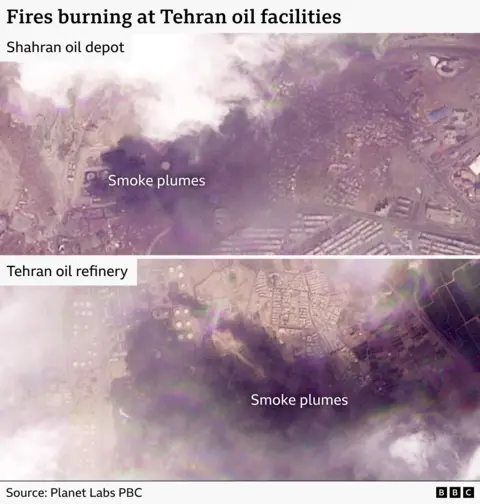
A significant revelation from Hegseth's comments was the explicit acknowledgment of Israel's autonomous war aims. He confirmed that an Israeli strike on oil depots in Tehran, which caused significant fires and damage, was not 'necessarily' a US objective. 'Israel has been a really strong partner in this effort. Where they have different objectives, they pursued them. Ultimately, we've stayed focused on ours,' Hegseth explained. This admission highlights the coalition nature of the conflict, where allies coordinate but may execute parallel campaigns targeting different aspects of Iranian power, from military infrastructure to economic assets.
The Strait of Hormuz Flashpoint
The war's economic and strategic dimensions have dramatically escalated around the Strait of Hormuz, a critical chokepoint for global oil shipments. Iranian military actions have largely succeeded in closing the strait, causing global fuel prices to soar. In response, President Trump threatened Iran with 'death, fire, and fury' if it does not allow oil shipments to pass. Iranian official Ali Larijani retorted that the strait 'will either be a Strait of peace and prosperity for all or will be a Strait of defeat and suffering for warmongers.'
While Trump suggested the US Navy might escort commercial vessels, top US General Dan Caine indicated that such a decision had not yet been finalized, stating forces would prepare options 'if tasked to escort.' This uncertainty at the tactical level, contrasted with Trump's strategic threats, exemplifies the complex decision-making hierarchy Hegseth described, where presidential direction sets the course for military planning.
Iranian Defiance and Shifting US Goals
Despite US assertions of dominance, Iranian leadership has projected defiance. Following US strikes that killed Supreme Leader Ali Khamenei and over 1,250 people, Iran has launched retaliatory missile and drone attacks. Larijani warned, 'Those mightier than you have not been able to eliminate our nation.' Furthermore, the US's stated war aims have appeared fluid. While Hegseth listed clear military objectives, President Trump has previously articulated broader goals ranging from 'freedom' for Iranians to installing a more compliant leader within Iran's governing system.
This divergence between the Pentagon's focused military targets and the White House's broader political ambitions adds another layer of complexity to the conflict's trajectory. It reinforces Hegseth's central point: final decisions on the war's scope, goals, and conclusion are not made in the Pentagon but are controlled by the President, who 'gets to control the throttle' based on a evolving strategic calculus.