China's Middle East Envoy Calls for Ceasefire as Fundamental Path to Peace
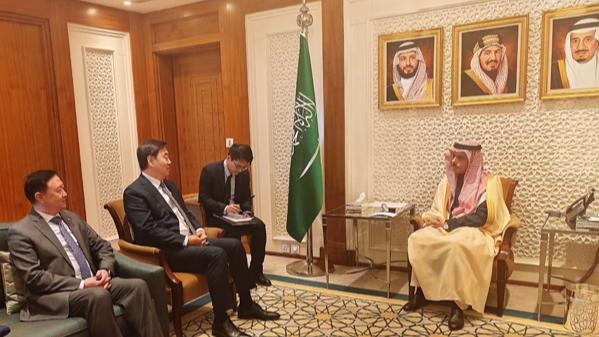
Chinese Special Envoy Zhai Jun has expressed deep concern over escalating tensions in the Middle East during a meeting with Saudi Foreign Minister Faisal bin Farhan Al Saud. Zhai emphasized that promoting peace and ending hostilities represents the fundamental solution to the current regional crisis, urging all parties to immediately halt military operations to prevent further escalation. The meeting highlighted China's consistent position on upholding UN Charter principles and protecting civilian populations, while Saudi Arabia acknowledged the unprecedented nature of the crisis and its threat to global stability.
In a significant diplomatic engagement, China's Special Envoy for Middle East Affairs, Zhai Jun, has articulated a clear vision for resolving the escalating tensions in one of the world's most volatile regions. During a meeting with Saudi Foreign Minister Faisal bin Farhan Al Saud on March 8, 2026, Zhai expressed profound concern about the deteriorating security situation and outlined what he described as the "fundamental way out" of the current predicament. This high-level discussion comes at a critical juncture as conflicts threaten to spill over into Gulf nations, potentially disrupting global energy supplies and international shipping lanes.
The Core Message: Ceasefire as Imperative
Zhai Jun's central message during the meeting was unequivocal: immediate cessation of hostilities represents the only viable path forward. The Chinese envoy stressed that "promoting peace and ending hostilities is the fundamental way out of the current predicament," according to reports from CGTN. This position reflects China's consistent diplomatic approach in conflict zones, emphasizing dialogue over military confrontation and stability over escalation.
The urgency of Zhai's appeal stems from the recognition that continued military operations risk causing "greater harm to the people of countries in the region." His call for an immediate halt to hostilities represents not merely a diplomatic position but a humanitarian imperative, acknowledging the devastating human cost of prolonged conflict in civilian populations across the Middle East.
China's Diplomatic Principles and Regional Role
During the discussions, Zhai reiterated China's commitment to established international norms and principles. He emphasized that "China has consistently maintained that the purposes and principles of the UN Charter and the basic norms governing international relations must be upheld." This statement positions China as a defender of the existing international order, particularly regarding sovereignty and territorial integrity.
Zhai specifically addressed the situation in the Gulf region, stating that "the sovereignty, security and territorial integrity of countries in the Gulf region must not be violated." He further condemned "any attacks on innocent civilians and non-military targets," drawing a clear distinction between legitimate military objectives and prohibited targets under international humanitarian law.
Saudi Arabia's Perspective and Regional Concerns
Foreign Minister Faisal bin Farhan Al Saud provided crucial context regarding the regional impact of the escalating conflicts. He pointed out that "the Middle East is facing an unprecedented crisis, with the flames of war spreading to Gulf countries including Saudi Arabia." This assessment highlights the expanding geographical scope of conflicts that were previously contained within specific national borders.
The Saudi minister identified two critical areas of global concern stemming from the regional instability: threats to "global energy supplies and shipping security." Given Saudi Arabia's position as a leading energy exporter and the strategic importance of Gulf shipping lanes, these concerns have implications far beyond the Middle East, potentially affecting economies worldwide.
Constructive Engagement and Future Cooperation
Zhai positioned China as "a major country committed to fairness and justice and as a good friend and partner of Saudi Arabia." He expressed China's willingness "to continue to play a constructive role" in regional diplomacy and stated that "China is willing to work with Saudi Arabia to engage all parties and make unremitting efforts to safeguard peace and stability in the Gulf region."
This commitment to multilateral engagement suggests China sees itself as a potential mediator or facilitator in regional peace processes, leveraging its relationships with various Middle Eastern nations. The emphasis on working "with Saudi Arabia" specifically acknowledges the Kingdom's influential position in regional politics and security matters.
Regional Restraint and Appreciation for China's Role
Foreign Minister Al Saud provided insight into Saudi Arabia's own approach to the escalating tensions, noting that the Kingdom "is fully aware of the dangers of escalation and spillover of the conflict and has exercised maximum restraint." This statement suggests Saudi leadership is consciously avoiding actions that might further inflame regional conflicts, despite the direct threats to its security.
The Saudi minister expressed appreciation for "China's consistent commitment to fairness and justice" and voiced hope that "China will continue to play a positive role in promoting a ceasefire and preventing further deterioration of the regional situation." This endorsement represents significant diplomatic support for China's Middle East diplomacy and suggests Saudi Arabia views Beijing as a potentially constructive actor in regional conflict resolution.

Conclusion: Diplomatic Pathways Forward
The meeting between China's Middle East envoy and Saudi Arabia's foreign minister represents more than routine diplomacy—it signals a shared concern about regional stability and a mutual commitment to diplomatic solutions. Zhai Jun's emphasis on ceasefire as the "fundamental way out" provides a clear framework for addressing the immediate crisis, while his references to UN principles and protection of civilians establish important normative boundaries for conflict conduct.
As tensions continue to threaten Gulf stability with implications for global energy and trade, the China-Saudi dialogue offers a potential pathway toward de-escalation. The mutual expressions of respect and commitment to cooperation suggest both nations recognize the necessity of coordinated diplomatic action to prevent further deterioration of security in one of the world's most strategically vital regions.