China Calls for Ceasefire in Middle East, Warns Against AI Militarization
China has issued a strong diplomatic statement opposing unauthorized military strikes against Iran and warning of the dangers of unchecked artificial intelligence in warfare. Defense Ministry spokesperson Jiang Bin called for an immediate halt to hostilities in the Middle East and emphasized the need for human control over AI weapon systems. This position reflects China's commitment to international law and its advocacy for dialogue over force in resolving global conflicts.
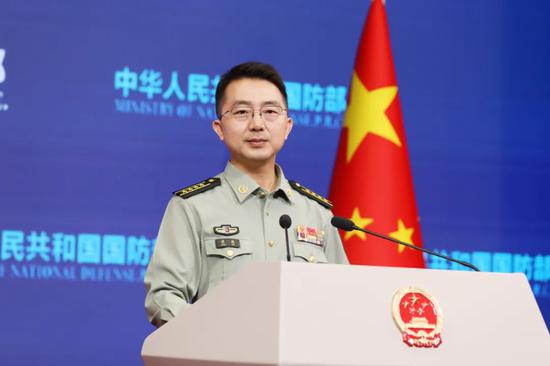
In a significant diplomatic intervention, China has positioned itself as a voice for restraint and international law amid escalating tensions in the Middle East. During a regular press conference on March 11, 2026, Chinese Defense Ministry spokesperson Jiang Bin delivered a comprehensive statement addressing both immediate military conflicts and long-term technological threats to global security. This dual-focus approach highlights China's growing role in shaping international norms around both conventional warfare and emerging technologies.
China's Position on Middle East Military Actions
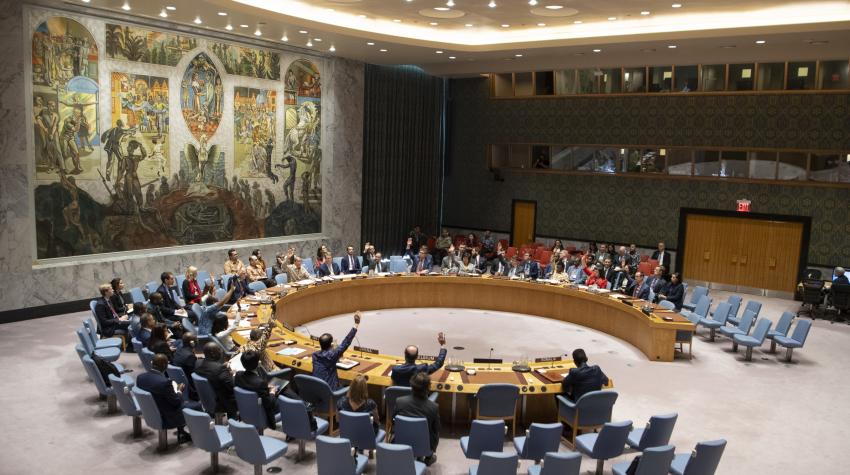
China has taken a firm stance against recent military operations targeting Iran, characterizing them as violations of international legal frameworks. According to spokesperson Jiang Bin, military strikes launched by the United States and Israel against Iran without authorization from the United Nations Security Council represent a serious breach of international law and fundamental norms governing international relations. This position aligns with China's longstanding diplomatic principle of non-interference in sovereign states' affairs.
The Chinese defense spokesperson emphasized that China "firmly opposes actions that infringe upon the sovereignty and security of other countries, as well as the abuse of force or the law of the jungle." This language reflects China's commitment to a rules-based international order and its opposition to unilateral military actions that bypass established multilateral institutions like the UN Security Council.
Call for Immediate Ceasefire and Dialogue
Jiang Bin articulated China's deep concern about the protracted nature of the conflict and its potential spillover effects on neighboring countries. He warned that "the continuation or escalation of hostilities would only push the Middle East toward a dangerous abyss and bring greater suffering to people across the region." This assessment reflects China's strategic interest in regional stability, particularly given its significant economic investments and energy security considerations in the Middle East.
The Chinese defense official stated unequivocally that "resorting to force is not the right solution to international disputes" and called for all relevant parties to "immediately stop military operations, return to dialogue and negotiations, and jointly safeguard peace and stability in the Middle East and beyond." This position represents China's consistent advocacy for diplomatic solutions over military confrontation in international disputes.
Warning Against Unchecked AI Militarization
In a related development that expands the scope of China's security concerns, Jiang Bin addressed reports about the U.S. military seeking unrestricted access to artificial intelligence technologies developed by American technology companies. According to the defense spokesperson, the U.S. has "widely used AI tools in military operations against Venezuela and Iran," raising significant ethical questions about the future of warfare.
Jiang expressed particular concern about "unrestricted military use of artificial intelligence, including using AI to infringe on other countries' sovereignty or allowing algorithms to exert excessive influence over wartime decision-making." He warned that such practices "could erode ethical constraints and accountability in warfare," creating dangerous precedents for future conflicts.
The Risk of Technological Runaway
The Chinese defense spokesperson issued a stark warning about the potential consequences of allowing algorithms to determine matters of life and death in military contexts. Jiang stated that this approach "could also create the risk of technological runaway," adding that dystopian scenarios depicted in science fiction films like "The Terminator" "could one day become reality" if proper safeguards aren't implemented.
This represents one of the most explicit warnings from a major military power about the existential risks associated with autonomous weapons systems and AI-driven warfare. China's position reflects growing international concern about the ethical dimensions of military applications of artificial intelligence.

China's Proposed Framework for AI Governance
In response to these concerns, Jiang Bin outlined China's vision for responsible military applications of artificial intelligence. He emphasized that China "advocates a people-centered approach and the principle of AI for good," stressing that "human primacy must be maintained in military applications of AI and that all relevant weapon systems should remain under human control."
This position aligns with growing international calls for meaningful human control over lethal autonomous weapons systems. China's framework represents a middle ground between complete prohibition and unrestricted development of military AI technologies.
Multilateral Governance and International Cooperation
Jiang Bin announced China's readiness to "work with other countries to advance multilateral governance of AI with the United Nations at its core, strengthen risk prevention and control, and ensure that the development of AI contributes to the progress of human civilization." This statement positions China as a proponent of international cooperation in regulating emerging military technologies.
The defense spokesperson also made clear that China "opposes attempts to leverage advantages in AI and other emerging technologies to pursue absolute military dominance or undermine the sovereignty and territorial integrity of other countries." This represents a direct critique of what China perceives as technological imperialism by other major powers.
Strategic Implications and Global Context
China's dual statements on Middle East conflicts and AI militarization reflect its evolving approach to global security issues. By linking conventional military actions with emerging technological threats, China positions itself as a comprehensive security actor concerned with both immediate conflicts and long-term strategic stability.
The timing of these statements is significant, coming amid heightened tensions in multiple global hotspots and rapid advancements in military AI capabilities. China's interventions suggest a calculated effort to shape international discourse around appropriate uses of force and technology in the 21st century security landscape.
As a permanent member of the UN Security Council and a major military power, China's positions carry significant weight in international diplomatic and security circles. The country's advocacy for dialogue over force in the Middle East and human control over AI in warfare represents a consistent philosophical approach to conflict resolution and technological governance.