Read on Nature
Unveiling Nanoscale Degradation: How Multimodal Electron Microscopy Reveals the Secrets of Perovskite LED Failure
Halide perovskite light-emitting diodes (PeLEDs) promise a revolution in efficient, low-cost optoelectronics, but their rapid operational degradation has remained a critical barrier. A groundbreaking study published in Nature employs a novel multimodal in situ electron microscopy approach to directly visualize the structural and chemical evolution within a working PeLED at the nanoscale. This research reveals that degradation is not a bulk phenomenon but is instead localized at the interfaces between the perovskite emitter and its transport layers. By integrating four-dimensional scanning transmission electron microscopy, energy-dispersive X-ray spectroscopy, and atomic-resolution imaging under electrical bias, scientists have uncovered the precise mechanisms—including metallic lead formation, halide migration, and electrode corrosion—that drive device failure, providing a crucial roadmap for designing more stable next-generation displays and lighting technologies.
Halide perovskite semiconductors have captivated the materials science world with their exceptional optoelectronic properties, offering a path to high-efficiency, low-cost light-emitting diodes (LEDs), solar cells, and lasers. However, a persistent shadow looms over this promise: operational instability. While perovskite photovoltaics have seen significant stability improvements, perovskite LEDs (PeLEDs) degrade rapidly under electrical bias compared to traditional inorganic semiconductors. The root causes, particularly the atomic-scale mechanisms at buried interfaces, have remained elusive—until now. A pioneering study leverages advanced multimodal in situ electron microscopy to act as a nanoscale movie camera, capturing the real-time degradation of a working PeLED. This direct visualization provides unprecedented insights into why these devices fail and charts a clear course for engineering their future stability.
The Challenge of Perovskite LED Instability
Perovskite LEDs combine high charge-carrier mobility and facile solution processability, making them ideal candidates for next-generation displays and solid-state lighting. Despite achieving impressive initial efficiencies and brightness, their operational lifetimes are often measured in minutes or hours, not the thousands of hours required for commercial applications. Conventional analysis techniques, such as synchrotron X-ray spectroscopy, offer valuable chemical data but lack the spatial resolution to pinpoint where and how degradation initiates within the complex, layered architecture of a device. It has been widely hypothesized that electric-field-driven ion migration and interfacial electrochemical reactions are primary culprits, but confirming this and understanding the precise sequence of events required a new observational paradigm.
A Multimodal Microscopy Breakthrough
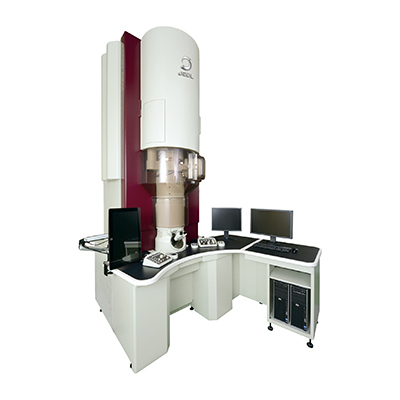
The research, detailed in Nature, introduces a sophisticated in situ methodology. Scientists fabricated a sky-blue PeLED and then used focused ion beam milling to create an ultra-thin cross-section, approximately 100 nanometers thick, of the complete device stack. This "nanoLED" was then integrated onto a microelectromechanical system (MEMS) chip inside an electron microscope, allowing researchers to apply electrical bias—simulating real device operation—while simultaneously imaging it.
The power of the approach lies in its multimodality. It combines three techniques:
- Four-Dimensional Scanning Transmission Electron Microscopy (4D-STEM): Captures nanoscale diffraction patterns at every point in the sample, mapping crystal structure and orientation.
- Energy-Dispersive X-Ray Spectroscopy (EDX): Provides elemental composition maps, showing where atoms like lead, chlorine, and bromine move during operation.
- Atomic-Resolution Imaging: Delivers direct visual confirmation of structural changes at the atomic level.

Key Findings: Interface is the Problem
The in situ observations delivered several critical discoveries that redefine our understanding of PeLED degradation. Contrary to the assumption that the entire perovskite layer breaks down, the study found that the bulk of the light-emitting material remains relatively intact. Instead, degradation is fiercely localized at the critical interfaces.
1. Pre-Existing Strain and Lead-Rich Phases
Even in the pristine, un-biased device, atomic-resolution imaging revealed pre-existing lattice strain and small clusters of lead-rich phases at the interfaces between the perovskite and the electron/hole transport layers. These imperfections, likely formed during device fabrication, act as predetermined weak points. Geometric phase analysis showed these areas experience significant tensile and compressive forces, creating a landscape primed for failure under electrical stress.
2. Formation of Metallic Lead and Degradation Products
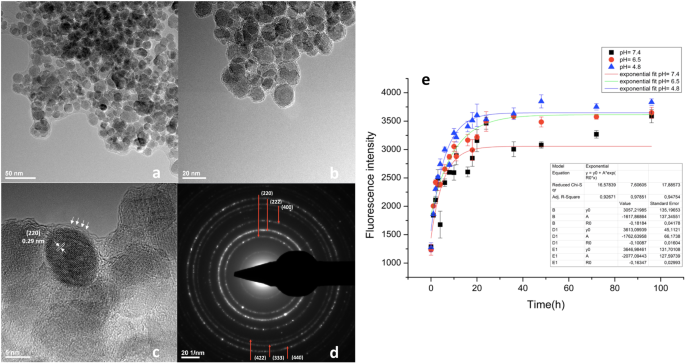
Upon applying a constant current, the microscope watched as nanoscale transformations unfolded. Metallic lead (Pb0) nanoparticles formed, along with other lead-rich phases like PbX2 and CsPb2X5. These phases are non-radiative recombination centers, meaning they waste electrical energy as heat instead of light, directly reducing efficiency and brightness. The formation is likely an electrochemical reduction process, where halide ions (like Cl- and Br-) migrate away under the electric field, leaving behind undercoordinated lead that reduces to its metallic state.
3. Cathode Corrosion via Halide Migration
One of the most striking observations was the corrosion of the aluminum cathode. Mobile chloride ions, which have high mobility in perovskites, migrated to the Al contact. There, they reacted to form a layer of insulating aluminum chloride (AlCl3). This insulating layer increases the device's resistance, causing voltage to rise during operation (a clear signature of degradation observed in the experiment) and severely hindering electron injection into the perovskite. This halide-driven electrode corrosion is a major, previously hard-to-observe failure mechanism.
4. Grain Fragmentation and Structural Collapse
As biasing continued, the perovskite grains themselves began to suffer. Analysis showed grain fragmentation and a loss of structural coherence. The lattice parameters distorted, and the material's crystallinity decreased, particularly at the interfaces. This physical breakdown further impedes the smooth flow of electrical charges through the device.
Implications for Designing Stable Perovskite LEDs
This research moves the field from speculation to certainty regarding degradation pathways. The implications for device engineering are profound:
- Interface Engineering is Paramount: The primary focus for stability must shift from the bulk perovskite to perfecting the interfaces. This includes developing new transport layers that are chemically inert, mechanically matched to reduce strain, and effective at blocking halide ion migration towards the electrodes.
- Strain Management: Fabrication processes must be optimized to minimize intrinsic lattice strain at interfaces, removing the precursor sites for degradation.
- Stable Contacts: Alternative cathode materials or sophisticated interlayers that are resistant to halide corrosion must be developed to replace or protect simple aluminum contacts.
- A New Analytical Standard: The multimodal in situ microscopy framework itself becomes a powerful tool for screening new materials and device architectures, allowing researchers to directly observe how their innovations perform under stress at the nanoscale.
Conclusion
The application of multimodal in situ electron microscopy has successfully lifted the veil on the hidden nanoscale dynamics causing perovskite LED failure. By proving that degradation is an interfacial phenomenon driven by ion migration, electrochemical reactions, and pre-existing strain, this work provides a definitive and actionable guide for the field. The path to commercial, stable perovskite LEDs is now clearer: it requires a concerted effort to design and engineer robust, non-reactive interfaces. This study not only solves a key mystery in perovskite optoelectronics but also establishes a powerful diagnostic framework that will accelerate the development of all complex, multilayered electronic devices, bringing the bright future of perovskite lighting one significant step closer to reality.