Read on PBS News
Market Volatility Amid Escalating Iran-U.S. Conflict and Contradictory Signals
As the conflict between the United States and Iran enters its second week, global markets are experiencing significant volatility. Contradictory signals from U.S. leadership regarding the war's duration are compounding uncertainty, with Iranian attacks on regional oil infrastructure and threats to maritime traffic directly impacting energy prices and economic stability. This article analyzes the current state of the conflict, its immediate economic repercussions, and the challenges of forecasting in an environment of heightened geopolitical risk and mixed messaging from Washington.
The escalating military conflict between the United States and Iran has thrust global markets into a state of pronounced volatility, with contradictory signals from U.S. leadership adding a layer of uncertainty that complicates economic forecasting. As the war entered its 11th day with no clear end in sight, Iranian attacks on critical oil infrastructure and pledges to choke off vital maritime routes have sent shockwaves through financial systems. The situation is exacerbated by mixed messages regarding the conflict's potential duration, leaving investors and analysts navigating a landscape defined by risk and unpredictability.

The Escalating Military Conflict
The conflict, triggered by U.S. and Israeli strikes on Iran on February 28, has rapidly expanded into a regional confrontation. Iran has launched sustained barrages targeting not only Israel but also Gulf Arab nations, including the United Arab Emirates, Bahrain, Saudi Arabia, and Kuwait. These attacks have resulted in civilian casualties and damage to industrial sites. In response, the United States has promised an intensification of its military campaign. Defense Secretary Pete Hegseth warned that operations would see "the most fighters, the most bombers, the most strikes" with increasingly refined intelligence, signaling a commitment to a prolonged and expansive engagement.
Economic Warfare and Market Impact
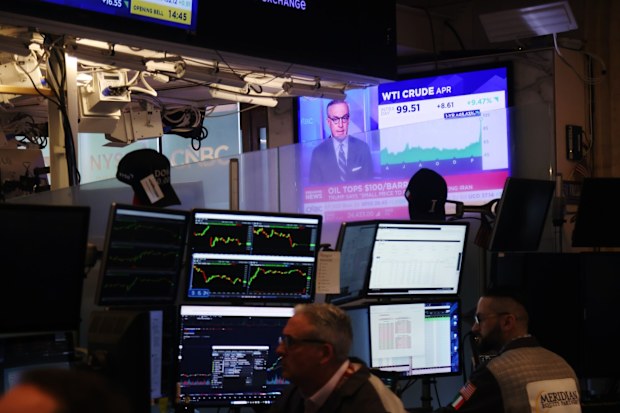
Iran's strategy extends beyond direct military engagement to economic warfare, explicitly targeting global energy markets to pressure the U.S. and its allies. A central component of this strategy is the threat to the Strait of Hormuz, a chokepoint through which approximately 20% of the world's oil transits. Iranian officials have declared they "will not allow the export of even a single liter of oil from the region to the hostile side," effectively aiming to blockade the strait. This has had an immediate and dramatic effect on oil prices. Brent crude oil spiked to nearly $120 a barrel before settling around $90—a 24% increase since the conflict began—introducing inflationary pressures worldwide.

The disruption is not merely theoretical. Saudi Aramco CEO Amin Nasser confirmed that tankers are being rerouted to avoid the strait, utilizing alternative pipelines to capacity. He warned that a prolonged blockage would have a "serious impact on the global economy." Simultaneously, attacks on merchant shipping have already claimed the lives of at least seven sailors, according to the International Maritime Organization, underscoring the tangible risks to global trade.
The Uncertainty of Contradictory Leadership Signals
Amid this volatile backdrop, conflicting statements from U.S. leadership have become a significant source of market anxiety. While military officials like Secretary Hegseth outline plans for intense, sustained strikes, political signals have been less consistent. This dissonance creates a fog of uncertainty, making it exceptionally difficult for markets to price in risk and for businesses to plan. The lack of a clear, unified message on the conflict's objectives and timeline leaves investors reacting to each new headline, contributing to the sharp swings observed in equity and commodity markets.
Regional and Global Repercussions
The conflict's effects are radiating across the Middle East and beyond. In Lebanon, clashes between Israel and the Iran-backed Hezbollah have escalated, with Israel calling for civilian evacuations. In Iraq, airstrikes have targeted Iran-linked militias. The human cost continues to rise, with officials reporting hundreds of casualties in Iran, Lebanon, and Israel, alongside U.S. military injuries. This expanding theater of conflict increases the risk of further miscalculation and escalation, factors that markets are poorly equipped to model.
Navigating a Market Defined by Geopolitical Risk
For investors and policymakers, the current environment presents a classic case of heightened geopolitical risk. Historical correlations and models may prove inadequate when facing a rapidly evolving military situation compounded by ambiguous political guidance. The primary challenges include assessing the longevity of oil supply disruptions, the potential for further escalation, and the ultimate economic toll of prolonged warfare. In such conditions, volatility is not an anomaly but a feature, requiring strategies focused on resilience, diversification, and scenario planning rather than precise prediction.
In conclusion, the war between the U.S. and Iran has become a potent catalyst for global economic instability. The direct targeting of energy infrastructure and maritime routes has triggered supply shocks, while the absence of a coherent, predictable political narrative from Washington amplifies market fears. As long as the military conflict persists and strategic ambiguity remains, markets will likely continue to swing violently, reacting to each development in a conflict that shows no immediate signs of de-escalation. The situation underscores the profound interconnectedness of global security and economic stability, where events in the Persian Gulf reverberate on trading floors and in economies around the world.