Read on PBS News
Georgia's 14th District Special Election: A Crowded Race to Fill Marjorie Taylor Greene's Seat
On Tuesday, voters in Georgia's 14th Congressional District will head to the polls in a special election to replace former Republican Rep. Marjorie Taylor Greene, who resigned in January. What began as a field of 22 candidates has narrowed to 17 active contenders competing on a single ballot. With Republicans holding a slim House majority, the outcome could further tighten the GOP's margin in a district Donald Trump carried decisively in 2024. This article examines the key candidates, the unique electoral rules, and what to expect as results come in.
All political roads lead to Rome, Georgia, this week as voters in the state's 14th Congressional District prepare to elect a replacement for former Republican U.S. Rep. Marjorie Taylor Greene. Greene resigned in January following a public rift with President Donald Trump, creating a vacancy in a deeply conservative district that has drawn national attention due to its potential impact on the House's delicate balance of power. With Republicans holding a slender majority in the chamber, the outcome of this special election carries significance beyond northwest Georgia.
The Electoral Landscape and Rules
The special election features a unique "jungle primary" format where all candidates, regardless of political affiliation, compete on the same ballot. A crowded field of 22 candidates initially filed to run, but that number has since fallen to 17 active contenders following several withdrawals. If no candidate receives a majority of votes cast, the top two vote-getters will advance to a runoff election scheduled for April 7. This system creates strategic challenges for both major parties, particularly Republicans who must avoid splitting their vote among multiple candidates.
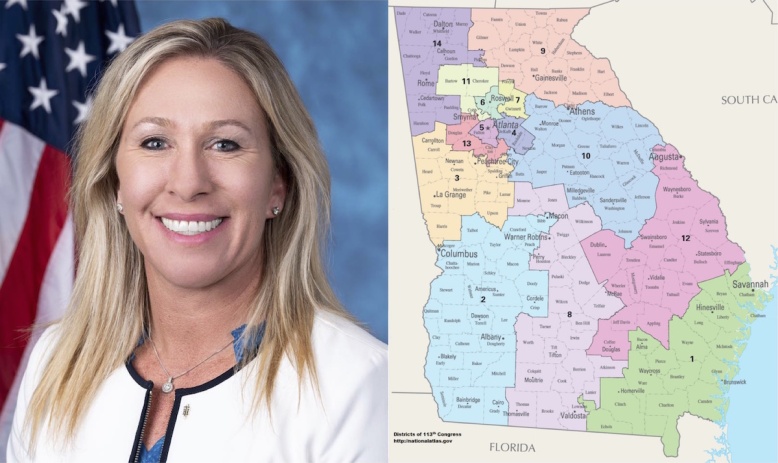
The 14th Congressional District spans 10 counties in Georgia's northwest corner, bordering both Alabama and Tennessee. Paulding County is the most populous, followed by a portion of Cobb County. The district includes the cities of Rome, Dalton, Acworth, and parts of Kennesaw. In the 2024 general election, approximately 378,000 votes were cast in the district, representing roughly 74% of registered voters. As of the latest count, there are about 521,000 registered voters eligible to participate in this special election.

Key Candidates and Campaign Dynamics
Twelve Republicans are competing in the special election, with Clay Fuller emerging as a frontrunner. Fuller, a state district attorney, has secured Donald Trump's endorsement, which could prove significant in a district where Trump outperformed Greene in the 2024 election. Another notable Republican contender is former state Sen. Colton Moore, whose state Senate seat is also being filled in a separate special election on Tuesday.
On the Democratic side, three candidates are vying for the seat, led by Shawn Harris, a retired Army brigadier general who challenged Greene in 2024. Harris has demonstrated considerable fundraising prowess, eclipsing the entire multi-party field with approximately $4.3 million raised as of mid-February. His campaign war chest of about $290,000 significantly outpaces Fuller's $238,000. In his 2024 bid against Greene, Harris received about 36% of the district vote, with his strongest showing in Cobb County where he garnered approximately 49%.
Voter Turnout and Counting Procedures
As of Friday before the election, nearly 54,000 ballots had already been cast in the special election. Georgia voters do not register by party, and any registered voter may participate in their district's special election. Polls close at 7 p.m. ET, with results expected to begin flowing in shortly thereafter. In the 2024 general election, the Associated Press first reported results from the 14th District at 7:10 p.m. ET, with about 99% of votes tabulated by 11:24 p.m. ET.
Counting procedures warrant attention, as all 10 counties in the district typically release some or all absentee voting results in their first vote update. Four counties, including the largest (Paulding and Cobb), also tend to include all early in-person voting results in that initial update. Since 2020, Democrats have been more likely to vote early or by mail, which could create an initial lead for Democratic candidates until Election Day in-person ballots are counted.
Political Implications and What's at Stake
This special election occurs against the backdrop of a narrowly divided House of Representatives, where Republicans hold a slim majority. A Democratic upset in a district Trump carried with 68% of the vote in 2024 would tighten the GOP margin even further, potentially complicating legislative efforts. However, with the Democratic vote split among just three candidates compared to 12 Republicans, Harris could potentially secure one of the two runoff spots if he performs at or near his 2024 level.
Beyond the congressional race, voters in state Senate District 53 will elect Moore's replacement, while state House Districts 94 and 130 will also hold special elections to fill vacant seats. Republicans control both chambers of the Georgia Legislature, and Tuesday's special elections are not expected to threaten those majorities. The Associated Press will declare winners only when it's determined there is no scenario that would allow a trailing candidate to close the gap, adhering to their standard of not making projections.
Conclusion: A Bellwether for Georgia Politics
The special election in Georgia's 14th Congressional District represents more than just filling a vacant House seat—it serves as a barometer for political dynamics in a deeply red district during a period of Republican internal tensions. The outcome will test the strength of Trump's endorsement, the organizational capacity of both parties in a special election context, and voter engagement in an off-cycle contest. As results come in Tuesday night, political observers will be watching not just who leads, but how vote patterns compare to previous elections in this northwest Georgia district that has become a focal point of national political attention.