Read on PBS News
Georgia's Special Election: Choosing Marjorie Taylor Greene's Successor
Voters in Georgia's 14th Congressional District are heading to the polls in a special election to fill the seat vacated by the resignation of Representative Marjorie Taylor Greene. The election features a crowded field of candidates, including Republicans Clay Fuller and Colton Moore and Democrat Shawn Harris. The winner will complete Greene's current term but faces the immediate prospect of another campaign to secure a full term in Congress, highlighting the complex electoral marathon unfolding in this deeply Republican district.
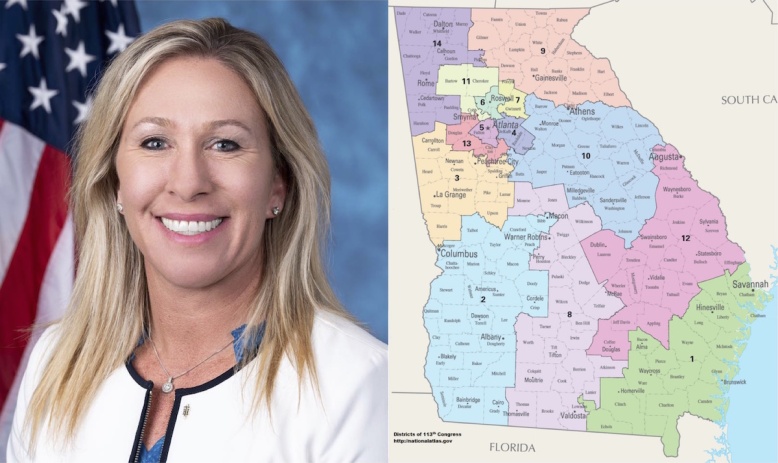
Voters in northwest Georgia's 14th Congressional District are participating in a pivotal special election to select a successor for former Representative Marjorie Taylor Greene, who resigned from Congress in January 2026. This election, held on March 10, 2026, marks the first step in a complex electoral process to determine who will represent the district, which is rated as the most Republican-leaning in Georgia by the Cook Political Report. The outcome will have immediate implications for the balance of power in the narrowly divided U.S. House of Representatives.
The Special Election Process
The special election is an "all-party" contest, meaning candidates from all political affiliations appear on the same ballot. A total of 17 candidates initially qualified, including 12 Republicans, three Democrats, one Libertarian, and one independent, though five Republicans subsequently withdrew. If no single candidate secures a majority of the vote, the top two finishers will advance to a runoff election scheduled for April 7, 2026. The winner of this process will serve the remainder of Greene's current term, which expires in January 2027.
Key Candidates in the Race
The field is led by several prominent figures. On the Republican side, Clay Fuller, a district attorney, has received the endorsement of former President Donald Trump and is campaigning as an "America First warrior." His main Republican rival is Colton Moore, a former state senator known to far-right activists for his vocal attacks on the prosecution of Trump in Georgia for alleged election interference. The leading Democratic candidate is Shawn Harris, a cattle farmer and retired U.S. Army general, who is campaigning on a platform of moderation and focusing on local district issues.

The Electoral Marathon Ahead
A critical nuance of this election is that it is only for the remainder of the current term. As reported by the Associated Press via PBS NewsHour, "The winner will serve out the remaining months of Greene's term. But if they want to remain in Congress beyond next January, they will have to run again." Indeed, a separate electoral cycle for a full two-year term beginning in January 2027 is already underway. Party primaries for that full term are set for May 19, 2026, with possible runoffs on June 16, culminating in the November 2026 general election. Many of the same candidates, including Fuller and Harris, have already qualified for that November ballot.
Political Context and Implications
The election occurs in a district that strongly embraced Marjorie Taylor Greene's hard-right politics when she was first elected in 2020. Greene, one of the most well-known members of Congress, resigned after a public falling out with former President Trump. Her departure created a vacancy that Republicans are eager to fill to maintain their narrow House majority, which currently stands at 218 Republicans to 214 Democrats. Returning a Republican to this seat is therefore a priority for the party. Given the district's strong Republican lean, a Democratic victory in the special election is considered unlikely, though Democrat Shawn Harris hopes to defy those odds.

In summary, the special election in Georgia's 14th District is a consequential event with layered political significance. It immediately impacts the composition of Congress and sets the stage for a prolonged campaign season as the victor must almost immediately begin campaigning again for a full term. The result will be a key indicator of the political climate in a deeply conservative district and a test of the enduring influence of Trump-style politics within the Republican Party.